Many treat modern generative AI as a single technology, but the architectural split between diffusion vs autoregression dictates every performance choice in high-fidelity image synthesis. While both systems learn the underlying patterns of visual data, they approach creation from opposite mathematical directions. One builds by predicting a sequence of choices; the other carves a clear signal out of total noise. For engineers and researchers, understanding this divide is far more than an academic exercise. As models move from simple image generation to complex video synthesis and spatial reasoning, the choice of backbone affects everything from memory use to how fast a model can think. The industry is moving away from a competition between these two methods, opting instead for hybrid systems where these two distinct philosophies begin to merge.
Generating high-resolution visual data is a high-dimensional probability problem. If an image has a million pixels, the model must decide the value of each one so the result looks like a coherent object. This task costs too much if handled as a single step because the search space is simply too large. Both diffusion and autoregression solve this by breaking the problem into smaller, manageable sub-tasks. Their methods for doing so remain fundamentally different, leading to the specific strengths and weaknesses seen in current tools.
The Fundamental Split in Generative Vision
Next Token Prediction and Signal Denoising
Autoregressive models treat an image like a long string of text. By breaking an image into a grid of visual tokens, the model uses next-token prediction to determine the value of the next patch based on all previous patches. This is a causal process where the model essentially asks what the most likely next piece of the image should be, given the parts it has already created. This logic aligns with the autonomous AI agent structures used in large language models, where one step follows another in a strict order.
Diffusion models use an iterative denoising process instead. They start with a canvas of pure noise and, over a series of steps, predict and remove that noise to reveal a clear image. Rather than working from left to right or top to bottom, diffusion models work on the entire image at once. They gradually increase the signal until the structure emerges from the static. This approach makes them highly effective at capturing fine textures and small details that sequence-based models might miss.
The Computational Cost of High-Resolution Synthesis
The primary barrier to visual generation is the sheer volume of data. A standard high-definition image contains millions of color values. Processing these raw pixels directly through a standard transformer would require far too much memory. To manage this, both architectures rely on compression. Autoregression uses discrete units to simplify the data, while diffusion uses mathematical abstractions called latent spaces. These techniques allow the models to focus on the important features of an image without getting bogged down by every individual pixel during the initial calculation phases.
How Autoregressive Models Sequence Visual Logic
Quantization and the Role of Visual Tokens
To use autoregression for images, engineers must first convert continuous pixel data into separate units. This usually happens through a process that compresses the image into a grid where each cell represents a specific pattern from a learned codebook. By mapping complex visual patterns to a finite set of tokens, the model treats image generation as a classification task. It picks the best-fitting pattern from a list rather than trying to calculate an infinite range of colors. This turns the creative process into a series of logical choices, which is why these models are so good at following complex instructions.
The Strengths of Global Contextual Awareness
Because autoregressive models use a transformer backbone, they excel at capturing the relationship between distant parts of an image. When the model predicts a token at the bottom of the frame, it can look at every single token it generated at the top. This global awareness is why these models often beat diffusion in tasks requiring precise composition, such as generating text within images or maintaining correct body proportions. If the model knows it started a sentence on the left, it has the memory to finish it correctly on the right.
In the past, these models used a simple ordering from top-left to bottom-right. Newer designs use multi-scale prediction, where the model generates a blurry, low-resolution version of the image first and then progressively fills in the details. This approach has allowed these systems to perform better as they scale up. According to recent research on Visual Autoregressive models, this method helps them generate results faster as the model size increases, overcoming some of the traditional speed limits of sequential generation.
The Mechanics of Diffusion and Iterative Refinement
Forward Noise Injection and the Reverse Sampling Path
The diffusion process starts with a fixed path where noise is added to a clean image until it becomes unrecognizable. The intelligence of the model lies in the reverse path. The model learns to predict exactly how much noise was added at any given step. By subtracting this predicted noise, the model steps backward toward a clean image. This iterative refinement allows the model to correct its own mistakes; if a step introduces a slight error, the next denoising step can smooth it out. This self-correction is a major reason why diffusion images often look more natural and less “digital” than early token-based attempts.
Latent Diffusion and the Compression Advantage
Early diffusion models were slow because they worked on every pixel at once. Modern systems use latent diffusion to speed things up. An autoencoder compresses the image into a space that is many times smaller than the original. The diffusion process happens entirely within this mathematical abstraction, and the system decodes the result back into pixels only at the very end. This reduces the hardware requirements significantly, allowing high-quality images to be made on home computers rather than just giant server farms.
The core of most diffusion systems used to be a specific type of convolutional network, but transformers are taking over here as well. This evolution into Diffusion Transformers provides better scaling and helps the model understand the overall structure of an image more effectively. As shown in this analysis of model evolution, these new designs borrow the best features of autoregressive design while keeping the refinement power of diffusion. This crossover is making the gap between the two technologies smaller every day.
Comparing Efficiency in Diffusion vs Autoregression
Inference Speed Bottlenecks in Sequence Generation
The debate over diffusion vs autoregression often centers on how fast a user gets their image. Autoregressive models face a bottleneck because they must generate tokens one after the other. Each new piece of the image requires a separate pass through the model. For an image made of 256 tokens, the model must run its full calculation 256 times. Even with clever tricks to speed this up, the process remains sequential, which can slow things down when trying to create very large or detailed images.
The Multi-Step Latency of Iterative Denoising
Diffusion models also require multiple steps, usually between 20 and 50 for high-quality results. While this is fewer steps than an autoregressive model takes to fill a grid, each diffusion step involves the entire model looking at the entire image. However, because these steps do not depend on a sequence in the same way, they are easier to optimize. Some methods can even reduce diffusion to a single-step generation, which is a feat that is mathematically much harder for autoregressive systems to achieve without losing quality. Performance also depends on AI graphics upscaling techniques used after the image is made. Often, a faster model creates a small image, and an upscaler adds the final polish, shifting the work away from the main generative engine.
The Shift Toward Unified Generative Architectures
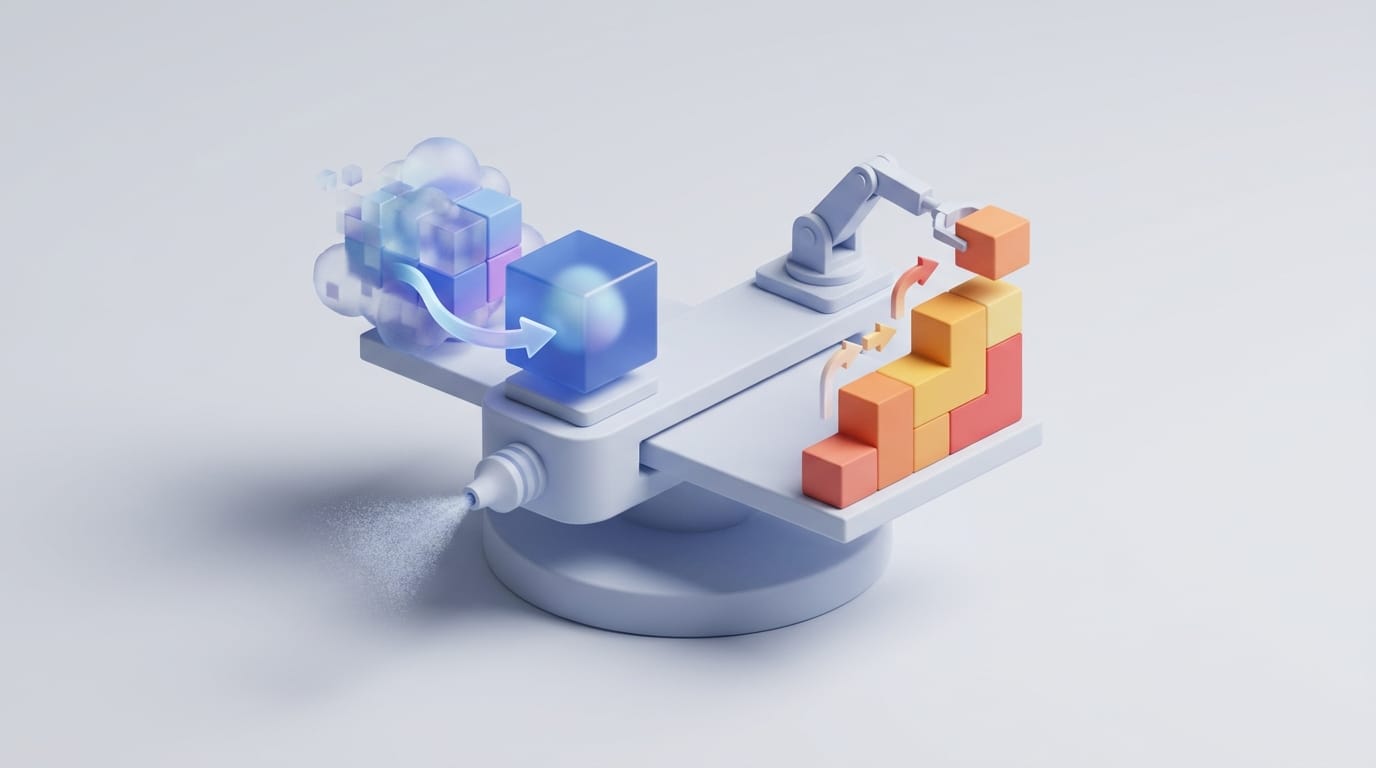
The most significant trend in modern AI is the blurring of the lines between diffusion vs autoregression. We are entering an era of unified architectures where the distinction is a matter of how the system is used rather than a fundamental choice. Leading video models use a transformer backbone to handle the structure and timing of a scene but use a diffusion process to create the actual visual content within those pieces. This allows the model to plan the “big picture” while letting a specialized process handle the fine details.
In this setup, diffusion acts as a tool for local refinement. The autoregressive structure handles the high-level logic, such as where a person is moving or how the light changes in a room. Meanwhile, the diffusion process handles the texture of the skin or the grain of a wooden table. This combination uses the strengths of both: the global logic of transformers and the local detail of denoising. Models that use this hybrid approach have shown tests showing faster image generation, sometimes up to nine times faster than pure diffusion models, without losing any visual quality.
Selecting the Right Architecture for Production Systems
Use Cases for Pure Autoregression
Engineers should choose autoregressive backbones when they need to mix different types of data. Since most language models are already autoregressive, it is easier to build a single model that handles text, code, and images in the same stream. If an application needs to reason about the layout of an image, like a software productivity tool that creates user interfaces, the step-by-step logic of autoregression is usually the better choice. It follows instructions with a level of strictness that diffusion sometimes lacks.
When Diffusion Remains the Industrial Standard
Diffusion remains the standard for creative work and editing. Because these models work by refining noise, they provide much more control over specific parts of an image. If a user needs to change the color of a shirt without touching the rest of the picture, diffusion makes this easy. This iterative nature is perfect for tools used by artists who need to tweak and polish a specific area of their work. The choice eventually comes down to hardware. Autoregressive models are easier to scale on existing infrastructure meant for language, but diffusion models are often more flexible for creative tasks.
As AI hardware limitations continue to shape the industry, the efficiency of hybrid systems will likely make them the default choice. The technical boundary between diffusion vs autoregression is dissolving into a spectrum of refinement. Whether a model predicts the next token or the next noise gradient, it is simply navigating data to find a coherent visual state. The core insight for the coming years is that the global logic of transformers and the local finesse of diffusion work best together. By treating generative AI as a tiered system of planning followed by polishing, developers can build models that are both faster and more capable than anything seen before.