
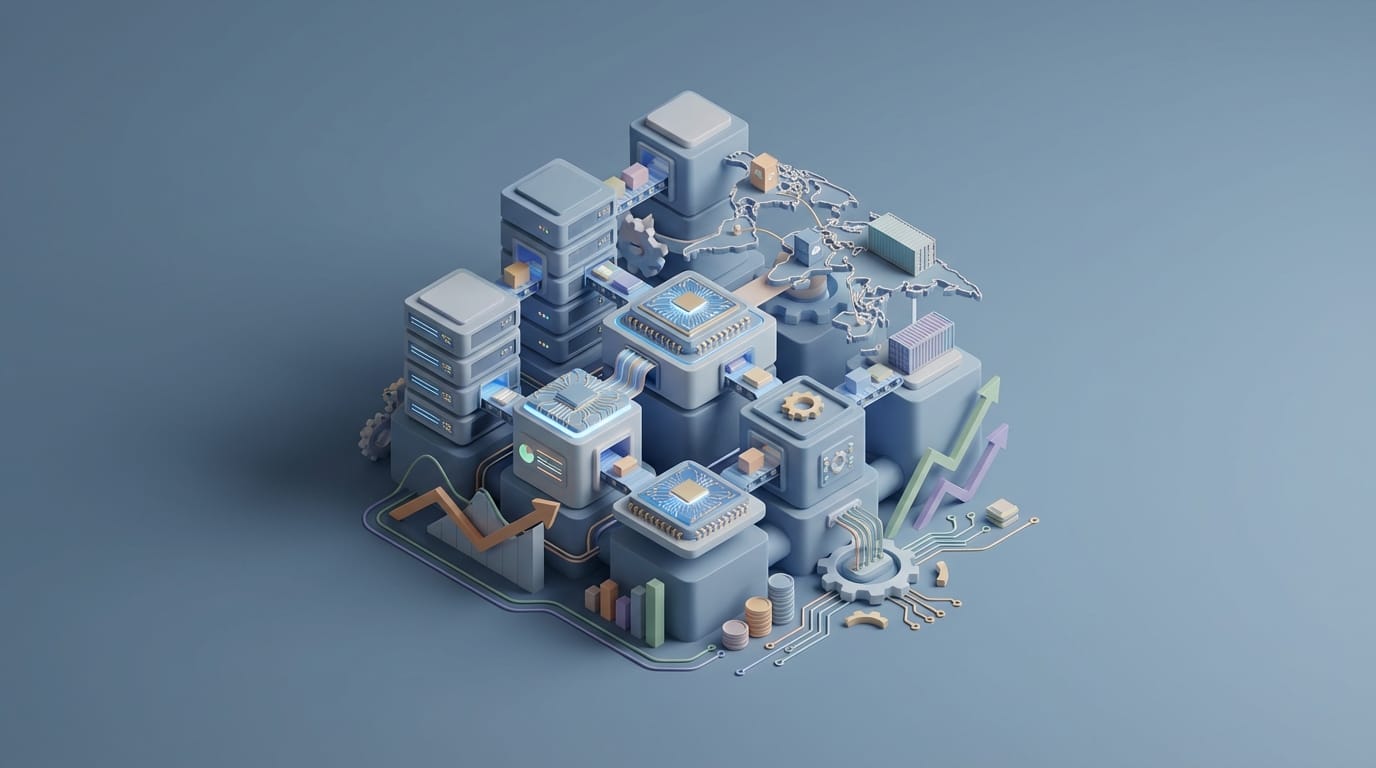
Scaling generative models has pushed the physical limits of AI infrastructure hardware from a simple buying problem to a barrier for the entire tech sector. Software progress usually gets the attention, but the speed of progress depends on specialized silicon and the materials used to package it. Today, the compute economy no longer depends only on how many transistors we can fit on a chip, but on the supply of the parts that support those chips. This shift creates a secondary expansion where high demand for AI parts drains the global supply of shared materials like glass fiber and power units. These shortages create a price floor and supply squeeze for industries that have nothing to do with machine learning.
To understand these limits, we must look past the chip itself and into the physical build of the data center. From how we stack memory to the basic limits of power grids, the physical world now dictates the pace of digital growth. These systems govern how we build and deploy technology in a world where hardware scarcity has replaced software as the main constraint on progress.
The Physical Reality Behind Generative Models
The move from general computing to AI workloads marks a major change in how servers work. For a long time, the industry used scalar processing, where processors handled tasks one after another. Modern large language models work differently; they use tensors, which are huge arrays of data that need many tasks to happen at the same time. Older systems cannot handle this scale, so engineers had to rethink the core design of the server.
This change moved the industry away from single, large chips toward designs using many smaller pieces called chiplets. A single piece of silicon can only be so large before the machines that print them reach their limit. To get around this, engineers now bond multiple specialized dies together on one package. This modular style works well, but it places a heavy burden on the connections between chiplets. If these parts cannot talk to each other fast enough, the whole system slows down, making the quality of these physical links more important than the speed of the chip itself.
The Memory Wall and High Bandwidth Memory Integration
In current AI clusters, the speed of the processor often matters less than the speed of the memory. This problem, known as the memory wall, happens when a processor calculates data faster than the system can feed it. To fix this, AI infrastructure hardware uses High Bandwidth Memory, which designers stack vertically on top of the logic die. This physical stacking allows data to travel shorter distances, which increases speed and saves power.
Experts expect this high-end memory to make up the vast majority of output in the coming year, according to market analysis from Crispidea. Making these memory stacks is expensive and difficult, leading suppliers to raise prices significantly to pay for new factories. These manufacturing hurdles impact everything from server costs to global trade, as seen in this look at the global semiconductor supply chain structure. Because the stacking process is so precise, any small error can ruin a very expensive component, keeping supply tight and prices high.
The Advanced Packaging Bottleneck
The biggest hurdle for AI today is not making the chip, but the final assembly process called advanced packaging. A specific method known as Chip-on-Wafer-on-Substrate has become a major global bottleneck. This process connects the logic die and the memory stacks onto a bridge that allows data to flow at high speeds. Without this bridge, even the fastest chip in the world would sit idle while waiting for data.
Global capacity for this packaging is growing fast, yet demand still grows faster. This is a delicate system where yield rates, or the percentage of parts that work, decide how many servers hit the market. Since this is the final step in a process that costs thousands of dollars, a single flaw in the packaging can destroy several high-value parts at once. This high risk makes companies cautious, which further limits how many units they can produce each month.
Interconnect Density and the Material Limit
As we pack more power into smaller spaces, the wires and materials used to connect them reach their breaking point. Traditional plastic bases are warping under the high heat and dense wiring of modern servers. Recently, major tech firms like Intel and Samsung began a shift toward glass-core substrates to solve this problem. Glass stays flat and handles heat better than plastic, which allows for much tighter wiring and faster data flow.
However, this shift creates new problems because it uses specialized glass fibers and optics. These same materials are used for 5G towers and home internet lines. This competition for raw materials means that solving a bottleneck for AI might make it more expensive to build a phone network or a home router. The tech world is finding that its different branches are all fighting for the same limited pool of high-quality materials.
How AI Infrastructure Hardware Squeezes the Global Compute Market
The hardware market is seeing a ripple effect where AI needs soak up the supply of basic parts. A modern AI server rack uses far more power than an old one, often moving from five kilowatts to over thirty kilowatts. This massive jump in power needs has caused a shortage of power units and transformers. Without these basic electrical parts, a data center is just an empty building.
Many data centers currently under development face potential delays for data center projects because they cannot find enough electrical equipment. This shows how AI growth competes with other sectors like electric car charging and power grid updates. For the people building these sites, managing data center energy consumption is now a major logistical task that requires planning years in advance.
Competition for Specialized Components
The rising cost of compute is driven by shared raw materials. High-purity resins, copper foils, and cooling fluids used in AI systems are the same ones used in cars and home electronics. When a large tech company buys a huge supply of cooling fluid for its servers, the price goes up for every other industry. This creates a situation where AI infrastructure hardware costs indirectly raise the price of cars, appliances, and industrial tools. Small manufacturers find themselves paying more for parts because they must compete with the massive budgets of the largest tech firms.
This competition also extends to the fluids used in immersion cooling. As servers get hotter, many companies are dipping them in specialized liquids to keep them cool. These liquids use complex chemistry that is hard to scale quickly. If the supply of these fluids cannot keep up, it limits how many high-power servers a company can run in a single room, creating a physical ceiling on the density of modern computing.
The Economic Reality of High Performance Clusters
The financial model for computing has moved from cheap, standard servers to expensive, specialized gear. This change has a big impact on how companies plan their budgets. In the past, hardware lasted five years before it needed to be replaced. Now, new designs come out so fast that hardware might be out of date in just two years. This forces companies to pay off their equipment much faster, which raises the cost of providing AI services to the public.
Energy has also become a primary cost that rivals the price of the chips. When we look at the cost of generating text or images, the power to run the chips and keep them cool is a huge part of the total. This high cost is why we see more focus on on-device AI hardware, which tries to move some of the work from the data center to your phone or laptop. Moving the work closer to the user can save money, but it requires chips that can do a lot of work without draining a battery.
The Economics of Generating Data
Currently, the high cost of AI is often hidden by large investments from the biggest tech companies. As the market settles, the price of these services must match the high cost of AI infrastructure hardware. If the price of packaging and memory stays high, then using AI will remain a premium service rather than a cheap tool for everyone. This reality forces software companies to think carefully about how they build their products, as they cannot assume that computing power will always get cheaper.
Building these clusters also requires a massive amount of copper and high-grade plastics. As more companies build their own custom chips to avoid high prices, they still find themselves using the same factories and materials as everyone else. Even if a company designs its own chip, it must wait in the same line for memory and packaging, which keeps the industry-wide bottleneck in place.
Strategic Diversification of the AI Supply Chain
To avoid high prices, many large companies now design their own custom chips. By making chips for their specific needs, they can work more efficiently and avoid bidding against others for general parts. However, these custom chips still need the same advanced packaging and memory that are in short supply. Designing a chip is only half the battle; finding someone to build and package it is where the real struggle happens.
The fact that most factories are in just a few locations is a risk for the whole world. If something happens in one region, the global AI economy could stop. This risk is leading many countries to spend billions of dollars to build their own factories. These projects take years to finish, meaning the current tight supply will likely continue for a while. This pattern of high investment followed by a scramble for parts is a common theme in the tech world, as explained in our guide on how tech investment cycles drive growth.
The Future of Local and Centralized Compute
The tug-of-war between giant data centers and small local devices will define the next several years. Large clusters are best for training new models, but the limits of power and packaging make them hard to scale forever. Using local devices to run smaller models avoids the data center bottleneck but creates new challenges for heat and battery life. Most companies will likely use a mix of both, depending on how much they are willing to pay for speed.
The hardware limits we see today show a system trying to grow faster than the physical world allows. The way AI needs affect other markets proves that no technology stands alone. The materials used to build digital intelligence are the same ones used to power our cities and build our homes. In the future, the most successful companies will be those that learn to work within these physical limits instead of trying to outspend them. The AI movement is currently a contest of physics and logistics as much as it is a contest of code.