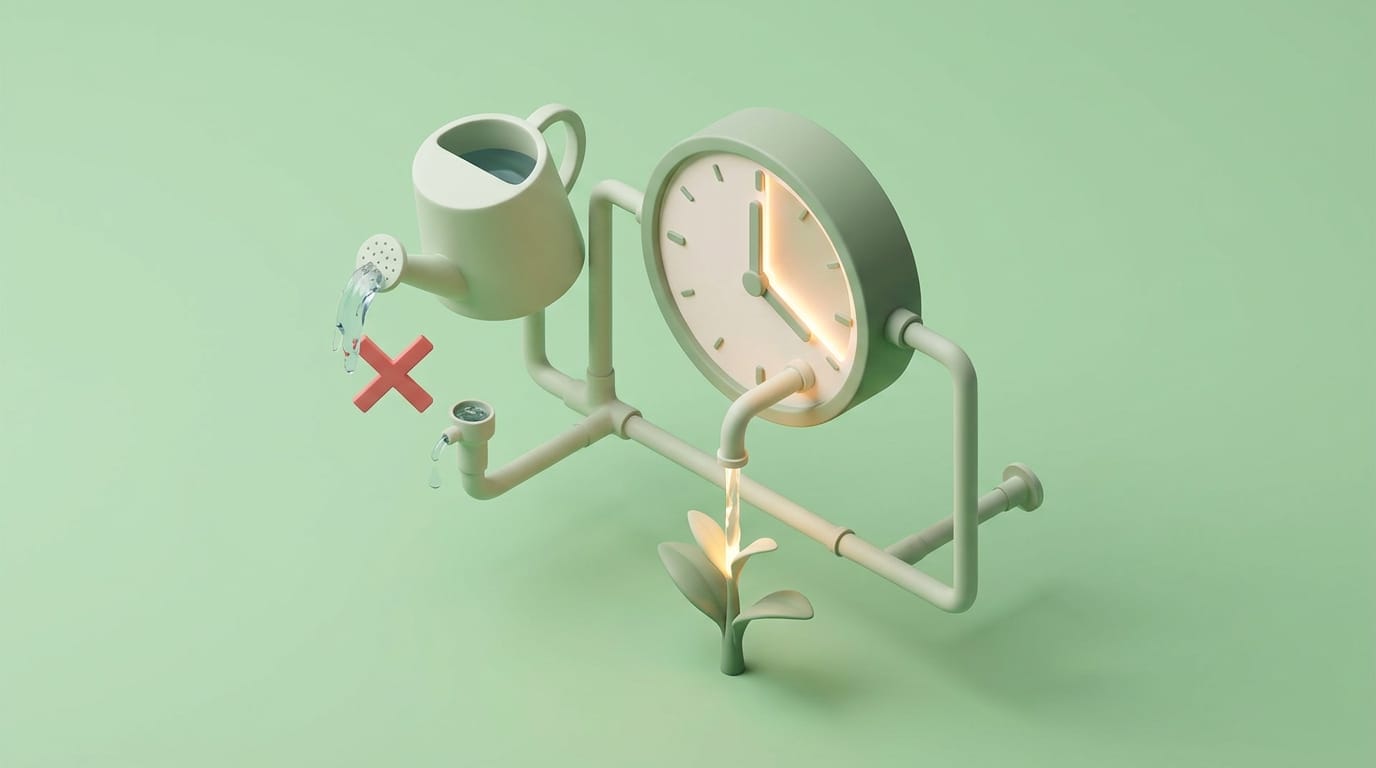
Root rot rarely stems from the amount of water a gardener provides, but rather from the plant’s inability to process that water when its metabolic clock is off. Understanding the best time to water plants requires looking past the soil surface and into the internal vascular systems that move fluids. When you align irrigation with a plant’s natural rhythm, you stop merely wetting the ground and start fueling a biological engine.
The system governing hydration is not a passive, sponge-like process. It is an active, solar-powered pump. For most species, this pump relies on light and the opening of tiny pores on the leaf surface. Watering outside of this metabolic window creates a gap between available moisture and the plant’s capacity to use it, which often leads to physiological suffocation.
Dawn represents the ideal time for irrigation because the plant wakes up at its highest metabolic potential. At sunrise, the plant prepares to pull water from the roots to the canopy through a vacuum effect that only exists during daylight. This timing ensures the plant uses the water before it can sit still or evaporate into the air.
The Circadian Rhythm of Plant Hydration
Plants operate on an internal clock that dictates their needs before the sun even rises. This rhythm ensures the plant’s machinery is ready for photosynthesis as soon as light hits the leaves. If you water at night, you provide resources to a system in sleep mode. During these hours, internal valves stay closed and the demand for fluid transport reaches its daily low.
The Role of Stomata in Daily Water Transport
The primary tool for hydration is the opening of stomata, which are small apertures on the underside of leaves that regulate gas exchange. When stomata open, they let in carbon dioxide for photosynthesis while allowing water vapor to escape. This escape creates a negative pressure known as transpiration pull, acting like a straw that draws fresh water up from the roots.
At night, these stomata close to save moisture. Because the biological straw is effectively pinched shut, the plant cannot move water through its tissues. Watering during this dormant period causes water to sit around the roots, which can destroy the delicate root hairs needed for absorption.
How the Dawn Trigger Activates Nutrient Movement
Blue light, which is most concentrated during the early morning, signals the stomata to open. Researchers at the University of Nebraska found that stomata respond quickly to blue light at sunrise, triggering a metabolic shift. As these pores open, the plant starts moving minerals and nutrients stored in the root zone overnight.
Timing your watering to match this dawn trigger ensures the plant has immediate access to growth fuel. The water you provide in the morning enters the upward stream of transpiration immediately. This flow cools the plant’s tissues as temperatures rise, preventing the stress that occurs when a plant tries to grow without enough fluid flow.
The Best Time to Water Plants: Soil vs. Cells
Many gardeners believe that wet soil means a hydrated plant, but these two states can be completely different. A plant can sit in a soaked container and still suffer from thirst if its internal transport is not active. This makes sunrise the best time to water plants because it connects soil moisture to cellular needs.
Transpiration Pull vs Surface Saturation
Hydration is a process of flow rather than a state of dampness. Morning watering supports the pull that sends nutrients to new growth at the plant’s tips. If the soil is wet while the air is cool and dark, the water stays still in the soil pores. This stagnant water pushes out the oxygen that roots need to breathe.
Losing oxygen is dangerous, especially in tight soil. Since soil compaction changes the structure of the root zone, it makes it harder for a plant to recover from poorly timed watering. Without the sun’s pull, water fills these tight spaces and creates a drowning environment that degrades the root system within hours.
Why Passive Absorption is a Myth
Roots do not drink water passively whenever it is available. Moving water into the root system is an intense process that relies on pressure. The plant’s metabolism maintains this pressure, but when the plant rests at night, it cannot move large volumes of water against gravity.
Watering during the morning window allows the plant to use the energy from the first hours of sunlight to power these pumps. This makes absorption much more efficient. Giving water when the plant is not active forces the roots to sit in a pool, leading to the suffocation that many people mistake for simply providing too much water.
The Physiological Cost of Poor Timing
The damage from watering at the wrong time rarely appears immediately. Instead, it shows up as a slow decline in the plant’s strength. When you water in the late evening, moisture stays on the leaves and in the soil for twelve hours or more before the sun can clear it. This long wet period creates a home for pathogens.
How Stagnant Water Leads to Root Suffocation
Root rot is essentially a breathing failure. Roots need oxygen to turn sugars into energy. When they stay submerged without moving that water upward, they run out of oxygen. This shift causes the root cells to produce toxins that dissolve their own walls.
Decaying roots attract pests that love rotting organic matter. For example, stopping the fungus gnat life cycle requires managing the balance between moisture and oxygen. Gnat larvae eat the weakened root tissues that result from nighttime water stagnation, turning a simple timing mistake into a difficult pest problem.
The Relationship Between Evening Moisture and Fungal Pathogens
Fungal spores need a thin layer of water to grow and enter a leaf. Evening watering keeps foliage damp throughout the night as temperatures drop. This environment is the primary cause of fungal outbreaks like powdery mildew. Watering at sunrise ensures any moisture on the leaves dries quickly as the air warms. This dry period is a vital defense that prevents most fungi from ever starting.
The Evaporation Trap of Midday Irrigation
While morning is the peak for efficiency, midday is the peak for waste. A common myth suggests that midday watering burns leaves by acting like a magnifying glass, but the real danger is evaporation. The high heat of the noon sun makes water vanish before the soil can absorb it.
Evaluating Thermal Loss
The best time to water plants is not when the sun is at its highest point. Data from the EPA shows that midday watering can lose 30 percent of its volume to the air before it reaches the roots. In dry or windy areas, this loss can reach 50 percent. When water evaporates from the top layer of soil, deep roots stay dry, which forces the plant to grow shallow, weak roots that cannot handle heat.
Why Midday Watering Fails
Irrigation during the heat of the day can lead to hydrophobic soil. This happens when the surface becomes so dry and baked that it repels water. When you apply water to a hot, dry surface, it beads up and runs off. Part of learning how to fix hydrophobic soil involves moving to a morning schedule so the ground stays receptive to moisture.
Plants also close their pores during the hottest hours to prevent wilting. This means that even if you provide water, the plant cannot move it. Midday watering provides resources at the exact moment the plant has restricted its intake to protect its internal pressure.
Optimizing Your Hydration Strategy
Moving to a sunrise schedule requires understanding how different environments handle these metabolic shifts. A container plant on a balcony has less mass than a garden bed, so its metabolic window is often shorter and more intense. These plants are sensitive to temperature changes because their roots are exposed to the air on all sides.
For containers, the sunrise window is critical. Watering as the sun hits the pot hydrates the roots before the temperature spikes. In contrast, in-ground plants have more insulation, but they still need the morning pull to move water through large root networks. The goal for both is deep watering during the morning peak rather than shallow misting that only wets the surface.
As seasons change, the sunrise trigger moves. In the summer, the metabolic window opens earlier and closes faster. In spring and fall, the window stays open longer because the air is cooler. Monitoring the local sunrise and adjusting timers keeps your garden in sync with the plant’s internal clock. Consistent timing allows the plant to predict when it will receive water, which reduces stress and builds stronger cell walls for a more resilient garden. Choosing the best time to water plants supports their fundamental ability to breathe, grow, and defend themselves.