
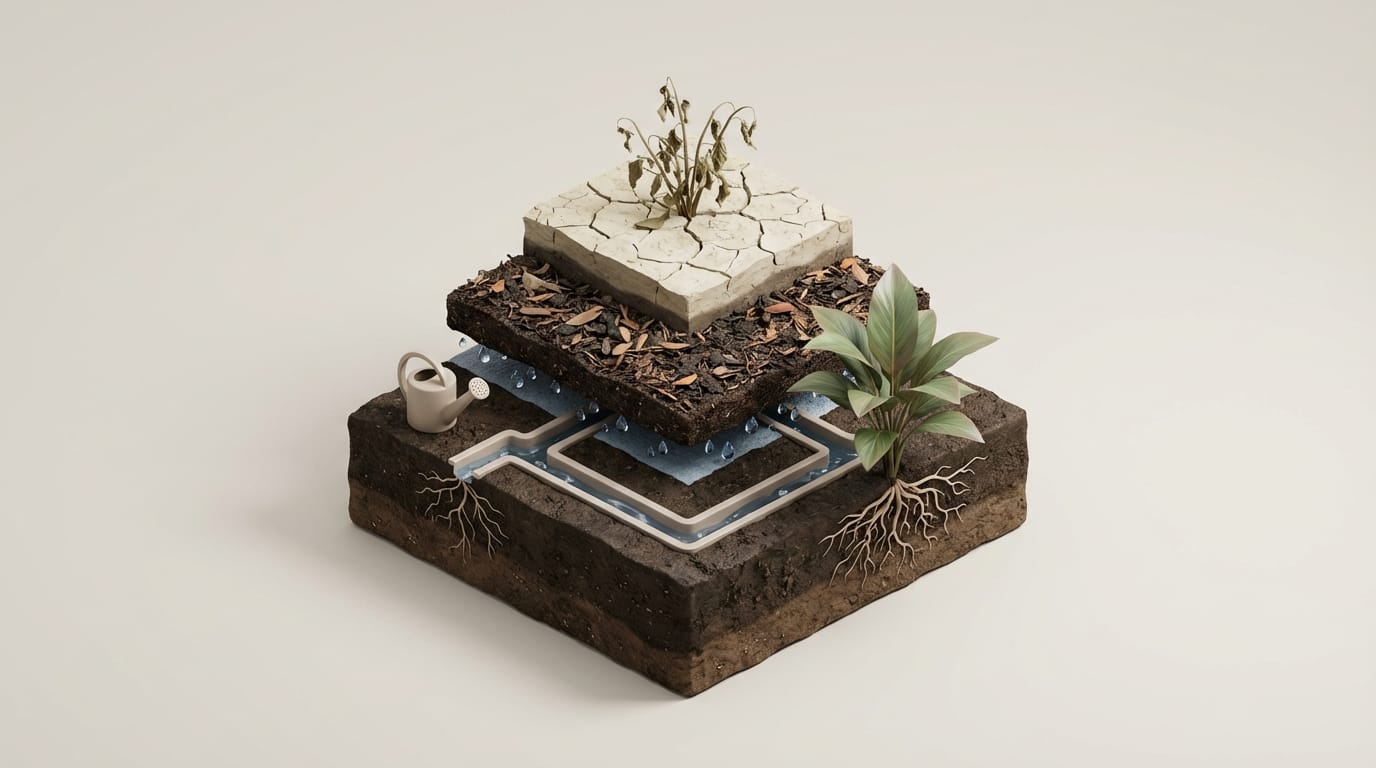
When water beads on top of your garden bed like a freshly waxed car, it indicates a biological breakdown that heavy watering cannot solve. This phenomenon, known as water repellency, seals the root zone from the moisture it needs to survive. Understanding how to fix hydrophobic soil requires moving beyond simple irrigation to address the chemical barriers forming at the soil particle level. This state of metabolic imbalance is common in arid climates or neglected containers, but gardeners can restore the ground’s natural ability to hold water by applying specific surfactants and biological stimulants.
To the naked eye, soil looks like simple dirt, but it is actually a complex structure of mineral particles and organic matter. Hydrophobicity occurs when this architecture becomes coated with substances that actively repel water molecules. Natural organic processes drive this transformation, often using the same materials that otherwise benefit the garden. As organic matter decomposes, it releases lipids, oils, and waxes that soil microbes usually process or wash away under normal conditions. However, certain fungi and decomposing plant tissues from resinous plants like eucalyptus or pines leave behind residues that coat soil particles. These natural waxes create a non-polar surface that prevents polar water molecules from bonding with the ground.
Dryness acts as the catalyst that turns these coatings from a minor presence into a waterproof shield. When soil moisture drops below a specific tipping point, the waxy molecules rearrange themselves to face outward, creating a solid crust. A garden bed might absorb water perfectly in the spring but act like plastic after a week of drought because of this molecular shift. This transition happens quickly, and real-time plant monitoring tracks internal data to detect this stress before the soil fully seals itself off. Once the barrier forms, even a heavy storm will simply roll off the surface, leaving the roots underneath completely dry.
Before implementing a cure, you must determine if your garden is truly hydrophobic or simply compacted. Physical compaction prevents water from entering because there is no pore space, while hydrophobicity prevents entry due to chemical repulsion. The standard diagnostic tool is the Water Drop Penetration Time test, which you can perform by clearing away mulch and placing several drops of water onto the dry soil surface. If the drops sit as distinct spheres for more than 60 seconds, the soil is moderately hydrophobic; if they remain for over ten minutes, the case is severe. This test confirms whether you are dealing with a physical blockage or the surface tension issues that define water-repellent conditions.
In a larger outdoor area, you should look for patterns where water finds a single crack and disappears down it, leaving the surrounding zones bone-dry. This tunneling often means the chemical barrier is widespread across your garden. Noticing these pooling patterns early is essential when designing and building multifunctional outdoor living spaces where consistent irrigation is a priority. If the ground cannot absorb water evenly, the health of the entire garden will eventually decline regardless of how much you irrigate.
How to Fix Hydrophobic Soil Using Natural Surfactants
The most immediate way to resolve water repellency is to use a wetting agent. These substances, known as surfactants, work by reducing the surface tension of water so it can flatten out and slip past the waxy barriers. While many commercial products exist, natural extracts are often safer for the delicate microbial life in your garden. Yucca and aloe plants contain natural compounds called saponins, which are molecules with one end attracted to water and the other attracted to waxes. When applied to the garden, saponins act as a bridge that pulls water into the waxy pores of the soil particles. Many experts use yucca extract specifications to guide their treatments, as these natural agents help plants overcome stress by relieving the tension that prevents deep hydration.
To use these extracts, mix about one teaspoon of concentrated yucca or aloe extract per gallon of water and apply the solution slowly to the affected areas. You must follow this treatment with a deep watering of plain water to help the surfactant penetrate deep into the ground profile. These natural saponins are biodegradable and will not leave harmful residues in your vegetables or ornamental plants, making them a better choice than petroleum-based detergents. Once the surfactant breaks the initial tension, the water can reach the deeper layers where it stays protected from evaporation.
While surfactants provide a quick fix for how to fix hydrophobic soil, they are essentially a temporary bridge. To solve the problem permanently, you must address the waxy coatings themselves through biological digestion. Beneficial soil bacteria are the primary cleaners of the garden environment, but they require energy to multiply and work effectively. Molasses serves as an excellent high-carbon food source that triggers a microbial bloom. By feeding the bacteria, you increase the population of organisms capable of secreting the enzymes needed to break down lipid coatings. This biological approach treats the chemical cause rather than just the physical symptom, ensuring the soil remains absorbent long after the initial treatment.
Applying a mixture of two tablespoons of molasses per gallon of water provides the fuel for a massive microbial expansion. As these bacteria digest the waxes, they effectively clean the surface of each soil particle and restore its natural water-loving properties. Many soil restoration experts recommend this method because it supports the broader biological network and improves fertility alongside water absorption. Over time, the bacteria integrate these broken-down waxes back into the nutrient cycle, turning a problematic barrier into a source of energy for the garden.
In cases where the ground has become exceptionally hard, biological and chemical treatments might need physical assistance to reach the root zone. You should use targeted mechanical intervention to avoid destroying the existing soil structure or damaging sensitive root systems. Rather than tilling the entire bed, which can destroy beneficial fungi, you can use vertical mulching. A garden fork or a specialized aeration tool can create narrow holes about six inches deep to provide physical channels for your surfactant and molasses treatments. These paths allow the liquids to bypass the hydrophobic surface crust and reach the areas that need them most. Once you make the holes, fill them with high-quality compost or worm castings to ensure the channels remain open and biologically active.
Adding organic matter is vital, but the type of matter determines your success. Finished compost and humic acids are highly absorbent and help hold moisture in place while the biological digestion of the waxes occurs. This process ensures that the water you apply stays in the root zone rather than draining away or evaporating. By combining physical channels with high-quality organic matter, you create a sponge-like environment that resists the formation of new waxy seals. This multi-layered approach is the most effective way to turn a hard, water-repellent patch into a thriving garden bed.
Once you have restored the soil’s absorbency, the goal shifts to long-term prevention. Hydrophobicity is a cycle, and if the ground dries out completely again, the waxy coatings can reform and rearrange. Maintaining a consistent moisture floor is the key to a permanent fix. Shallow, frequent watering often contributes to the problem because it keeps the surface wet while the deeper layers remain dry. You should transition to a deep, infrequent watering schedule to encourage roots to grow deeper and keep the lower soil levels above the dryness threshold. Slow-release methods, such as drip irrigation or clay pots buried in the ground, are excellent for maintaining this consistency without wasting water.
Bare soil is vulnerable to the elements because direct sunlight and high temperatures accelerate the drying process and the hardening of organic waxes. A thick layer of organic mulch, such as straw or wood chips, acts as a thermal and moisture buffer. It prevents the soil surface from reaching the extreme temperatures that trigger water repellency and provides a steady supply of fresh organic matter to feed the microbial community. This layer also protects the surface from the physical impact of rain, which can further compact the ground and lead to more drainage issues. How to fix hydrophobic soil is ultimately a task of managing a living system rather than just fighting the dirt. By using surfactants to break the immediate tension and molasses to fuel the bacterial digestion of residues, you move from a temporary patch to a lasting cure. The most resilient gardens are those where the soil remains active and capable of receiving water as easily as a sponge, allowing the system to sustain itself through the changing seasons.