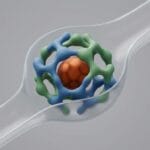

Understanding hyaluronic acid requires looking past its marketing as a simple moisturizer to the complex, weight-dependent signaling it performs within the extracellular matrix. While many consumers view it as a topical humectant, hyaluronic acid science reveals a multifaceted glycosaminoglycan that dictates everything from the inflammatory response in dermal tissue to the viscoelastic protection of our weight-bearing joints.
This molecule works not as a binary presence but as a function of its molecular weight and three-dimensional architecture. As a primary component of the extracellular matrix (ECM), hyaluronic acid (HA) acts as both a structural scaffold and a sophisticated signaling ligand. When aging or injury disrupts its homeostasis, the systemic impacts range from increased trans-epidermal water loss to the mechanical degradation of synovial fluid.
For healthcare professionals and researchers, navigating the nuances of hyaluronic acid science involves understanding how different chain lengths trigger vastly different biological pathways. This article examines the molecular mechanisms, the paradoxes of molecular weight, and the clinical standards required to evaluate HA-based interventions effectively.
The Molecular Architecture of Hyaluronic Acid
Chemical Composition of Glycosaminoglycans
Hyaluronic acid stands apart from other glycosaminoglycans (GAGs) because it lacks sulfate and does not link to a core protein to form proteoglycans. It exists as a linear polysaccharide composed of repeating disaccharide units: D-glucuronic acid and N-acetyl-D-glucosamine. These units connect via alternating beta-1,4 and beta-1,3 glycosidic bonds, creating a long, unbranched chain that can reach millions of Daltons in mass. This chemical simplicity allows the molecule to maintain a high degree of flexibility while resisting the rapid enzymatic breakdown that affects more complex proteins.
The Hydration Mechanism and Polysaccharide Structure
The primary physical characteristic of HA is its extraordinary hydrophilicity. Due to the high density of negative charges on its carboxyl groups, the molecule adopts an expanded, random-coil configuration in aqueous solutions. This structure allows a single molecule of HA to bind up to 1,000 times its weight in water, according to the Cleveland Clinic, making it the most efficient natural water-absorbing polymer known to biology. This water-binding capacity creates the turgor pressure necessary for skin firmness and the lubricating properties found in human connective tissues.
A family of integral membrane proteins known as hyaluronan synthases (HAS1, HAS2, and HAS3) synthesizes HA at the inner surface of the plasma membrane. As the chain grows, these proteins extrude it directly into the extracellular space. Research into these isoforms indicates that HAS2 typically produces high-molecular-weight hyaluronan, while HAS3 tends to produce shorter chains that assist in rapid tissue remodeling and signaling. This separation of production allows the body to fine-tune the local environment based on immediate physiological needs.
Navigating the Molecular Weight Paradox
High Molecular Weight Hyaluronan and Homeostasis
In a healthy state, the body primarily maintains HA in its high-molecular-weight (HMW) form, which typically exceeds 1,000 kiloDaltons (kDa). In this state, HA serves as an anti-inflammatory and immunosuppressive scaffold; it physically occupies space, restricting the movement of pro-inflammatory cells and stabilizing the ECM. HMW-HA interacts primarily with CD44 receptors to promote cell survival and maintain the structural integrity of the skin and cartilage. When the immune system perceives this large-scale architecture as intact, it suppresses the release of cytokines that would otherwise trigger an inflammatory cascade.
This structural arrangement remains essential for biological cushioning. In the synovial fluid of joints, HMW-HA provides the necessary viscosity to resist compression and the elasticity to absorb shock during rapid movement. By acting as a molecular filter, the HMW-HA network regulates the transport of plasma proteins and metabolites, ensuring that the joint environment remains stable even under heavy physical loads.
The Pro-Inflammatory Risks of Low Molecular Weight HA
The “Molecular Weight Paradox” occurs when enzymes or oxidative stress fragment HA into low-molecular-weight (LMW) pieces, often under 50 kDa. While these smaller fragments penetrate the skin barrier more effectively, they can function as “damage-associated molecular patterns” (DAMPs). LMW-HA fragments trigger Toll-like receptors, specifically TLR4 and TLR2, which recognize pathogens within the innate immune system. According to research published in PMC, these fragments can induce macrophage activation and the up-regulation of pro-inflammatory genes, signaling the body that a tissue injury has occurred.
However, this signaling is not always detrimental because a “Multi-Weight” approach uses LMW-HA to stimulate self-defense mechanisms in controlled clinical applications. For instance, LMW-HA can induce the production of beta-defensin 2 in keratinocytes, which strengthens the skin’s antimicrobial barriers during wound healing. The key to therapeutic efficacy lies in balancing these weights; practitioners use HMW-HA for surface protection and use specific LMW-HA concentrations for deeper biological signaling without triggering chronic inflammation.
Mechanics of Hyaluronic Acid in Dermatological Science
Epidermal Penetration and the Stratum Corneum Barrier
The stratum corneum serves as a formidable barrier to most topical ingredients. Traditional HMW-HA forms a breathable film that reduces trans-epidermal water loss, but it is too large to penetrate the epidermis. Most researchers agree that for a molecule to pass through the lipid bilayers of the skin, it must generally stay below 500 Daltons. However, HA molecules as large as 50 kDa can occasionally penetrate deeper layers through specialized transport or follicular pathways. This is why many advanced serums use hydrolyzed HA, which enzymes have broken down into smaller fragments to facilitate absorption into the viable epidermis.
Hyaluronan Influence on Fibroblast Migration and Collagen Synthesis
Once HA reaches the dermis, it regulates the osmotic pressure within the ECM to create a hydrated environment conducive to fibroblast migration. Fibroblasts produce collagen and elastin, and their activity depends heavily on the mechanical tension of their surroundings. By maintaining ECM volume, HA ensures that fibroblasts remain stretched and active, which prevents the cellular collapse associated with premature aging.
This process is vital in the coordination of systemic healing and tissue remodeling. During the proliferative phase of wound healing, HA levels spike to facilitate the movement of cells into the wound bed. As the tissue matures, a more permanent collagen matrix replaces the HMW-HA, which demonstrates the molecule’s role as a temporary but essential biological architect. This turnover ensures that the tissue remains flexible during the early stages of repair before solidifying into a stable structure.
Hyaluronic Acid Science in Synovial Fluid Homeostasis
Viscosupplementation in Joint Lubrication
In orthopedics, the loss of HA molecular weight is a hallmark of osteoarthritis. As inflammation increases, hyaluronidases become overactive and reduce the synovial fluid’s viscosity. This leads to increased friction between the articular surfaces of the joint, which causes pain and further degrades the cartilage. Viscosupplementation (the intra-articular injection of HA) aims to restore this hyaluronic acid science by reintroducing HMW-HA into the joint capsule to provide immediate mechanical relief.
These injections do more than just provide lubrication; they also act as a metabolic signal to chondrocytes, or cartilage cells, encouraging them to produce more endogenous hyaluronan. Clinical studies show that these injections can manage knee pain as effectively as traditional anti-inflammatories while offering a more favorable side-effect profile for long-term use. By restoring the rheological properties of the synovial fluid, these treatments help delay the need for more invasive surgical interventions.
Chondrocyte Protection and Cartilage Matrix Integrity
Hyaluronic acid serves as a protective coating for chondrocytes, shielding them from mechanical stress through mechanotransduction. When the cartilage compresses, HA helps distribute the load across the ECM to prevent cell death. This protective effect depends highly on the concentration and molecular weight of the HA present. Higher concentrations of HMW-HA provide a more durable shield against the degradative enzymes associated with aging, ensuring that the cartilage matrix remains intact even under repetitive stress.
Bioavailability and Metabolic Pathways of Oral Supplements
The Intestinal Absorption Debate
For years, researchers debated the efficacy of oral HA supplements because they believed large molecules could not survive the digestive tract. However, recent evidence suggests that gut microbiota plays a significant role in degrading HMW-HA into smaller, absorbable fragments. These fragments enter the small intestine and travel via the lymphatic system to peripheral tissues, including the skin and joints. This systemic distribution suggests that oral HA can improve skin hydration from the inside out by providing the precursors necessary for local synthesis.
Evidence-Based Outcomes for Skin and Joints
Clinical trials increasingly support the use of oral HA for both dermatological and orthopedic health. Studies have demonstrated a significant reduction in systemic dehydration markers and an improvement in skin luster after consistent supplementation. In joint health, oral HA has been linked to decreased knee pain in patients with mild osteoarthritis. This benefit likely stems from the molecule’s ability to modulate the body’s inflammatory response rather than simply acting as a direct lubricant for the joint surfaces.
Clinical Evaluation Standards for HA Products
Interpreting Concentration versus Efficacy Data
When evaluating professional-grade HA products, concentration is often a misleading metric. A product claiming 100% Hyaluronic Acid is usually a 1% or 2% solution of HA in water, as pure HA exists as a dry powder. Higher concentrations are not always superior; if the concentration is too high, the HA can become so viscous that it fails to spread evenly. In some cases, high concentrations may even draw moisture out of the deeper layers of the skin if the external environment is dry. It is also important to maintain a healthy skin barrier function to ensure that topical HA stays locked within the epidermis where it can provide the most benefit.
Differentiating Cross-linked Fillers from Unmodified HA
In the realm of dermal fillers, hyaluronic acid science takes a different turn through chemical cross-linking. Native HA degrades within 24 to 48 hours, so manufacturers use cross-linking agents like BDDE to create chemical bridges between the HA chains. This transforms the liquid HA into a cohesive gel that resists enzymatic degradation for several months. The degree of cross-linking determines the filler’s hardness, which allows practitioners to choose softer gels for lips and firmer gels for cheek augmentation.
Healthcare professionals must also consider how these products interact with the immune system. While HA occurs naturally, the cross-linking agents or the fragmentation of the HA over time can occasionally trigger delayed inflammatory nodules. Understanding the balance between longevity and biocompatibility remains a primary focus of current aesthetic research as manufacturers strive to develop gels that mimic the natural movement of human tissue.
“The shift from seeing HA as a filler to seeing it as a bioactive signaling molecule is the most significant advancement in contemporary hyaluronic acid science.”
As we continue to map the specific receptors that respond to various HA weights, the precision of our treatments will only increase. Whether it is using ultra-low weight HA to trigger antimicrobial defenses or using cross-linked gels to restore facial volume, the system of hyaluronan regulation remains central to the preservation of human tissue health. Modern medicine now views HA not just as a space-filler, but as an active participant in the body’s regenerative processes.
The core insight of hyaluronic acid science is that the molecule’s function is inseparable from its form. By moving beyond the “more is better” philosophy and embracing a multi-weight strategy, we can more effectively regulate the biological signals that govern skin aging and joint longevity. This systemic understanding transforms HA from a simple cosmetic ingredient into a sophisticated tool for regenerative medicine. The integration of HA into personalized health protocols now hinges on our ability to precisely match molecular weight to specific cellular needs, redefining the standard of care for chronic inflammatory conditions.