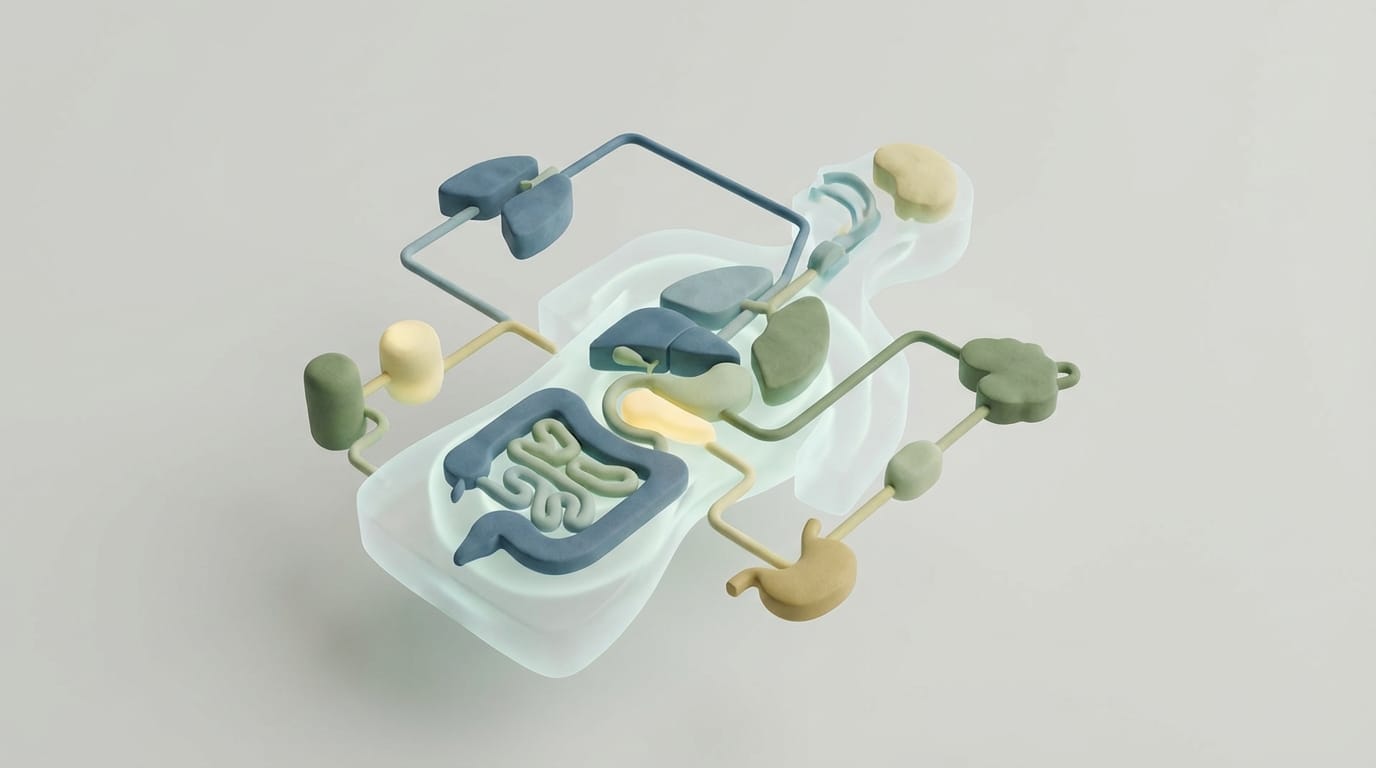
Recovery is rarely the work of a single organ. Instead, it is the result of a coordinated biological conversation where healthy systems actively volunteer resources to repair damaged tissue. This sophisticated process of inter-organ communication ensures that a wound or a fracture is treated as a priority by the entire organism rather than just the local site of injury. When we view healing as a systemic event rather than a localized repair job, we begin to understand how the body functions as a single, integrated circuit.
For a long time, medical science viewed organs as separate units. The heart pumped, the lungs breathed, and the liver filtered with little overlap in their primary functions. Modern research into biological signaling pathways has revealed a persistent, high-speed dialogue occurring across these boundaries. This dialogue is the fundamental mechanism that allows for optimizing post-workout recovery and systemic healing after traumatic injury. These pathways ensure that the body routes glucose, immune cells, and growth factors exactly where it needs them most.
To understand systemic healing, we must move beyond the bandage mentality. When a tissue is damaged, it sends out distress signals that act as a universal call to action. The speed and clarity of these signals determine how quickly a person can transition from the acute phase of injury back to full functional capacity. Whether you are managing a chronic condition or looking for a safe return to sports after injury, the integrity of these communication channels drives your progress.
The Biological Logic of Organ Signaling Networks
Moving Beyond Localized Healing Responses
The local response is only the first line of defense when you sustain an injury. While platelets form a clot and local immune cells begin clearing debris, distant systems manage the heavy lifting of repair. This represents the biological logic of systemic resource management; a damaged tissue lacks the metabolic machinery to heal itself in isolation. It requires the liver to increase protein synthesis, the bone marrow to produce new white blood cells, and the brain to manage pain and energy use.
This coordinated effort is a hallmark of metabolic homeostasis, which is a state where the body maintains a stable internal environment despite external shocks. By treating a local injury as a systemic event, the body prevents the damaged area from becoming a weak point that could compromise the entire organism. This network ensures that healing is not just about filling a gap in tissue, but about restoring the functional integrity of the whole system.
The Role of Biological Messengers in Body Stability
The primary vocabulary for this organ dialogue consists of cytokines and hormones. Cytokines are small proteins released by cells that have a specific effect on how cells interact. According to research from the Cleveland Clinic, cytokines act as chemical messengers that can travel great distances through the bloodstream to tell distant cells how to behave. They signal cells to divide, move toward an infection site, or increase their defenses.
These messengers create a feedback loop that maintains body stability. For example, if the gut detects a pathogen, it releases pro-inflammatory cytokines that signal the brain to induce a fever and the liver to produce specific proteins. This is not a series of disconnected accidents. It is a calculated, systemic response designed to help the body survive. The body is a single, integrated communication circuit where the signals of one organ become the critical data for another.
Secretory Factors and the Mechanics of Body Wide Dialogue
Exosomes and the Transfer of Genetic Instructions
While cytokines provide simple instructions, the body uses more complex data packets known as exosomes for nuanced repair tasks. Think of an exosome as a biological shipping container. It is a tiny bubble of fat that contains proteins, lipids, and even snippets of genetic material. When a healthy organ releases an exosome, it sends a set of genetic instructions that can reprogram the behavior of the recipient cell.
Research published in PubMed Central highlights how these vesicles facilitate inter-organ communication by transporting cargo across the bloodstream to distant sites. In the context of healing, a healthy liver might send exosomes to a damaged heart. These vesicles carry specific instructions that inhibit cell death and promote the growth of new blood vessels. This allows healthy organs to export their regenerative capacity to parts of the body that are struggling to recover.
Endocrine and Paracrine Signaling in Recovery
The mechanics of this dialogue are divided into two main categories: endocrine and paracrine signaling. Endocrine signaling is long-distance, involving hormones like cortisol or insulin that travel through the blood to reach targets anywhere in the body. Paracrine signaling is local, occurring between immediate neighbors. During systemic healing, the body must balance both to ensure a total recovery.
Long-distance signals dictate the general state of the body, such as whether it is in growth mode or survival mode. Meanwhile, paracrine signals fine-tune the local environment to ensure the repair is precise. The speed of these transmissions is vital. In acute recovery, a delay between an injury occurring and the brain receiving the signal can lead to excessive scar tissue. High-speed signal transmission ensures that the orders for repair arrive while the local environment is still ready for regeneration.
Using Inter-organ Communication for Regenerative Signaling
Recruiting Healthy Organs to Support Damaged Sites
One of the most exciting frontiers in medicine is the concept of regenerative signaling, where signals from healthy organs are recruited to speed up the repair of a damaged one. This moves beyond simply preventing disease and into the realm of active recovery. For instance, when muscle tissue is damaged in one limb, stem cells in the opposite, healthy limb enter an alert state. They do not migrate, but they prime themselves to divide faster if needed, triggered by signals in the blood from the injured site.
This systemic alert system means that healthy parts of the body are active participants in the healing process. By maintaining the health of your non-injured organs, you maintain a donor pool of regenerative signals that your body can tap into during a crisis. This is why overall systemic health is the greatest predictor of how well you will recover from a specific localized injury. The quality of inter-organ communication determines how effectively these healthy resources reach the injury site.
The Liver as a Metabolic Support Hub
The liver is the unsung hero of systemic repair. As the primary metabolic hub, it senses distress in distant tissues and responds by taking over the metabolic work of those tissues. If your skin is trying to heal a large wound, the liver increases its production of transport proteins to move nutrients and building blocks to the site. It also manages the metabolic dialogue necessary to control inflammation related to aging.
This metabolic offloading allows the damaged organ to focus all its available energy on cell division and structural repair. In a healthy system, the liver acts like a backup generator. It steps in to provide the energy and raw materials that the local injury site can no longer produce for itself. Using this systemic pool of growth factors through cross-organ triggers is a primary goal of modern recovery protocols.
The Brain and Gut as Central Communication Routers
Neurological Oversight of Physical Recovery
The nervous system acts as the high-speed data cable for the body’s organ status updates. The vagus nerve is the primary channel for the inflammatory reflex. When an organ is damaged, sensory nerves detect the change and send a signal to the brain. The brain then processes this data and sends a return signal via the vagus nerve to control the immune response, effectively acting as a volume knob for inflammation.
This neurological oversight ensures that the immune system does not overreact and cause secondary damage. Without this top-down control, local inflammation can spiral out of control, leading to chronic pain. Understanding this connection is why athletic recovery science emphasizes neurological rest just as much as physical rest. A fatigued brain cannot effectively manage the complex signaling required for rapid tissue repair.
The Microbiome and Systemic Signal Modulation
The gut is more than a digestive organ; it is a massive immune sensor that communicates directly with the brain and skin. This gut-brain-skin axis plays a decisive role in how quickly a wound closes. Bacteria in the gut produce metabolites that enter the bloodstream and act as signaling molecules. These metabolites can reduce systemic inflammation and even encourage stem cells to move toward the skin.
When the microbiome is healthy, it provides a clear signal that promotes healing. When it is out of balance, it creates background noise that can distract the immune system and slow down repair. This explains why nutrition is a pillar of recovery. You are not just eating for calories; you are eating to support the microbial messengers that tell your body it is safe to invest in regeneration.
Maintaining Signal Integrity for Faster Recovery
Lifestyle Factors That Clarify Internal Messaging
To maximize the speed of systemic healing, you must prioritize signal clarity. Sleep and circadian rhythms are the primary ways the body synchronizes organ schedules. During deep sleep, the brain flushes metabolic waste and the endocrine system releases growth hormones. Using a bedtime routine for adults is not just about feeling rested; it is about ensuring that your organs are synchronized for the next day’s repair tasks.
Physical activity is another powerful driver of signal integrity. When muscles contract, they release myokines, which are signaling proteins that act as anti-inflammatories and promote the repair of other tissues like the bone and brain. Regular movement keeps the communication lines open, ensuring that the regenerative signaling network remains ready for action. Without this regular input, inter-organ communication can become sluggish.
The Role of Nutrient Density in Signal Transmission
Signal transmission requires specific building blocks. The fatty acids that make up the membranes of exosomes must be of high quality to ensure they can merge with target cells. Micronutrients like magnesium and zinc act as helpers for the enzymes that produce these signals. Without a high density of these nutrients, the vocabulary of your internal dialogue becomes limited. Anti-inflammatory diets rich in omega-3s and antioxidants work by reducing the interference of oxidative stress. This allows the body’s natural repair signals to be heard clearly by every organ.
Systemic healing is a feat of biological engineering. By viewing our bodies as a network of communicating systems, we can make better decisions about how to support our own recovery. Whether you are healing from surgery or simply recovering from a hard workout, the goal is always the same: maintain the integrity of the conversation. When the brain, gut, and liver work in concert, the body’s capacity for regeneration is far greater than the sum of its parts. If you want to heal faster, do not just look at the injury. Look at the inter-organ communication network that supports it.