
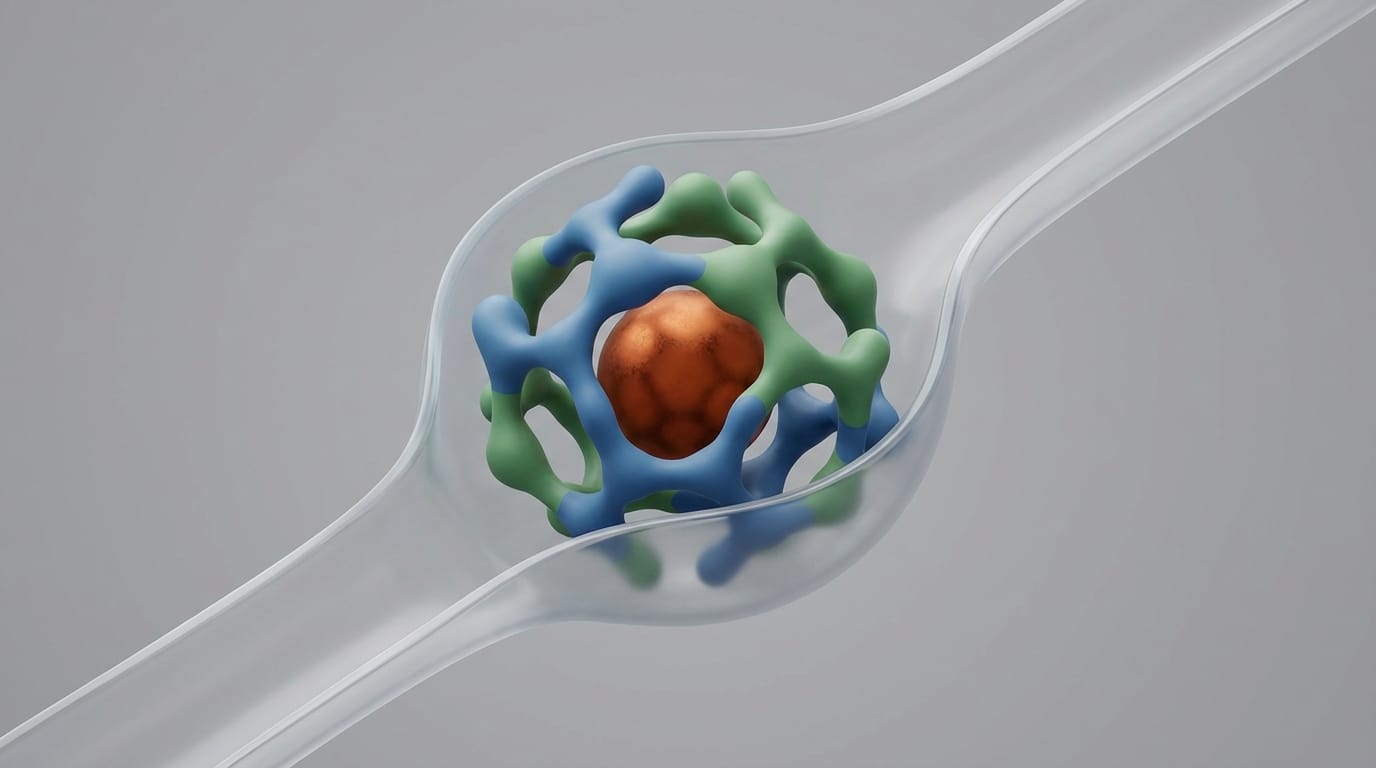
The Molecular Architecture of Chelated Iron
Standard iron supplements often fail because common minerals in your daily diet block their absorption before they reach your bloodstream. For many, the cycle of treating iron deficiency involves high-dose salts that cause digestive pain while barely raising ferritin levels. The solution lies in a structural shift to chelated iron, a form of the mineral that uses molecular engineering to bypass the body’s crowded absorption pathways. By changing how iron enters the system, chelation prevents other nutrients from interfering with uptake and protects the stomach lining from the stress of raw mineral salts. Understanding why this happens requires looking past marketing labels and into the biochemistry of how our intestines transport nutrients.
To understand why a chelate works better, we must first look at the makeup of a standard iron supplement like ferrous sulfate. These inorganic salts dissolve into free-floating iron ions when they hit the acidic environment of the stomach. These ions are highly reactive; they seek to bond with the first thing they touch, which is often the lining of your digestive tract or compounds like phytates found in grains and legumes. The process of chelation changes this dynamic by chemically bonding the iron ion to an organic molecule, such as the amino acid glycine. This creates a ring structure where the amino acid wraps around the iron to shield it. In the world of supplements, the most researched form is ferrous bisglycinate, where two glycine molecules hold one iron atom in place.
This bonding creates a chemically neutral compound that behaves differently than traditional minerals. Unlike iron salts, which carry a strong electrical charge that triggers reactions in the gut, a stable chelate remains whole throughout the stomach’s acidity. This structural strength is the foundation of its performance. By keeping the iron hidden within the amino acid, the supplement prevents the mineral from reacting early with the food in your stomach or the sensitive tissues of your digestive tract.
How Chelation Bypasses Competitive Absorption Pathways
The main advantage of this structure is the ability to navigate a biological limit called the Divalent Metal Transporter 1 (DMT1). Most minerals, including calcium and zinc, use this same doorway to move from the intestine into the blood. When you eat a meal high in calcium, those ions flood these transporters and effectively lock out any standard iron you might take. Chelated iron functions as a molecular Trojan Horse by ignoring the DMT1 pathway entirely. Because amino acids bind the iron, the body does not recognize it as a raw mineral but identifies the molecule as a protein instead. This allows the iron to move through specialized peptide transporters that remain separate from the mineral channels.
Research on mineral competition shows that when minerals are chelated, their absorption rates can be much higher because they do not have to wait in line behind calcium or zinc. This is why many people can take chelated supplements with meals, whereas they must take standard iron on an empty stomach to see any results. This efficiency mimics the way biological systems adapt to get the most nutrients from whole food sources. By using a different entry point, the body ensures that vital minerals reach the bloodstream even when other nutrients are present.
Improving Bioavailability Without Gastrointestinal Pain
The side effects associated with traditional iron, such as nausea and constipation, are not caused by the iron the body absorbs. They are caused by the iron the body fails to absorb. When ferrous sulfate stays in the gut, it breaks down and creates free radicals that irritate the intestinal wall. This irritation slows down the system and leads to the chronic constipation many patients report. Because chelated forms have a higher rate of absorption, there is simply less leftover iron to cause these issues. Clinical evidence suggests that lower doses of chelated iron can be more effective than massive doses of salts. For instance, a clinical trial found that 25 mg of iron bisglycinate worked as well as 50 mg of ferrous sulfate at maintaining hemoglobin levels, according to a study published in Biomedical Frontiers.
This efficiency allows for a much gentler approach to supplementation. By maintaining chemical neutrality, the chelate ring prevents the iron from reacting with the gut lining. This creates a cleaner transfer of energy, similar to how batteries move ions through a controlled medium to prevent internal damage. For the user, this means higher stored iron levels with only a fraction of the traditional discomfort. The body treats the supplement like food, which reduces the chance of rejection or irritation.
Critical Use Cases for Chelated Iron Therapy
While anyone with a deficiency can benefit, certain groups find the advantages of chelation vital for their daily health. Pregnant women face a massive increase in iron demand to support a growing baby and increased blood volume. In these cases, the high success rate of chelated iron is essential. If a supplement causes morning sickness or severe constipation, a patient might stop taking it, which puts her health at risk. Vegetarians and vegans also face a unique challenge because of phytates and oxalates. These compounds, found in spinach and whole grains, bind to iron and prevent it from working. Since amino acid claws shield chelated iron, it does not bond with these dietary blockers, making it the most reliable choice for plant-based diets.
Fitness enthusiasts and endurance athletes use iron to maintain hemoglobin, which carries oxygen to working muscles. During intense training, the body’s demand for repair increases while iron is lost through sweat and physical impact. Adding a chelated supplement into an athletic recovery protocol ensures that oxygen transport remains high without the sluggishness that could ruin a training schedule. The absence of digestive issues allows athletes to stay fueled and focused on their performance goals.
Identifying Effective Chelated Iron on Product Labels
Not all gentle iron products are the same. When shopping for a supplement, the first thing to check is the specific chemical name on the back of the bottle. You want to see Ferrous Bisglycinate or Iron Glycinate Chelate rather than Ferrous Sulfate or Ferrous Fumarate. The presence of an amino acid name is the primary sign that you are looking at a true chelate. It is also important to tell the difference between elemental iron and the total weight of the pill. A 150 mg pill of ferrous bisglycinate might only contain 27 mg of actual iron. This is normal because the rest of the weight comes from the amino acids doing the carrying. Because the absorption rate is so high, you do not need the 65 mg or 100 mg doses typical of inorganic salts.
Finally, look for third-party certifications that verify the bond between the iron and the amino acid is stable. If the bond is weak, the chelate will break apart in the stomach and turn back into a standard iron salt, which defeats the purpose of the premium form. Your choice of iron should work with your body’s existing logic to ensure your cells get exactly what they need for energy production. Using a stable chelate remains the most effective way to ensure your supplement does the job it was hired to do.
The Systemic Advantage of Precision
The shift from standard mineral salts to chelated iron forms represents a move toward precision delivery. By acknowledging that the human gut is a crowded and competitive environment, chelation allows iron to move through the system as a welcome guest rather than a reactive intruder. This matters because the goal of any supplement is to get nutrients into the cells where they can drive energy. As we continue to learn more about how nutrients work together, the importance of how we supplement will likely outweigh how much we take. Choosing a stable chelate ensures that your iron reaches its destination without causing unnecessary trouble along the way.