
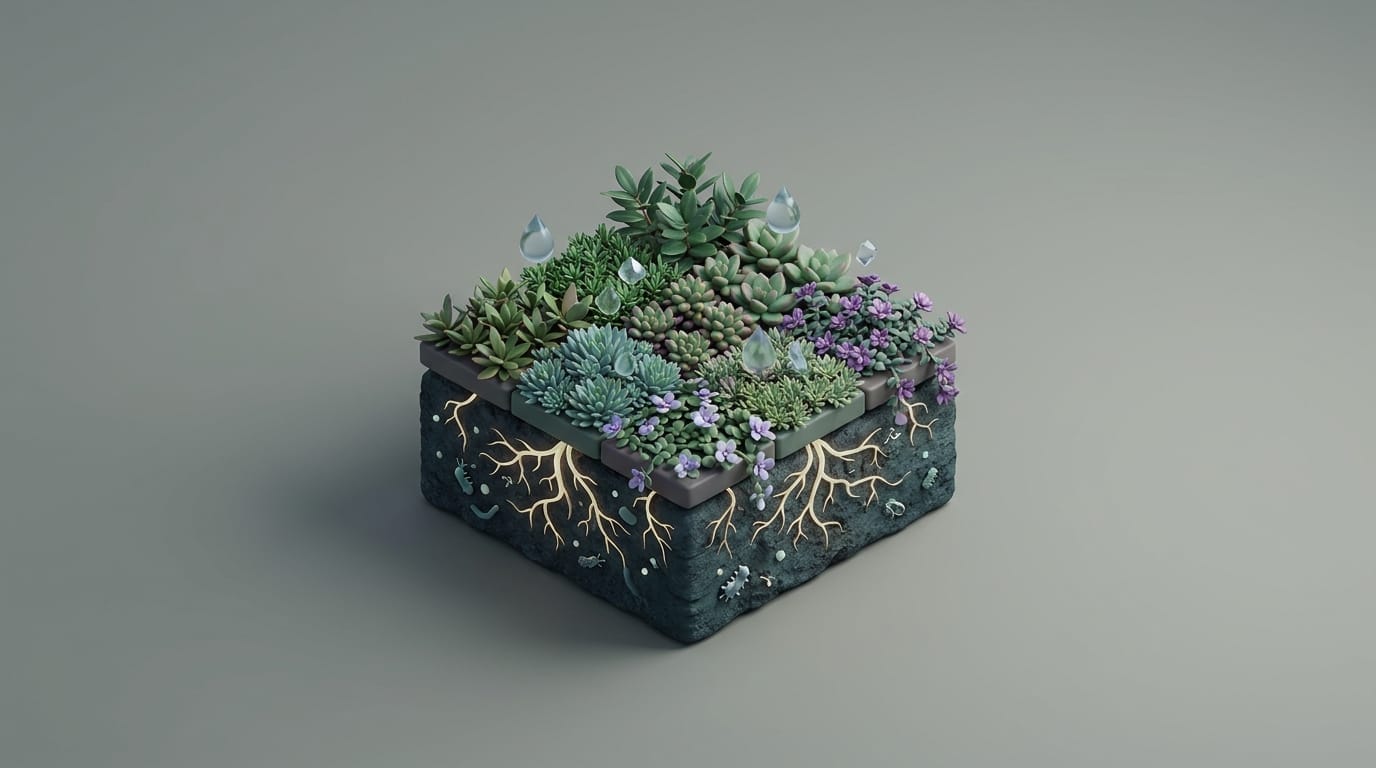
Treating garden soil as a static surface leads to a cycle of weeding and expensive mulching that fails to improve the land. When you rely only on wood chips or bark, you place a bandage over the yard rather than healing the ground. Using resilient groundcover plants creates a high-performance engine for your garden. These plants build soil structure while cutting down on seasonal work. This shift to a living carpet is more than a look; it is a move toward a better system. While mulch breaks down and needs replacing, groundcovers expand on their own. They create a strong mat that survives weather shocks. Knowing how these plants work with the soil helps you move away from the “mulch and weed” cycle. Modern garden design shows how xeriscaping design creates lush gardens without relying on turf. These plants solve the problem of bare soil by replacing a dead layer with a living one.
Why Resilient Groundcover Plants Outperform Passive Mulch
Gardeners often view wood mulch as a soil builder, but it acts as a passive input. It provides quick help with water and heat, yet it relies on external decay to help the soil. Over time, thick layers of mulch starve the soil of oxygen. They create a dry crust that stops water from reaching roots. This often causes garden failure where water beads on the surface. You may need to use specific methods to fix hydrophobic soil once this cycle breaks. Wood mulch also fails to compete with weeds since it merely buries their seeds. As it breaks down, it becomes a perfect spot for new weeds to grow. This forces you to add more mulch to stop the weeds the old mulch helped feed.
Active groundcovers serve as a living root system. Unlike dead wood, living plants pump carbon into the ground. Through sunlight, they make sugars to feed soil life. Research into farm management shows that carbon storage in the roots of perennial plants can reach 26% of their total mass. This creates a stable food source that mulch cannot match. This flow of energy acts like a straw. Soil fungi build tiny tunnels to get these sugars, which lets air into the ground without digging. This turns the soil into a sponge that holds water during dry times. By keeping a living root year-round, you ensure that soil life never goes hungry during the change of seasons.
Selecting Resilient Species for Variable Climates
Not all groundcovers are the same. When picking resilient groundcover plants, you must look at light and foot traffic. For areas where people walk, Creeping Speedwell or Creeping Thyme work well. Their growth nodes sit low to the ground to avoid damage from heavy steps. For hot, sunny spots, succulents like Blue Chalksticks or Sedum store water in their thick leaves to beat the heat. These types stay green even when the rain stops, keeping the soil covered and cool.
In regions with harsh winters, plant structure matters. Many owners now avoid the artificial turf environmental impact by using evergreen types. Plants like Creeping Juniper keep the soil safe even when they are not growing. These varieties do not lose leaves in winter, which stops wind from blowing soil away and keeps the ground warm through the frost. Native species usually have an edge because they know the local pests and weather. However, some hardy non-native plants can fill gaps where natives struggle. For example, Asiatic Jasmine resists fungus in wet, humid air. In many areas, plant guides for heat-hardy zones show that even slow growers can cover a bed in two years if you start with good soil.
Design Strategies for Year-Round Coverage
A common mistake is planting only one species. If a pest or disease hits that plant, the whole garden fails. A mixed planting uses different heights and types to create a stable system. By mixing low plants like Ajuga under taller ferns, you create a thick canopy. This mat traps water and stops weeds better than a single plant could. A diverse mix also supports more birds and bugs, which helps keep pests under control without using sprays. This living tapestry changes with the seasons but never leaves the ground bare.
You should also plan for the times between seasons. While some groundcovers have great fall colors, they leave soil bare when their leaves drop. Mixing in evergreen types keeps the soil covered year-round. This stops rain from washing away food for the plants in spring. Using Wild Geranium offers early flowers while evergreens like Creeping Phlox keep the base of the bed strong. This layered approach ensures that the ground stays protected from the first thaw to the last freeze. When you mix different growth habits, you fill every gap in the garden beds.
Installation Techniques for Fast Growth
Common garden prep often involves digging and tilling, but this does more harm than good. Tilling breaks up soil life and brings weed seeds to the top. A no-dig method works better. You can lay a thin layer of compost and plant right through it. This keeps the soil’s inner paths intact. This choice allows resilient groundcover plants to tap into deep moisture right away. By keeping the soil firm, you also prevent erosion during the early stages of growth when the plants are still small.
How fast a garden fills in depends on your spacing. While it is tempting to save money by spacing plants far apart, gaps let weeds in. For most types, a gap of 12 to 18 inches is standard. For faster results, many experts suggest using growing plugs for faster coverage. These small plugs have a better root-to-top ratio than large pots. They grow faster in native soil and survive more often. Using plugs also lets you plant more densely without a huge cost. This leads to a closed canopy in months rather than years.
Keeping a Self-Sustaining Living Carpet
The fast growth that makes resilient groundcover plants strong can also make them spread too far. Using hard edges like stone or steel stops them from moving into other beds. Some plants spread by runners on top of the soil, while others use roots under the ground. Knowing which one you have helps you plan your work. For runner types, a quick edge cut once a year keeps them in place. This simple task prevents the plants from taking over the lawn or walkways. It keeps the garden looking neat while allowing the plants to thrive in their own space.
Groundcovers also work well under big trees. Since plugs have small roots, you can plant them near trees without hurting the tree’s own roots. This living layer keeps tree roots cool and helps turn fallen leaves back into soil food. As the garden grows, you will need to feed it less. The mix of living roots and old leaves creates a cycle that feeds itself. Moving from mulch to a living carpet turns your yard into a system that works for you. By picking a living root, you create a garden that pulls carbon and builds soil every day. The result is a yard that needs less work and offers more for nature. This self-feeding loop ensures the soil stays rich without adding store-bought fertilizers every spring.
