The artificial turf environmental impact reaches far below the plastic blades, changing how the ground interacts with the air and the life beneath the surface. Property owners often see synthetic grass as an easy way to save water, but they frequently miss the deeper thermodynamic and biological costs. By replacing living plants with plastic, humans turn a cool, carbon-storing space into a heat-absorbing mass that needs mechanical help to stay usable. This shift creates a ripple effect that touches everything from local air temperatures to the health of the groundwater. Understanding these hidden trade-offs helps urban planners and homeowners look past the green color to see the physical reality of engineered surfaces.
When we look at a plot of land, we are looking at a living stack of biological layers. In a natural environment, grass blades, decaying organic matter, and complex root zones work together to manage energy. They use moisture to cool the air and build soil structures that filter water. Synthetic systems break these natural links. They replace living tissue with polyethylene fibers and engineered drainage that react to the sun with high intensity. This creates a site that no longer breathes or heals itself. Instead, it becomes a static product that slowly degrades while pushing heat and runoff into the surrounding neighborhood.
How Artificial Turf Manages Thermal Energy Transfer
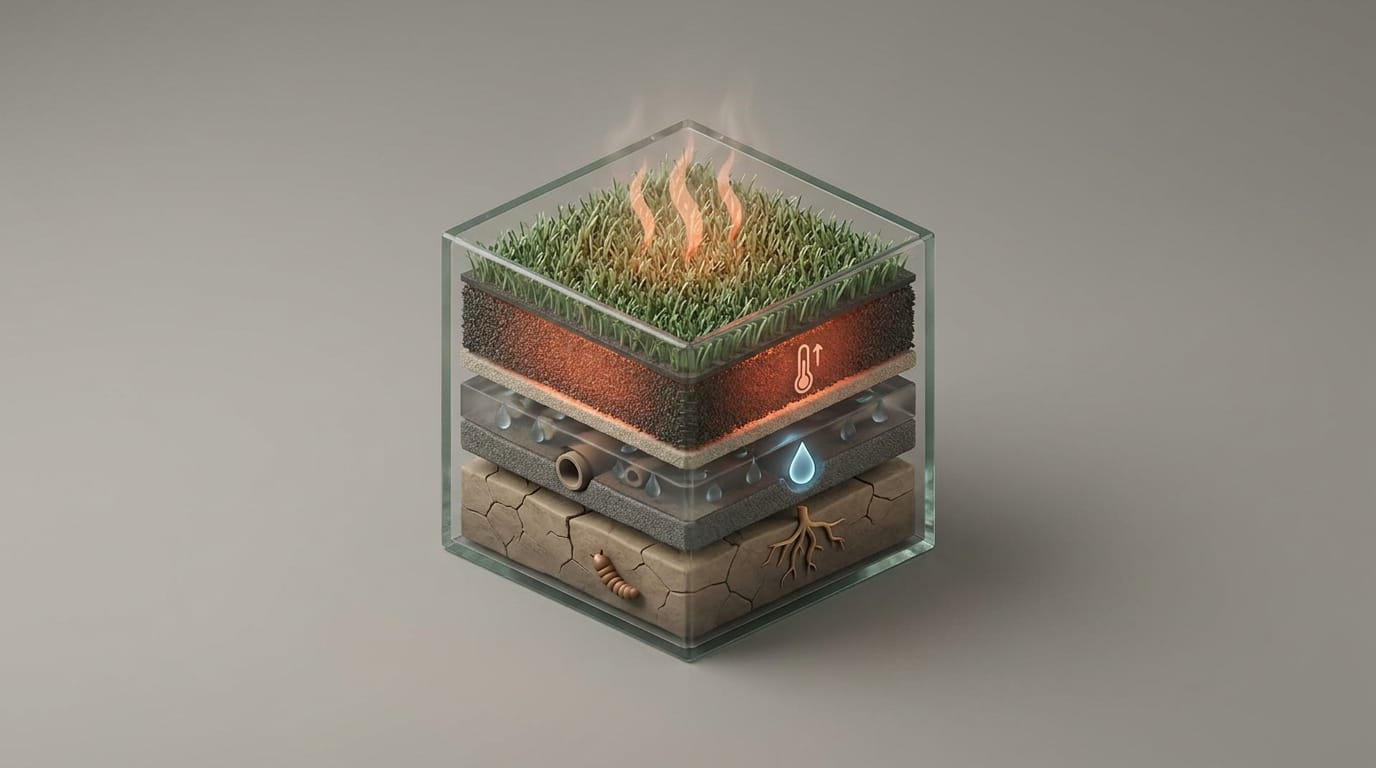
The way synthetic grass handles heat is a direct result of what it is made of. Unlike living plants, which use solar energy to drive atmospheric circulation and stay cool, synthetic turf acts as a thermal sponge. Modern turf consists of polyethylene or polypropylene fibers that have a low specific heat capacity. This means the material needs very little solar energy to get hot. Because the fibers cannot sweat or move water, they have no way to shed this energy. The heat simply builds up until the surface becomes significantly hotter than the air around it.
One major factor in the artificial turf environmental impact involves this thermal regulation. In a natural setting, plants move water from the soil into the air through a process called transpiration. This process uses up heat energy, which keeps the surface temperature close to the ambient air temperature. Synthetic fibers lack this biological mechanism. When the sun hits a plastic field, the energy stays in the fibers as sensible heat. This creates a localized heat dome that can make outdoor spaces uncomfortable or even dangerous during the brightest parts of the day.
Solar Absorption Rates of Polyethylene Fibers
Polyethylene fibers are built to last and resist fading, but their chemical structure makes them absorb solar radiation quickly. On a clear day when the air is 90°F, the surface of a synthetic lawn can climb to between 140°F and 170°F. These findings appear in detailed studies on urban heat balance, which show that plastic surfaces often double the heat of nearby natural grass. The fibers hold this energy because they are surrounded by air, which is a poor conductor, and sit on top of infill materials that are designed to trap heat.
Most infill consists of crumb rubber or coated sand. Crumb rubber, often made from recycled tires, is particularly effective at holding thermal energy. As the fibers get hot, they pass that heat down into the infill layer, creating a thick reservoir of energy. This stored heat does not just stay on the surface; it warms the air immediately above the ground, contributing to a hotter microclimate. This effect makes it difficult for surrounding plants to survive and forces people to use more energy for cooling nearby buildings.
The Contrast Between Daytime Heat and Rapid Sunset Cooling
The thermal behavior of synthetic grass changes sharply when the sun goes down. While it causes a spike in the urban heat island effect during the day, it behaves differently at night. Because synthetic systems have less total mass and no water-bound thermal storage compared to deep-rooted natural soil, they can lose their heat fast once the sun disappears. This creates a rapid temperature swing that can stress local wildlife and change the way air moves through a yard at night.
According to technical findings from environmental agencies, synthetic surfaces can sometimes stay a few degrees cooler than natural grass at night. The thin plastic blades lose heat to the clear sky through radiation more efficiently than a moisture-heavy lawn. However, this small nighttime cooling does not make up for the extreme heat of the day. The daytime temperature spikes are so high that they often make the site unusable for hours, and the rapid cooling at night does nothing to help the soil life that was baked during the afternoon.
Why Synthetic Surfaces Permanently Alter Soil Microbiology
Underneath a synthetic lawn, the soil undergoes a total transformation. In a natural habitat, soil acts as a living skin for the planet. It breathes by exchanging oxygen and carbon dioxide with the atmosphere and supports billions of organisms. When a synthetic system is installed, workers strip away the topsoil and seal the ground with plastic backing and weed barriers. This process effectively shuts down the biological activity that keeps the ground healthy and productive.
The Biological Desert Beneath the Base Layer
The installation of artificial turf requires a flat, stable surface, which means removing the organic topsoil. This layer is the most active part of the ground, filled with the nutrients and microbes that drive the carbon cycle. Installers replace this living dirt with a compacted layer of crushed stone. While this stone base provides stability, it acts as a wall that stops soil life from thriving. Without falling leaves, dying roots, or grass clippings, the organisms that live in the dirt have nothing to eat.
Over time, this creates a biological desert. Earthworms, which normally tunnel through the soil to move air and water, disappear because they cannot penetrate the stone base or find food. Beneficial insects and fungi that help plants grow also die off. The lack of these organisms means the soil can no longer maintain its own structure. It becomes a hard, dead mass of minerals that cannot support life even if the plastic is later removed. This loss of biodiversity is a permanent part of the artificial turf environmental impact that rarely appears in marketing brochures.
Impact of Restricted Air and Gas Exchange on Microbial Life
Living soil needs a constant flow of gases to stay healthy. Aerobic microbes require oxygen to break down organic matter and keep the soil from turning sour. Synthetic turf backings, even those with drainage holes, significantly limit this gas exchange. When the air cannot move freely through the soil pores, oxygen levels drop, and anaerobic conditions take over. These conditions often lead to the buildup of gases like methane and hydrogen sulfide, which are toxic to most beneficial life forms.
In a healthy garden, people might use natural fungi to manage pests and keep the environment in balance. These biological tools fail in the sterile, high-heat environment under a synthetic lawn. The heat from the surface often travels deep enough into the ground to kill the remaining microbes that might have survived the lack of air. This results in a ground profile that is structurally stable but biologically dead, serving only as a platform for a plastic product rather than a functional part of the local environment.
How Drainage Systems Influence the Artificial Turf Environmental Impact
Manufacturers often market synthetic grass as a solution for drainage problems because it does not turn into mud. While it is true that water moves through the system quickly, the way it moves creates new environmental challenges. The hydrology of a synthetic field is built on engineering rather than biology. Natural soil slows down rainwater, filters it, and lets it soak into the ground. Synthetic systems do the opposite, moving water away as fast as possible, which can cause trouble for local waterways.
Permeability Ratings vs Real-World Runoff Velocity
Most modern turf products have holes in the backing that allow water to drain at a high rate. On paper, these systems drain better than many types of natural soil. However, the speed of the water is the problem. Living grass and its thatch layer act as a filter and a brake, slowing down the flow of rain. Synthetic fibers are smooth and offer little resistance. During a heavy storm, the water can rush across the surface and through the stone base with a lot of force.
Data from local engineering reports, such as the Centennial Field study, show that these systems can produce runoff rates similar to hard pavement. During a major storm, a synthetic field might shed more than half of the water that hits it almost immediately. This rapid flow can overwhelm city storm drains and cause erosion in nearby streams. Because the water does not stay in the soil, it also fails to refill local groundwater levels, which can lead to drier conditions for surrounding trees and plants.
The Role of Crushed Stone Bases in Hydrological Filtration
Installers put a thick layer of crushed stone under the turf to hold water temporarily. This stone layer acts like a storage tank during light rain, but it does not work like a natural filter. Natural soil has the power to break down pollutants through chemical and biological reactions. The crushed stone base is inert, meaning it cannot clean the water as it passes through. Any chemicals or debris on the surface of the turf go straight into the stone and then into the environment.
This lack of filtration is especially concerning when it comes to microplastics. As the plastic blades age, they become brittle from sun exposure and friction. Small fragments of polyethylene break off and get washed down into the stone base. From there, they enter the local watershed. Natural ground would trap and eventually break down many organic materials, but the engineered stone base allows these synthetic particles to travel deep into the water system. This contributes to the growing problem of plastic pollution in rivers and oceans.
Maintenance Realities and Material Lifecycle Constraints
Many people choose synthetic grass because they believe it requires no work. In reality, the maintenance simply changes from biological tasks like mowing to mechanical and chemical tasks. Because the surface is not self-healing, it requires human intervention to stay clean and upright. Understanding the artificial turf environmental impact requires a look at the full product lifecycle, from the energy used to make the plastic to the massive amount of waste it creates at the end.
Why Sanitization and Grooming Replace Traditional Mowing
In a living yard, nature takes care of cleaning. Microbes in the soil break down bird droppings, fallen leaves, and pet waste. Synthetic turf cannot do this. Organic matter gets stuck in the plastic fibers and the infill, where it can rot and cause smells. To fix this, owners must use chemical cleaners and biocides to kill bacteria. This introduces new chemicals into the yard that would not be necessary with a natural lawn. The system also requires regular brushing with heavy machines to keep the fibers from laying flat, as they lack the natural strength of living plants.
End-of-Life Disposal and Recyclability of Composite Plastics
The biggest environmental hurdle comes when the turf reaches the end of its life, usually after 10 to 15 years. A synthetic lawn is not a simple piece of plastic; it is a complex mix of different materials glued together. The polyethylene blades are attached to a polyurethane or latex backing, which is then filled with thousands of pounds of sand or rubber. Separating these parts so they can be recycled is extremely difficult and expensive. Because of this, almost all old turf ends up in landfills.
A single sports field can weigh hundreds of thousands of pounds, most of which is plastic and rubber that will not break down for centuries. This creates a massive waste legacy for a product that was sold as a green alternative. Property owners might find more success by using eco-friendly weed control and landscaping methods that support the soil rather than replacing it. By keeping the ground alive, they ensure the land can continue to process waste naturally rather than creating a mountain of plastic trash for the future.
Choosing artificial turf means trading a living system for an engineered one. While the immediate look of a green lawn without mowing is tempting, the long-term costs to the soil and the local climate are high. The sterile ground, the high heat, and the constant shed of microplastics represent a debt to the environment. As cities look for ways to handle a changing climate, the best path forward involves working with natural systems. Replacing the living earth with plastic proxies might solve a short-term chore, but it leaves behind a biological desert that is hard to fix. True sustainability comes from supporting the life in our own backyards, not from sealing it away under a layer of polyethylene.