
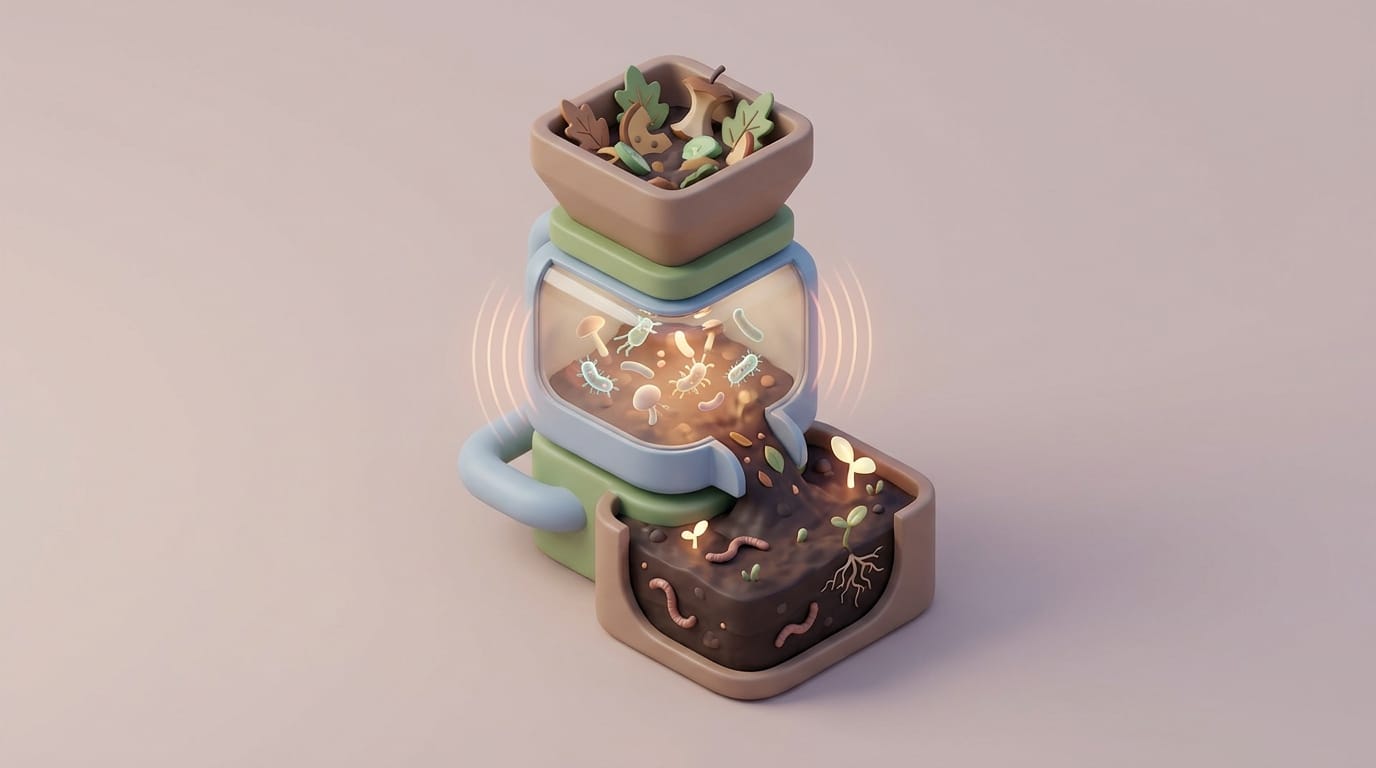
While many gardeners view composting as a way to recycle kitchen scraps, the true power lies in building a complex biological engine. Through living soil composting, you change from a waste manager to a biological builder, growing a self-sustaining habitat where microbes do the work of delivering nutrients. This approach shifts focus from chemical fertilizers to the biology of the soil food web to create an asset that improves with age.
Unlike chemical gardens that need constant inputs, a living soil system works as a probiotic for your plants, providing the minerals and enzymes they need when they need them. This structural approach to health turns dirt into a thriving community capable of storing carbon and fighting disease. By focusing on life rather than just chemistry, you ensure your garden remains productive and resilient without relying on external salt-based feeds.
The Difference Between Dead Dirt and Living Soil
To understand why living soil is better, you must first tell the difference between dirt and soil. Dirt is a simple collection of mineral particles like sand, silt, and clay that lacks the biological glue necessary for plant health. It acts as an empty container. Living soil instead functions as a busy biological habitat where structure matters more than chemistry. The physical layout of these soil particles dictates how air and water move through the root zone.
Chemical fertilizers often provide a quick growth spurt, but they come with a hidden cost. These salt-based nutrients can dry out soil microbes and break the natural bond between plants and bacteria. Over time, using these chemicals leads to a breakdown of soil structure, which makes it harder for roots to grow and reduces the ground’s ability to hold water. This explains why plants in chemical systems often struggle during dry spells, as they lack the deep, strong networks that living soil composting provides.
By investing in a living system, you build a permanent asset. While wood mulch or bark might provide a temporary cover, groundcover plants build better soil by continuously moving carbon into the ground. Living soil improves every season as fungal networks grow and bacterial colonies stabilize, creating a bank of fertility that expands rather than fades away.
The Soil Food Web as a Biological Engine
Seeing your garden as a biological engine helps clarify the roles of the various organisms involved. In this engine, the fuel is organic matter, and the pistons are the members of the soil food web. Bacteria and fungi act as the primary workers, serving as the first responders to any organic waste added to the pile. They break down complex proteins and sugars, locking those nutrients into their own tiny bodies to prevent them from washing away.
The Role of Predators in Moving Nutrients
The real magic happens when larger organisms enter the system. Protozoa and nematodes act as the predators of the soil world by eating the bacteria and fungi. Because these predators need less nitrogen than the microbes they consume, they release the extra as ammonium that plants can use. This process ensures a slow, steady release of nutrients exactly where the roots can reach them, which works much like a timed-release vitamin.
Creating a Probiotic Supplement
When you use living soil composting, you are not just throwing away trash; you are building a concentrated source of beneficial biology. This probiotic approach ensures that when you add compost to your garden, you introduce the workers along with the raw materials. This is more effective than adding raw minerals alone, because the microbes actively protect plant roots from germs while helping the plant take in minerals.
The Needs for Aerobic Decomposition
For your biological engine to run at top speed, it needs an environment rich in oxygen. Aerobic breakdown is powered by microbes that breathe oxygen, and their activity prevents the buildup of smelly gases like ammonia. Keeping this balance requires attention to the fuel you provide, specifically the carbon-to-nitrogen ratio.
Balancing Carbon and Nitrogen Ratios
In the world of composting, materials fall into two groups: Browns and Greens. Browns, such as dried leaves and cardboard, provide the energy for microbial life. Greens, like kitchen scraps and fresh grass, provide the protein needed for microbes to multiply. A common goal is a ratio of thirty parts carbon to one part nitrogen, which provides enough energy to keep the pile moving without creating a shortage. If you want to reduce waste while feeding your soil, you can grow vegetables from scraps to create a closed-loop system in your own kitchen.
The Key Role of Oxygen and Moisture
Microbes live in the thin film of water surrounding soil particles. If the pile is too dry, they stop working; if it is too wet, water squeezes out the oxygen, leading to bad smells and rot. The goal is to keep the pile feeling like a wrung-out sponge. Good airflow is just as vital, as it prevents the growth of germs that can harm your plants. A well-aired pile marks the difference between a productive engine and a stagnant heap of waste.
Managing the Phases of Microbial Heat in Living Soil Composting
As microbes consume organic matter, they produce heat as a byproduct of their life processes. This heat is not just a sign of activity; it is a tool for cleaning the soil. During the first phase, moderate-temperature bacteria start the breakdown. As their numbers grow, the pile enters a hot phase where temperatures can reach between 131 and 170 degrees. Currently, keeping temperatures above 131 degrees for several days is the best way to destroy germs and stop weed seeds from growing, according to the EPA’s guidelines on composting approaches.
However, high heat is only a temporary stage. If a pile stays too hot for too long, it can kill off the helpful fungi that your soil needs for long-term structure. The shift to the ripening phase is where the most complex acids form. During this cooling period, the biological engine moves from fast breakdown to structural refinement, creating the dark, crumbly humus that defines high-quality living soil.
Changing from Waste Management to Soil Building
Once you understand the mechanics, you can optimize your compost for specific goals. One of the best ways to jumpstart a new pile is through starting it with active biology. By adding a handful of finished compost or forest floor soil, you introduce local microbes that already thrive in your climate. This ensures that your living soil composting process is led by the strongest local workers.
How to Use Compost for Maximum Impact
The way you use your finished compost matters as much as how you make it. Modern soil building favors top-dressing over tilling. Tilling acts like an earthquake to the soil food web, breaking fungal strands and collapsing the air pores that microbes need to survive. By spreading compost on the surface, you let earthworms and rain move the nutrients naturally, which keeps the delicate layers of the soil system safe.
For a more targeted boost, many gardeners use compost tea, which is a liquid extract of the compost’s life. When sprayed on leaves or poured on roots, it acts as a shield by taking up the space where harmful fungi might otherwise land. This method helps in stopping the fungus gnat life cycle by introducing predatory microbes that hunt pest larvae beneath the surface.
Long Term Benefits of a Living System
The ultimate goal is to create a self-sustaining system that needs very little help over time. One of the most visible benefits is better water storage. As microbes process organic matter, they produce glues that bind soil particles into small clumps called aggregates. These aggregates work like tiny sponges. Increasing soil organic matter by just one percent can increase water storage by up to 16,500 gallons per acre, according to the Noble Research Institute. This makes your garden much more resistant to drought.
Beyond water, a diverse living soil provides natural pest and disease control. When the soil is full of helpful life, there is no room or food for germs to take hold. This biological competition reduces the need for chemical sprays, which often do more harm than good by killing the microbes that protect the plants. If your soil has become hard or sheds water over time, focusing on biology is the most effective way to fix hydrophobic soil permanently.
The financial and ecological value of this system is significant. By building your own soil biology, you remove the need for expensive chemical products and reduce your impact on the environment. You are not just growing plants; you are caring for a living legacy that will continue to provide value as it ages. Building a biological engine through composting moves us away from the old model of modern gardening. When you view your soil as a living thing rather than a blank slate for chemicals, you unlock the natural power of the earth. By managing heat, balancing fuel, and protecting structure, you create a place where plants thrive with minimal help.