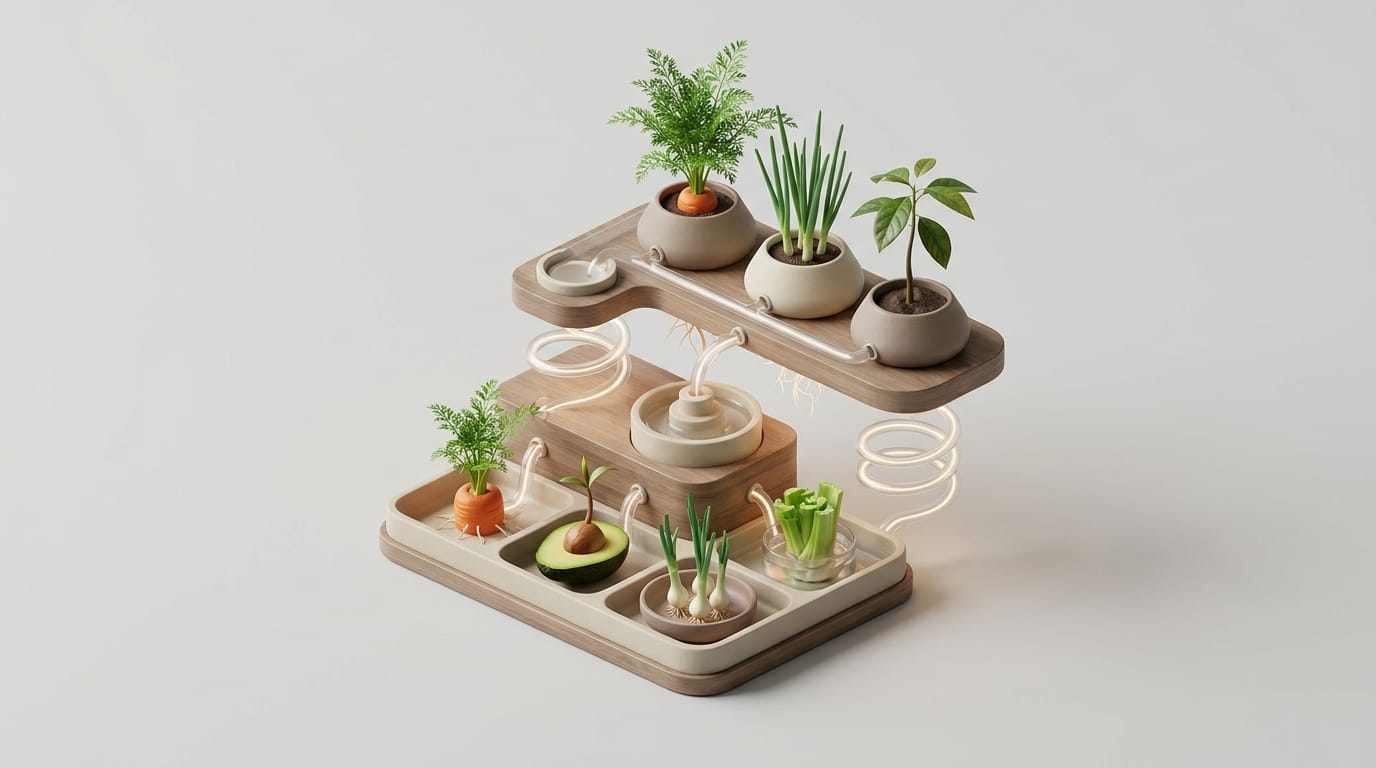
Your kitchen trash contains the potential to start an entire garden for free if you know how to unlock it. While many see a wilted leek or a sprouted potato as waste, these scraps are dormant engines waiting for the right triggers to grow again. Learning to grow vegetables from scraps is a simple way to reduce waste while exploring the basic systems of plant biology and self-sufficiency.
Placing a celery heart in a bowl of water does more than just restart the plant. This process, known as vegetative propagation, is a form of natural cloning that skips the traditional seed cycle. The system uses specific cells that allow a mature plant to grow new roots or leaves from a small piece of its body. Understanding this process changes how you view your grocery list. Instead of seeing produce as a finished product, you begin to see it as a collection of living parts. By managing light and water, you can turn one trip to the market into a cycle of fresh food.
The Science Behind How You Grow Vegetables from Scraps
The ability to regrow food depends on growth cells called meristematic tissue. These cells are like stem cells for plants because they can divide and change into any type of plant part. In lettuce or onions, these cells stay near the base where the roots once met the stem. When you cut the plant and add moisture, these cells receive a signal to build new structures. Success starts with finding this growth engine. For onions and leeks, the engine is the firm disk at the bottom. If you cut too high and remove this tissue, the scrap will simply rot.
For herbs like basil or mint, the growth potential lies in the nodes. These are the small bumps on the stem where leaves once grew. These nodes contain the blueprints for roots that grow from non-root tissue, as explained in this guide on plant propagation from the University of Florida. It is helpful to realize that regrowing a scrap is cloning, not starting a new life. The plant you grow is the same age as the original. Because it is already mature, it often tries to produce seeds faster than a young seedling would. You are managing a survivor that is racing to finish its life cycle.
Vegetables That Grow in Water
Water immersion is the easiest starting point because it only requires a shallow dish and a sunny window. This works best for head vegetables and bunching onions that have already built their cellular structures. A clean, wet environment triggers the plant to push out new leaves from its center using sugars stored in the base. This method keeps the process visible and easy to manage for beginners.
- Green Onions: Cut the white base an inch from the roots and stand it in a small jar. Use just enough water to cover the roots while leaving the top exposed to air.
- Celery and Bok Choy: Cut the base two inches thick and place it in a shallow saucer of water. New leaves will grow from the center of the heart within a few days.
To keep the plant healthy, change the water every day or two. Water that sits too long loses its oxygen, which allows germs to grow. You can expect to harvest greens within two weeks, though these water-grown plants often have a milder flavor. They lack the minerals found in soil, so this stage should be temporary. For a long-term project, you must eventually move these clones into dirt.
Root Crops That Need Soil
While lettuce can live in a saucer for a while, root-based scraps like sweet potatoes or ginger need a medium with nutrients. These plants use storage organs designed to stay underground. Their growth cycles often follow seasonal patterns, staying dormant until they feel warmth and moisture. Sweet potatoes are unique because they grow tiny shoots called slips from the skin. You can start these in water, but they must be moved to deep, loose soil to form new tubers. Using organic produce helps here, as some grocery store items are treated to stop them from sprouting.
Ginger and turmeric are tropical roots that make excellent houseplants. To regrow them, look for pieces with a small, light-colored bud at the tip. Plant these an inch deep in warm soil that drains well. These plants grow slowly and need temperatures stay above 70 degrees. They create lush, green foliage that brightens a room, and you can harvest small pieces of the root while the rest of the plant continues to grow.
Moving Plants from Water to Soil
The most common point of failure when you grow vegetables from scraps is the move from a water jar to a soil pot. Roots grown in water are different from those grown in dirt. Water roots are fragile and lack the tiny hairs needed to pull moisture from soil. When you move the plant, it faces significant stress. To help it survive, wait until the roots are at least an inch long. When you first pot the plant, keep the soil wetter than usual for a week. This keeps the water roots hydrated while the plant builds stronger soil roots.
The plant might wilt at first, but this is a normal part of the shift. Using local garden supplies like high-quality potting mix helps ensure the soil has the right balance of moisture and air. This transition is the bridge between a kitchen experiment and a sustainable source of food. Once the plant adjusts to the soil, it can access the minerals it needs to develop a full flavor profile.
Handling Early Flowering and Seeds
Regrown scraps often bolt, which means they quickly grow a tall stalk and produce flowers. Many people see this as a failure because it makes the leaves taste bitter. However, this is a great opportunity for your garden. Because your scrap is biologically mature, it is ready to reproduce. A single lettuce base that flowers can produce hundreds of seeds. Letting the plant finish this cycle allows you to move beyond cloning.
Plants grown from these seeds will be stronger and more productive than the original scrap clone. According to experts at Gardenary, regrowing is often more about learning the life of a plant than just producing food. To collect seeds, wait until the flowers dry out and turn into fluff or brown pods. Shake the seeds into an envelope and keep them in a cool place. By doing this, you have turned a kitchen scrap into a complete reproductive loop.
Troubleshooting Common Problems
Even with care, scraps can sometimes turn into a mushy mess. This usually happens because of water quality or a lack of light. If your tap water has a lot of chlorine, it can hurt the new growth cells. Leaving the water out for a day before use allows the chlorine to escape. Light is another major factor. A windowsill might look bright, but it is often not enough for a plant building new organs. If the greens look thin and pale, they are stretching for more sun. Ensure they get six hours of direct light or use a small LED light to help them grow.
A major goal when you grow vegetables from scraps is to keep the growth tip dry. If the area where new leaves emerge gets submerged, it will rot. Keep the base in the water but the top in the air. If you see white mold, wipe it off and move the plant to a spot with better air flow. Regrowing food is a lesson in how life persists. By watching a celery base rebuild its entire system, you gain a better understanding of the food that supports us. The shift from being a consumer to a participant in this cycle is the real reward for your efforts.
Starting Your Kitchen Garden
Start with a bunch of green onions this week to see how quickly they react. Once you harvest the first round of greens, try moving the base into a pot of soil. Observing this tiny system every day prepares you for the challenges of a larger garden. This simple practice turns your kitchen window into a place for sustainable living and provides a fresh supply of food with almost no cost.