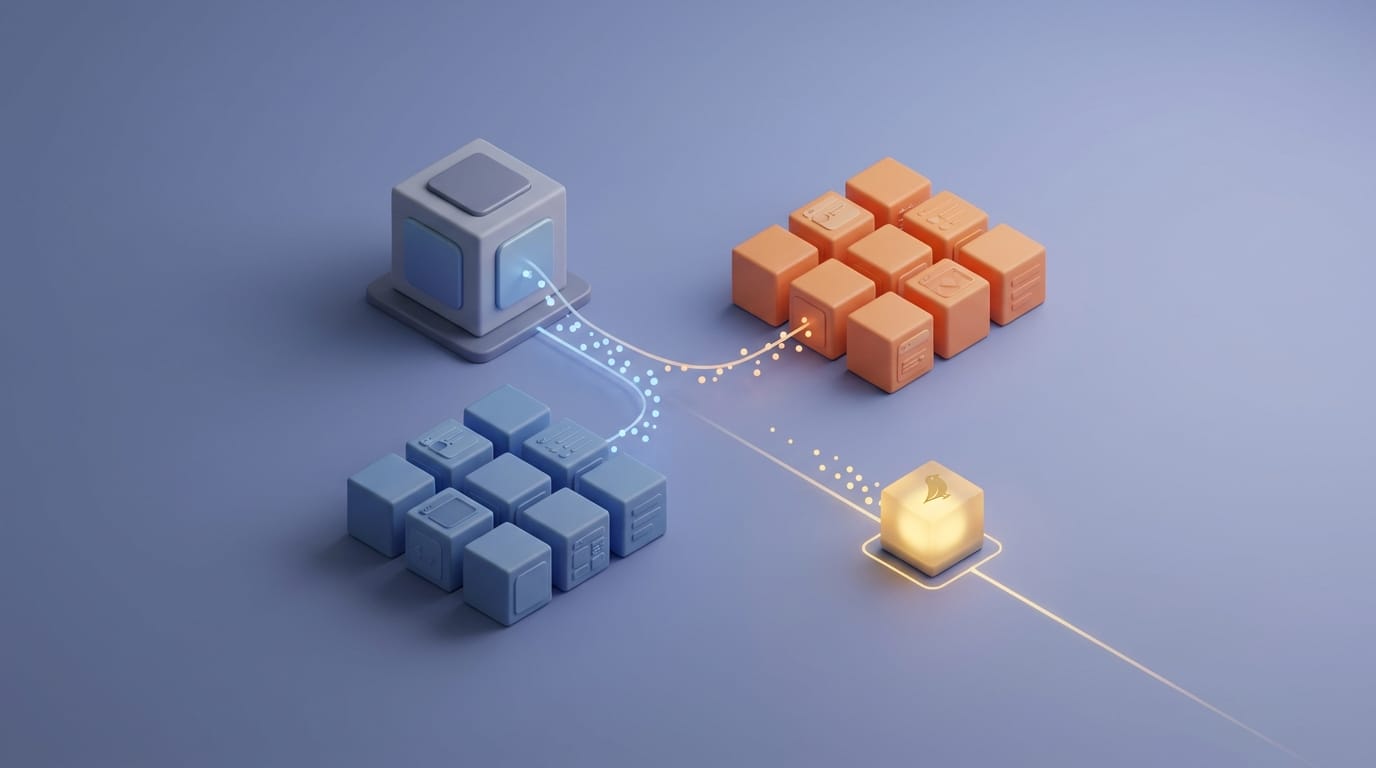
When your mobile app looks different than the version on your neighbor’s phone, you are seeing a high-stakes experiment rather than a glitch. This divergence happens because engineers use canary releases vs a/b testing to manage how code enters the real world without breaking the systems we rely on daily. Modern software is no longer a finished product. It is a living set of variables that shift based on who is using them at any given moment.
In the past, companies delivered software like physical books. Once the factory shipped the product, the contents stayed the same until the next edition. Today, applications act more like modular stages in a theater. Crews can swap the scenery mid-performance without the audience noticing the stagehands. This shift from massive updates to small rollouts allows companies to innovate fast while lowering the risk of a global digital outage.
The Reality of Asynchronous Software Delivery
The reason you might lack a feature that your friend already uses is rarely due to a slow download or a weak phone. Instead, the platform makes a choice to segment its user base. By staggering the release of new features, engineering teams watch how their code behaves in the real world without exposing everyone to potential failure. This asynchronous delivery model responds to the rising complexity of modern software.
When an app connects to dozens of other services, one line of code can trigger a chain reaction that crashes a server across the globe. To stop this, teams use progressive delivery models that favor stability over speed. Segmented releases act as a shield for the majority of users. If a new update contains a flaw, only a tiny fraction of users (perhaps 1% or 5%) will experience the bug. This approach ensures the system stays strong, allowing engineers to pull the update before it touches the rest of the population.
Canary Releases for Technical Stability
The term canary release comes from the old practice of miners carrying birds into coal mines. Because the birds felt toxic gas faster than humans, they provided an early warning. In software, the canary is a small group of users who get an update first to test its health. The primary goal of a canary release is risk control. Engineers do not care if you like a new button color during this phase; they watch metrics to ensure the server does not slow down or lose data.
By pushing updates to a tiny sliver of traffic, they can monitor error rates and request times in a real environment. If monitoring tools detect a spike in errors, the system often triggers an automated rollback. This process happens in minutes, often before a human engineer even notices the problem. This safety net is why Martin Fowler describes canary releases as a way to validate code with a built-in escape hatch.
A/B Testing for Data-Driven Product Decisions
While canaries check if an app works, A/B testing checks if it succeeds. This method involves showing two different versions of a feature to two groups of users at the same time. The goal is to measure how people act and see which version performs better for the business. A/B testing focuses on the user experience. For example, a travel app might test two checkout buttons. One says “Book Now” and another says “Reserve for $0.” By comparing clicks, the product team can decide which version to give to everyone.
Unlike canary releases, which can end in an hour if the metrics look good, A/B testing needs a large sample size and more time. It can take days or weeks to prove that one version is better and not just a fluke in user behavior. This method is growing in popularity as market analysts at Future Market Insights show that more companies now prioritize hard data over human intuition when designing apps.
Canary Releases vs A/B Testing vs Blue-Green Deployment
To most users, these strategies look the same, but the intent behind them is different. Canary releases focus on engineering, performance, and safety. A/B testing belongs to the product side for testing new ideas and user satisfaction. You can think of a canary release as checking the engine for smoke, while A/B testing asks the driver if they prefer the leather or cloth seats. Both differ from Blue-Green deployment, which is a structural way to manage environments.
In a Blue-Green setup, you have two identical environments. Only one is live at a time. When it is time to update, the team puts new code on the idle environment. Once they verify the new side is ready, the system flips a switch to send all traffic there. It is a binary choice: all old or all new. Overlap between canary releases vs a/b testing occurs when teams use the same tools to run both. However, mixing them can lead to messy data. If a crash happens during a stability check and a UI test, a developer might wrongly blame the button color for a database error.
How Feature Flags Bypass the App Store Bottleneck
Feature flags are a hidden bridge in mobile development that let teams separate code deployment from the actual release. In the past, changing a single icon meant submitting a new version to Apple or Google and waiting days for a review. This created a bottleneck for teams trying to fix bugs. With feature flags, developers can ship the code for many features in one large update but keep those features hidden. Once the app is on your phone, the developer sends a signal from their server to toggle a flag, making the new UI appear instantly.
This skips the traditional smartphone update cycle and allows real-time changes without a new download. This technique works well for “dark launches,” where the backend of a feature is tested under load before the user ever sees it. This gives native apps the agility of a website, as noted in comparisons of mobile and web app mechanics. According to technical documentation from Flagsmith, feature flags let teams target users by location or device type. This turns the canary releases vs a/b testing distinction into a powerful way to control exactly who sees what.
The Cost of Managing Phased Rollouts
While phased rollouts offer safety, they are not free. Managing many versions of an app at once creates technical debt. This happens when source code fills up with thousands of checks for different feature flags. If teams do not remove these flags after a launch, the code becomes fragile and hard to read. Data consistency is also a challenge. If half of the users are on a version with a new database format and the other half are on the old one, the backend must handle both at the same time.
This requires careful management of the software supply chain to ensure a user does not lose information when switching between a phone and a tablet. Teams must also invest in tracking tools to see which user sees which version. Without this visibility, a developer might waste hours trying to fix a bug that only exists for a tiny group of people. Clear data is the only way to survive the complexity of modern releases.
Ultimately, the choice between canary releases vs a/b testing is about deciding which variable you want to control. Are you protecting the system from a crash, or are you protecting the product from a bad design? Both are vital for delivering software that feels smooth. As continuous delivery becomes the standard, the line between a finished app and a test version will continue to blur. The systems we live inside use these hidden toggles to keep the digital world stable even as it changes. The next time your favorite app changes overnight, remember that you are likely one of the canaries helping the engineers ensure the platform is safe for everyone else.