
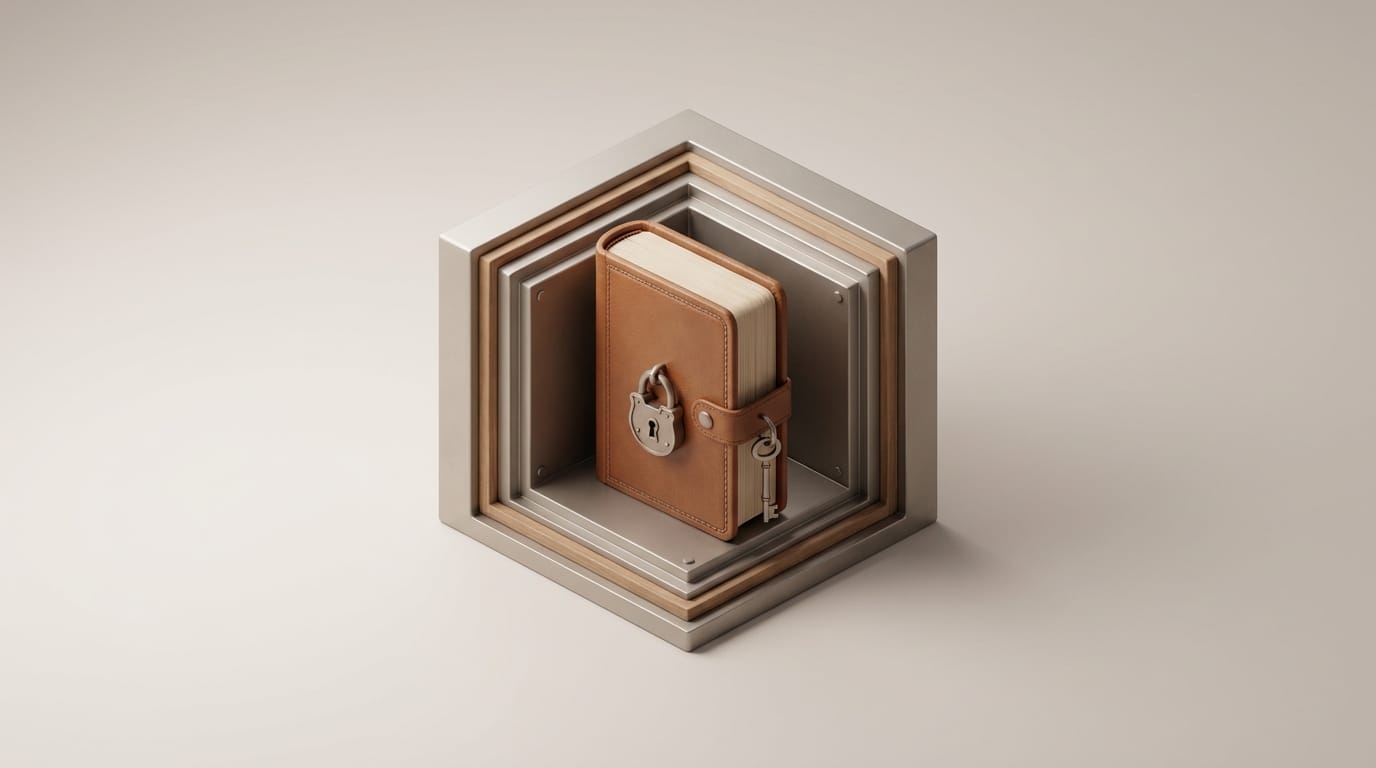
While the world moves toward the cloud, remote cybercriminals remain powerless against a simple sheet of paper stored in a desk drawer. This immunity to digital intrusion is the core reason physical password book security remains a vital part of a defensive strategy. In an age where data breaches occur daily, an analog backup provides a hard stop against automated attacks that compromise thousands of accounts in seconds.
Relying solely on digital memory or encrypted software creates a single point of failure that many users overlook until a system lock-out occurs. By shifting critical credentials to an offline medium, you effectively air-gap your most sensitive data. This ensures that even a total network compromise cannot touch your physical records. This approach does not reject modern technology; instead, it acknowledges the limits of purely digital protection.
Understanding the value of an analog record requires looking at it as a sophisticated fail-safe rather than an outdated relic. It addresses the fundamental trade-off between convenience and absolute isolation. When you store a password on paper, you choose a system where the attack surface is limited to the four walls of your home. You already secure this space through physical locks and personal presence, making it much harder for a global attacker to reach.
The Difference Between Remote and Local Threats
Why paper is invisible to global botnets
The primary advantage of analog storage is that it exists outside the reach of global botnets and automated scraping tools. Digital password managers provide high levels of security, yet they remain high-value targets for hackers who exploit software vulnerabilities from anywhere on Earth. In contrast, paper has no IP address. A hacker in a different hemisphere can breach a cloud provider’s database, but they cannot reach into your desk drawer. This physical isolation serves as a form of security that bypasses the logic of modern malware entirely.
The limitation of digital encryption during cloud breaches
Even strong encryption has a shelf life. As identity becomes the new perimeter for security, the risk shifts from cracking codes to stealing keys. When a digital vault is compromised, attackers can download the encrypted data and attack it offline using massive computing power. Physical records are immune to this specific vector because no one can brute force a notebook without having the physical object in hand. This makes paper a superior medium for the master keys that control your entire digital existence.
Maximizing Physical Password Book Security for Digital Inheritance
The risk of permanent data loss in encrypted vaults
One of the most significant risks in modern computing is the lock-out scenario. If a user becomes incapacitated or passes away, their digital assets often become permanently inaccessible. These assets include bank accounts, family photos, and legal documents. Encrypted vaults are designed to be impenetrable, which means they do not differentiate between a rightful heir and a malicious actor. Without the master password, the data is functionally non-existent, leading to what experts call digital ghosting.
Creating a clear path for executors and family members
A well-maintained physical password book security system acts as an analog digital inheritance tool. Unlike complex emergency access features in software that require pre-approval and technical skill, a physical book provides a clear, intuitive path for executors and family members. It bypasses the legal and technical hurdles of posthumous account access. By leaving a physical record, you ensure that your digital legacy remains manageable for those you trust without requiring them to be cybersecurity experts.
Debunking Common Myths About Analog Password Storage
Addressing the fear of physical theft versus data scraping
The most common argument against writing passwords down is the fear of a burglar stealing the book. However, the threat to a typical individual is heavily skewed toward remote attacks. Statistics from the FBI’s Internet Crime Complaint Center consistently show that phishing and personal data breaches affect millions more people than physical home burglaries each year. Furthermore, a common thief typically looks for hardware like laptops and jewelry, not a nondescript notebook that looks like a grocery list. Digital scraping is a zero-cost, high-reward activity for criminals that can be performed at a massive scale, making it a much more likely threat than a home invasion targeting your passwords.
The reality of password complexity on paper
There is a persistent myth that writing passwords down leads to simpler, weaker passwords. In reality, the opposite is true. When you know you do not have to memorize a string of characters, you are free to use high-entropy passwords that are 20 or 30 characters long. You can include symbols, numbers, and random casing that would be impossible to remember but are easy to write down. Paper does not require software updates or subscription fees, making it a permanent system that stays functional regardless of how technology changes.
Best Practices for Maintaining a Secure Password Book
Using simple obfuscation techniques for sensitive data
To maximize physical password book security, you should never write your credentials exactly as they appear. Use obfuscation techniques to add a layer of protection in case a guest or a repair person sees the book. For example, you might add a consistent salt to every password. This salt is a word or number that stays in your head and never goes on the paper. If the password in the book is BlueCat44, but your mental salt is 99, the actual password you type is BlueCat4499. This ensures that the book alone is useless without the missing piece stored in your memory.
Environmental protection and fireproofing
The greatest threat to a physical book is not a hacker, but the environment. Fire, water, and simple loss are the primary risks. To mitigate this, store your password book in a fire-rated safe or a small fireproof document bag. Because you likely will not need to access the book every day, keeping it in a hidden, protected location is a viable strategy. Additionally, consider how you will manage the transition when a book becomes full. Always shred old pages rather than simply throwing them in the trash. Protecting your private information requires a clean chain of custody for your data throughout its entire life cycle.
Physical Password Books vs Digital Managers
Determining which accounts belong on paper
The most effective security systems are often hybrid models. You do not have to choose between convenience and physical password book security. A smart approach uses a digital manager for low-stakes accounts, such as streaming services or forums, where the risk of a breach is annoying but not catastrophic. Your high-stakes accounts, such as your primary email, banking, and government IDs, should have their master credentials and multi-factor recovery codes stored in your physical book. This keeps your most sensitive keys offline and unreachable by any digital means.
The hybrid approach to maximum security
When you use multi-factor authentication (MFA), your physical book becomes even more powerful. Many MFA systems provide backup codes in case you lose your phone or physical security key. These codes are the ultimate emergency tool. Storing these specific codes in a physical book ensures that you can always regain access to your digital life, even if your hardware fails. This creates a redundant system where the physical book secures the digital manager, and the digital manager handles the daily friction of logging in.
Security research, such as the Verizon Data Breach Investigations Report, shows that the vast majority of successful breaches involve stolen credentials used remotely. By ensuring that your most critical reset passwords are never stored in a format that can be transmitted over a network, you eliminate this entire category of risk. This strategy is particularly effective for people who are not tech-native, as it relies on physical habits, like locking a door or hiding a key, that are already part of daily life.
The true value of this analog method lies in its refusal to participate in the vulnerabilities of the global network. By maintaining a physical record of your credentials, you establish a hard boundary that no amount of code can cross. You effectively turn your home into the final vault for your digital identity. This system provides more than just protection against hackers; it offers a practical solution for digital inheritance and a reliable fail-safe for the moments when technology fails. As our lives become increasingly tethered to encrypted vaults, the most sophisticated tool in your security arsenal might just be a pen and a well-hidden notebook.