
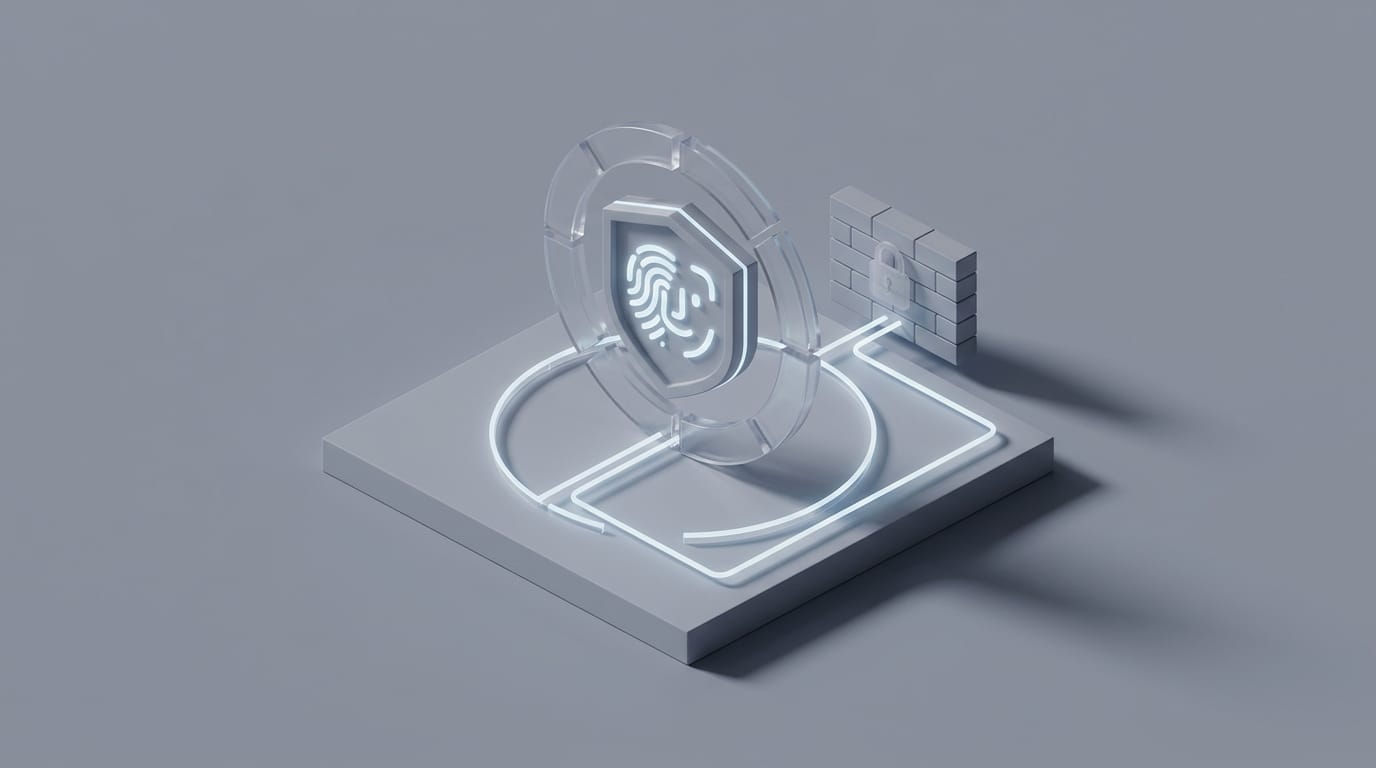
Most modern data breaches happen when an attacker steals a single login, not because they break through a hardware firewall. In an age where the office has no physical walls, identity as the new perimeter has become the primary defense for modern companies. We can no longer use a physical desk or a specific office Wi-Fi as a sign of trust. Instead, security teams must check exactly who is asking for data every single time.
For many years, companies built their security like a castle with a moat. If a person was inside the building, the system trusted them. If they were outside, the system blocked them. This logic worked when data lived in a room full of servers and workers sat in the same chairs every day. Today, that old world has faded into a mix of cloud apps, home offices, and mobile phones. These changes make hardware walls almost useless for keeping data safe.
The main goal of security has now moved from guarding the gates to managing the keys. This change is not just a small fix; it is a total rebuild of how we protect our work. By moving control to the identity layer, teams can keep security high no matter where a person works. Whether a worker logs in from a coffee shop or a high-rise office, the same rules apply to their account and their data.
Why the Traditional Network Perimeter No Longer Protects Data
The old way of securing a network rested on the idea that location equals safety. By sending all web traffic through a single box, IT teams could look at every bit of data. However, the rise of cloud tools and remote work has moved the edge of the network away from the office. When a person uses their own laptop to reach a database in another country, they are not inside any physical network.
IP addresses have also become poor ways to prove trust. Since people use VPNs and mobile hotspots, an IP address tells us very little about who is actually behind the screen. A thief using stolen login names from a home internet connection looks just like a real employee working from their house. This is why modern breach prevention methods focus on the user credentials rather than where the person is sitting.
Breaches are rarely the result of complex code breaking a lock. Instead, they happen when someone uses a real login for a bad reason. A report from the Identity Theft Resource Center shows that most successful hacks now start with stolen logins. When a thief has a valid name and password, the firewall simply opens the door and lets them in. This makes expensive hardware feel like a lock on a door with no walls.
To make matters worse, the speed at which attackers work has increased. In the past, an attacker might spend weeks trying to find a hole in a firewall. Now, they can buy thousands of stolen passwords on the dark web for a few dollars. They use automated scripts to try these logins across hundreds of different company portals until one works. Once they are in, they do not need to hack anything else because the system already thinks they belong there.
Identity as the New Perimeter
When we treat identity as the new perimeter, we move the security line from the edge of the network to the individual request. Every attempt to see a file or open an app is a new event that the system must check. We do not assume a user is safe just because they logged in an hour ago or because they are on a known Wi-Fi network. The system asks for proof at every step of the journey.
This model uses context to decide if a request is safe. Before letting someone see a bank file, the system looks at the device health, the location, and the time of day. If an employee who usually works in New York tries to log in from another country at midnight on a new phone, the system can stop them. It might block them entirely or ask them to prove who they are with a second check.
Identity then becomes the main control center for everything in the company. By putting all logins in one place, security teams can give people only the access they need for their current job. This stops a person from having a “master key” that opens every door in the company. This tight control is a big part of zero trust design principles, which teach us that no user or device is safe by default.
This shift also helps with the problem of “shadow IT,” where employees use apps that the company did not approve. When identity is the center of the plan, the security team can see every app that asks for a user’s login. If an employee tries to sign up for a new cloud tool using their work email, the system can flag it. This gives the company a clear map of where their data is going and who is looking at it, even if the data is not on their own servers.
The Hidden Risk of Non-Human Identities and AI Agents
Most talk about security focuses on people, but the real hidden risk lies in “non-human” identities. These are things like service accounts, API keys, and scripts that talk to each other. These tools often have more power than any person, but we do not watch them as closely. In many companies, these machine logins outnumber human users by more than forty to one, according to reports from VentureBeat.
The rise of AI has made this even harder to manage. An AI tool might need to read emails, calendars, and files to do its job. If we do not watch this tool, it can become a fast way for data to leak out of the company. A person might get caught if they download a thousand files in one minute, but an AI doing that might look like it is just working normally.
The Governance Gap in Machine Identities
- Long Life: People change their passwords, but machine keys are often set once and left for years. If a thief finds an old key, it might still work even after the person who made it has left the company.
- Hard to Watch: Most tools that look for bad behavior are built to watch humans. They do not know how to spot a machine that is acting strangely because machine traffic is fast and complex.
- Too Much Power: To make sure an automated task does not fail, developers often give these accounts full power. This creates a permanent back door if those keys ever leak out.
Managing these systems requires a specific plan for enterprise AI security strategies. Without a way to track who made an AI agent and what data it can touch, the identity wall remains full of holes. Companies must start treating every script and bot with the same level of care they give to their top executives.
Why Continuous Verification Matters More Than Initial Authentication
A common mistake is thinking that once a person logs in, the job is done. However, simple checks have limits. Thieves now use “fatigue” attacks, where they send hundreds of alerts to a person’s phone until the user gets annoyed and clicks “yes.” Also, thieves can steal “cookies” from a web browser. These cookies let a thief skip the login screen entirely because the site thinks they are already logged in.
Continuous checking solves this by looking at a user’s risk score all day long. If a user starts doing something odd, like moving huge amounts of data, the system can end the session right then. This is much safer than letting a one-time login stay active for eight or ten hours. You can learn more about how multi-factor authentication basics help stop simple attacks before moving to these more advanced steps.
This method also makes things easier for the user. If an employee is on a company laptop in the main office, the system might not ask for a check very often. But if they move to a public park or a hotel, the risk goes up. The system then asks for more proof. This move from “trust but check” to “never trust, always check” keeps the identity as the new perimeter strong against new ways of stealing data.
We must also consider the “blast radius” of a stolen account. In the old model, once a person was in the network, they could often see everything. In an identity-first model, we shrink that space. If an account is stolen, the thief can only see the few files that specific user was allowed to touch. By limiting the reach of each identity, we stop a small mistake from turning into a company-wide disaster.
Building a Resilient Identity Centric Architecture
To make this model work, the team that manages logins must work closely with the team that watches for hacks. Often, these two groups do not talk to each other. This creates a delay that thieves use to their advantage. When a tool sees something wrong, it should be able to lock that user account in less than a second without waiting for a human to give the order.
Managing the life of a login is just as vital. Accounts that belong to former workers or old projects are easy targets. A study by SpyCloud shows that nearly all companies have had an issue with an old login that was never turned off. Automating the way we turn accounts on and off ensures that no one keeps their access longer than they need it. When a person leaves the company, every key they held should vanish at the same time.
Strong identity rules also give leaders a clear view of the company. Board members need to know who can see the most sensitive files at any time. By making identity as the new perimeter, the company can stop reacting to threats and start preventing them. The focus stays on the truth of every request rather than the thickness of the office walls.
The move to an identity-first model is a deep change in how we think about work. Since the network walls have melted away, we must focus on the one thing that stays the same: the identity of the person or machine asking for data. This is the only way to stay safe in a world of cloud tools and AI bots. As we build more automated systems, our ability to manage these identities will decide which companies stay safe and which ones become the next headline. Success now depends on knowing exactly who is at the door before we ever let them in.