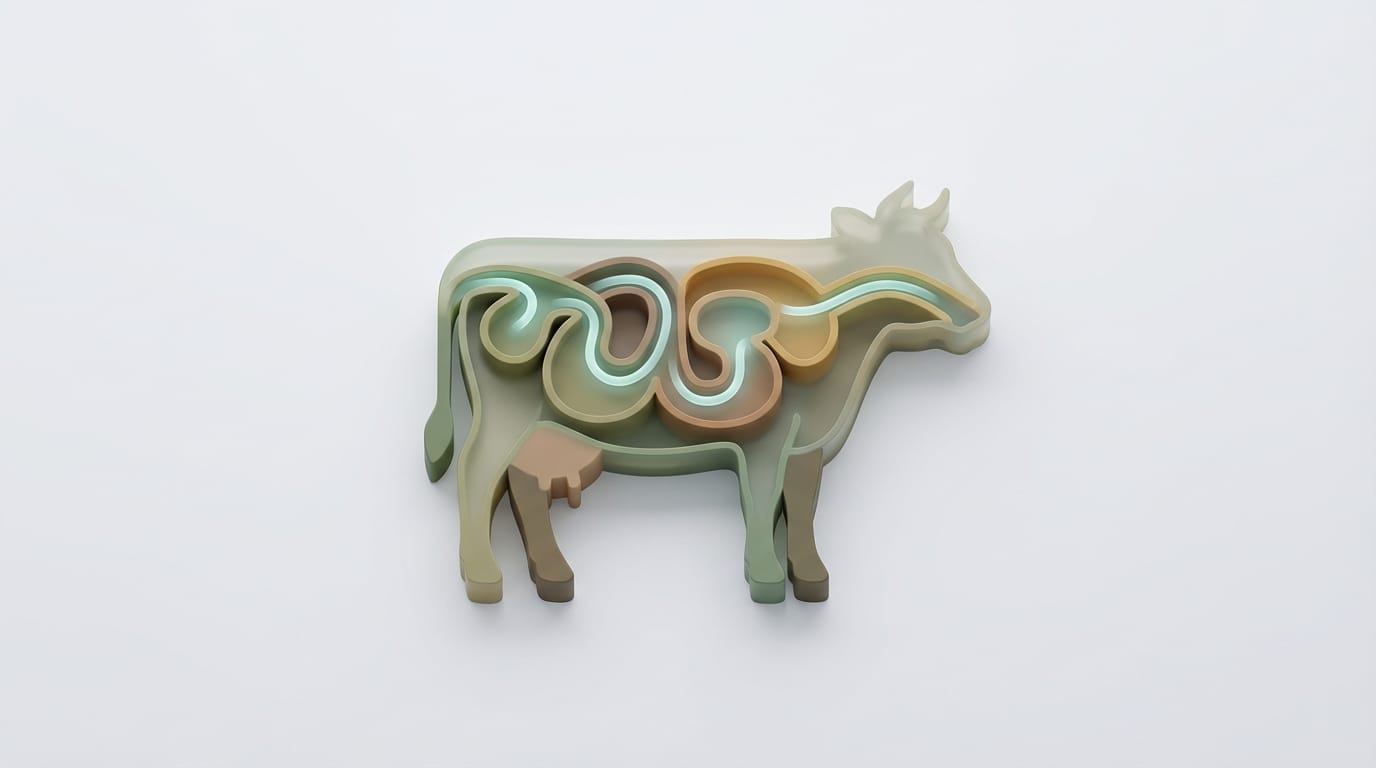
Believing a cow has four separate stomachs hides the complex engineering that turns grass into protein. When people ask how many stomachs does a cow have, the answer is one; however, this organ has four specialized parts that work together like a processing plant. This system solves the problem of cellulose, the tough part of plant walls that is hard to digest. Most mammals cannot break down these fibers because they lack the right enzymes. By using a multi-chambered system, cows and other ruminants tap into a massive energy source that would otherwise go to waste.
The Reality of Ruminant Anatomy: How Many Stomachs Does a Cow Have?
The confusion surrounding how many stomachs does a cow have comes from the sheer size of the bovine digestive tract. In a mature cow, the stomach can fill nearly 75 percent of the abdominal cavity. Unlike humans or pigs, which use a single acidic chamber to melt food, the cow uses a fermentation strategy. This path gives cattle a clear advantage in the wild. They can eat large amounts of low-quality grass quickly to avoid predators before moving to safety to finish digesting. The first three chambers of the stomach do not use acid. Instead, they act as a massive fermentation tank and a filter that prepares the food for the final chamber.
Processing Forage in the Rumen and Reticulum
Scientists often group the rumen and reticulum together because they are separated only by a small fold of muscle. The rumen is the main fermentation tank, holding up to 70 liters of fluid in a typical cow. It is an environment full of life; recent research on rumen microbe density shows that one milliliter of fluid can contain over 10 billion cells. These tiny bacteria, protozoa, and fungi do the hard work of breaking plant fibers into fatty acids, which give the cow most of its energy.
This process is efficient but produces methane as a byproduct. This link between digestion and the atmosphere is why researchers study cattle when looking at the details of the greenhouse effect. Next to the rumen, the reticulum uses a honeycomb-shaped lining to act as a filter. If a piece of food is too large, the reticulum traps it and sends it back up to the cow’s mouth. The cow then chews this material, known as cud, to break it down further. This constant loop ensures that the microbes can reach every part of the plant fiber.
Filtering and Squeezing in the Omasum
After the microbes ferment the grass, the mixture moves into the omasum. People often call this third part the “many-plies” because it has dozens of leaf-like folds. These folds create a large surface area that allows the organ to act as a powerful squeezer. The omasum recovers water and minerals before the food enters the acidic part of the stomach. By pulling out excess moisture, the omasum keeps the digestive acids in the next chamber from becoming too weak. It also works as a final physical check, making sure only the smallest particles move forward to keep the chemical process running smoothly.
Digestion Within the Abomasum
The abomasum is the only part of the cow’s stomach that works like a human stomach. This chamber uses acid and enzymes to break down proteins. At this stage, the cow is not just digesting grass; it is also digesting the billions of microbes that flow out of the rumen. This microbial protein provides the cow with essential nutrients that were not in the grass to begin with. The cow essentially grows a crop of microbes in its rumen and then harvests them in its abomasum. This shift from fermentation to chemical digestion is a masterclass in efficiency. From here, the nutrients move to the small intestine where the body finally absorbs them into the blood.
The Secret Transition from Calf to Ruminant
This complex system is not ready to go at birth. A newborn calf actually digests food much like a human does. In the first weeks of life, the abomasum is the largest part of the stomach, making up over 60 percent of the total space. The rumen stays small and does not function because a calf only drinks milk, which does not need to ferment. To keep milk out of the rumen where it might rot, calves use a special muscle called the esophageal groove. When a calf drinks, this muscle forms a tube that sends milk straight to the abomasum.
As the calf starts to eat grain and hay, the rumen begins to grow and fill with microbes. According to guides on calf digestive health, the rumen grows from a small portion of the stomach at birth to the largest part by the time the animal is four months old. This change shows how adaptable the cow is. The animal does not just have four parts; it builds them to match its diet. By the time a cow is fully grown, the abomasum shrinks to just 8 percent of the total stomach volume, giving up its lead to the massive rumen.
Understanding how many stomachs does a cow have changes how we see these animals. They are high-performance biological processors that can live in places other animals cannot. By turning sunlight trapped in grass into energy, they fill a unique role in the world. When we look at the transition from calf to adult, we see the clever engineering that makes ruminant life possible. This specialized system allows cattle to turn simple plants into the complex proteins that support the modern food system.