
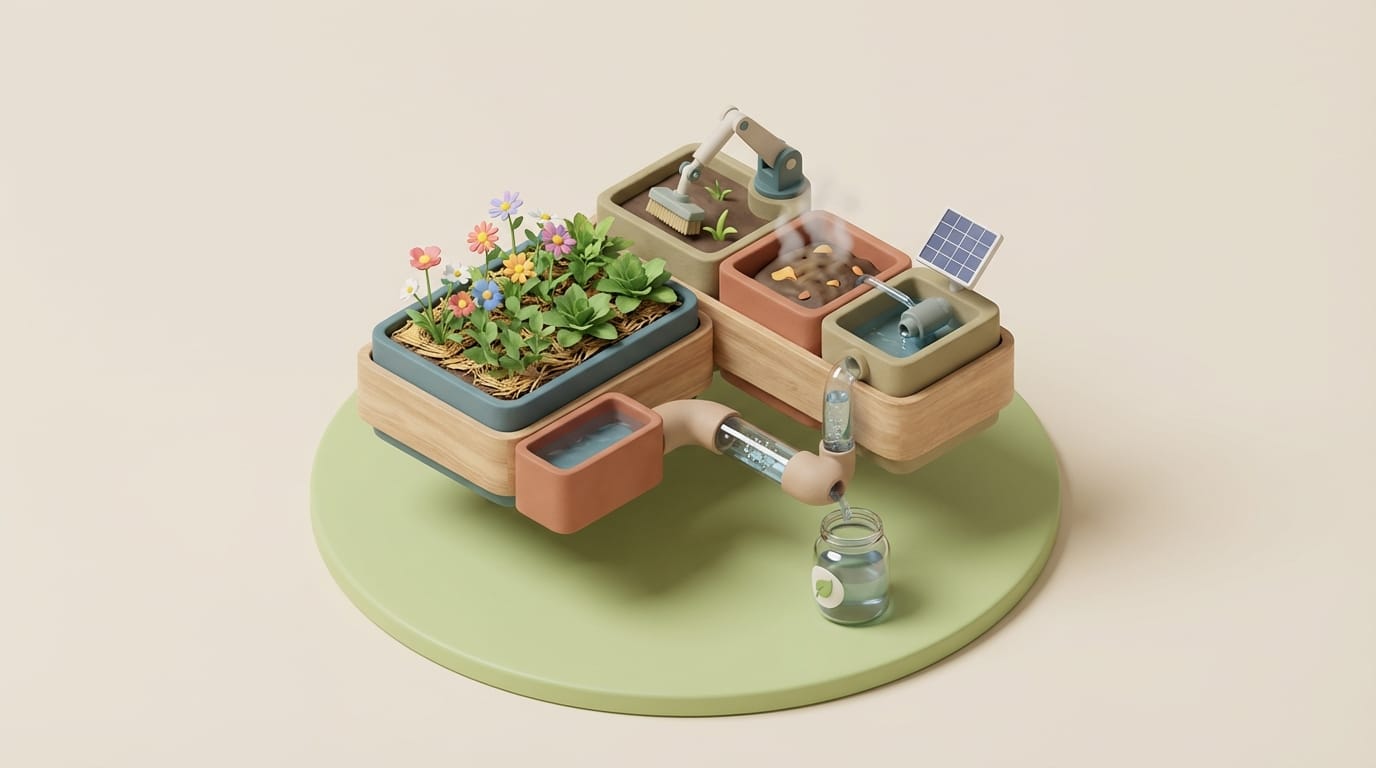
Most gardeners choose natural alternatives to protect their soil, but common home recipes often cause more long-term damage than the weeds they target. When you implement eco-friendly weed control for flower beds, the goal involves managing unwanted growth without breaking the biological systems that keep your plants alive. A garden functions like a complex machine where the soil acts as the primary engine. If we treat weeds as isolated enemies rather than symptoms of the environment, we risk using methods that stall that engine entirely.
Maintaining a healthy flower bed requires moving beyond a mindset focused solely on elimination. True sustainability comes from understanding how soil health works and using specific interventions that protect the microbiome while making the area unwelcoming for invasive species. By focusing on the root causes of weed growth, you create a resilient space that requires less work over time.
Eco-Friendly Weed Control for Flower Beds and Soil Health
Traditional weed management often relies on synthetic chemicals that provide fast results but create a long-term debt for the environment. These substances can move into groundwater or stay in the dirt, where they harm helpful insects and non-target plants. When a gardener treats a flower bed with harsh synthetics, the soil loses its natural ability to regulate itself, which often leads to a cycle of chemical dependency. Healthy soil is a dense network of bacteria, fungi, and tiny organisms that process nutrients for your flowers.
Natural methods must prioritize the protection of these microbes. If chemicals or poor practices destroy this life, flowers lose their primary support system and become more vulnerable to disease and drought. Modern real-time plant monitoring systems show that plants in biologically active soil respond much faster to environmental stress than those in sterile environments. Weeds often act as sensors for your soil. A sudden surge of a specific plant might indicate a nitrogen deficiency or hard, compacted ground. Instead of simply pulling them, view them as data. Dandelions, for example, often thrive in tight soil where their deep roots reach nutrients your flowers cannot access, signaling that the bed may need air rather than more spray.
Why chemical products hurt garden health
Chemical weed killers work by breaking biological pathways in plants, but other organisms often share these same pathways. When these substances stay in the ground, they can stop the signals between plant roots and helpful fungi. This break in communication prevents the nutrient exchange that keeps perennials vibrant. Eventually, the garden needs more fertilizer to achieve the same growth results because the natural system no longer functions.
How weeds compete for flower nutrients
Weeds are aggressive competitors that grow quickly and produce many seeds. They often have better systems for taking up nutrients than highly bred ornamental flowers. By taking up space and absorbing resources, they physically and chemically crowd out your desired plants. Effective management focuses on tilting the balance back in favor of your flowers through structural and biological changes to the environment.
The Risks of Using Salt and Vinegar Mixes
A persistent myth in eco-friendly weed control for flower beds suggests that salt and vinegar mixes are safe home remedies. While these ingredients belong in a kitchen, their effect on soil chemistry is harmful. Sodium chloride, or common table salt, acts as a permanent sterilant that does not break down over time. When you apply salt to a flower bed, the sodium ions cause clay particles to move apart, which destroys the structure of the soil. This leads to heavy compaction and prevents water and oxygen from reaching the roots of your flowers.
Specific research into salt-based weed killers indicates that salt can make soil infertile for years, turning a productive garden into a dead zone. Vinegar presents its own set of problems. High-strength horticultural vinegar contains acetic acid that damages any leaf it touches. If the liquid drifts onto your perennials, it will burn the foliage and weaken the plant. While it may kill the top of a weed, it rarely reaches the root system, meaning the weed will likely return while the soil remains dangerously acidic for helpful microbes.
How salt damages the ground
Salt pulls moisture away from plant cells and has a long-lasting impact on the ground. It bonds to soil particles and prevents them from forming the small clumps that allow for proper drainage. Over time, a salted bed becomes hard and crusty. Instead of absorbing rain, the ground repels it, creating a hostile environment for even the toughest flowers.
The impact of acid on soil microbes
Helpful bacteria and fungi need a specific pH range to survive. The sudden introduction of high-concentration acetic acid can kill these organisms on contact. Without these microbes, the soil cannot cycle nitrogen or protect roots from pathogens. This leaves your flower bed vulnerable to the very issues you wanted to avoid in the first place.
Smothering Techniques to Stop Germination
Prevention is more efficient than removal. Smothering techniques focus on blocking the light that weed seeds need to grow. By creating a physical barrier, you can stop weeds before they break the surface. Sheet mulching is one of the most effective ways to do this without using toxic chemicals. This process involves laying down a layer of plain, unwaxed cardboard or newspaper over the dirt and covering it with three to four inches of organic mulch, such as wood chips.
This system allows water to soak through while depriving seeds of the sunlight they need to thrive. As the cardboard breaks down, it adds carbon back into the soil and feeds earthworms. A thick layer of bark also makes it difficult for new seeds that land on top to reach the soil and grow. If a weed does sprout in the mulch, its roots are usually shallow and weak, making it very easy to pull by hand.
Sheet mulching with organic matter
This method works like a slow-release soil builder. As the cardboard decomposes, it encourages fungal activity that improves the texture of the soil. It is particularly helpful when you want to start a new flower bed or reclaim an area that has been taken over by aggressive grasses. Unlike plastic fabrics that eventually break into tiny pieces and pollute the dirt, biodegradable barriers integrate into the ecosystem and leave behind enriched soil.
Manual and Mechanical Methods for Removal
Despite your best efforts, some weeds will still appear. When this happens, manual removal is the most precise tool available. The secret to successful hand weeding is removing the entire taproot. Many common weeds can grow back from a small piece of root left in the ground. Timing plays a large role in how well this works. Trying to pull weeds from dry, hard ground often causes the stem to snap, leaving the root behind.
It is much better to weed after a heavy rain or after you water the garden deeply. When the soil is wet, there is less friction between the root and the earth, which allows the whole plant to slide out with little effort. Using precision tools like long-tined forks or specialized weeders helps you get under the root ball without hurting the delicate roots of nearby flowers. Keeping soil disturbance to a minimum is vital because turning the dirt brings dormant seeds to the surface where they can finally grow.
Thermal and Bio-Based Strategies
Thermal weeding is a high-tech approach to an old problem. Using a flame weeder allows you to apply intense heat to weed leaves for a fraction of a second. This heat does not need to burn the plant to ash; it only needs to expand the sap until the cell walls burst. Within hours, the plant wilts and dies. Safety remains the priority when using thermal tools, so never use them near dry mulch or wooden fences. This method works best on gravel paths or at the edge of beds where the soil is bare.
Bio-based strategies often include using corn gluten meal as a pre-emergent. Researchers at Iowa State University discovered that corn gluten meal contains peptides that stop seeds from forming roots as they germinate. While it will not hurt flowers that are already growing, it prevents new weed seeds from starting. It also contains nitrogen, which acts as a slow-release fertilizer. Specialists at the University of Illinois suggest that applying it in early spring provides the best results for eco-friendly weed control for flower beds, though you must be careful not to over-fertilize sensitive areas.
Designing Beds to Outcompete Weeds
The most sustainable way to manage a garden is to design it so that weeds have no room to grow. In nature, bare soil is rare because plants usually occupy every available space. By using high-density planting, you can create a leaf canopy that shades the ground and starves weed seeds of light. When you are designing multifunctional outdoor living spaces, the choice of plants determines how much work the garden will require in the future.
Selecting aggressive but non-invasive groundcovers creates a living mulch. These plants spread across the surface and compete directly with weeds for water and nutrients. Native species are your best allies because they are already used to your local weather and soil. A healthy native plant is much harder for a weed to replace than a struggling exotic flower. By creating a self-sustaining system, you reduce the need for chemicals and heavy labor. Once these plants grow together, the need for manual weeding drops because there is simply no space left for invaders to take hold.