When homeowners misunderstand the structural engineering of their roof, they often miss out on the architectural freedom that comes with removing interior load-bearing walls. Modern construction relies heavily on roof trusses to bridge the gap between aesthetic desire and structural necessity, allowing for expansive rooms that remain stable under pressure. By shifting the weight of the roof entirely to the perimeter of the building, these engineered components eliminate the physical constraints that once dictated how we lived indoors.
In traditional construction, the roof acted as a heavy lid supported by internal columns and partitions. Today, the system uses pre-engineered frames that function as a single, rigid unit. This evolution redefines the volume of a home to accommodate the fluid, open floor plans that define the modern aesthetic. Understanding these mechanics allows renovators to make informed decisions about the home’s skeleton. This transition replaces site-built guesswork with industrial precision by calculating how every timber and connector performs within a network of force and resistance.
The Structural Engineering Principles of Roof Trusses
The strength of a truss lies in its geometry. While a single beam might sag under its own weight over a long distance, a truss uses the inherent stability of the triangle to maintain its shape. Because a triangle cannot change shape without altering the length of its sides, it provides a rigid framework that supports significantly more weight than individual pieces of wood alone.
The Mechanics of Triangulation
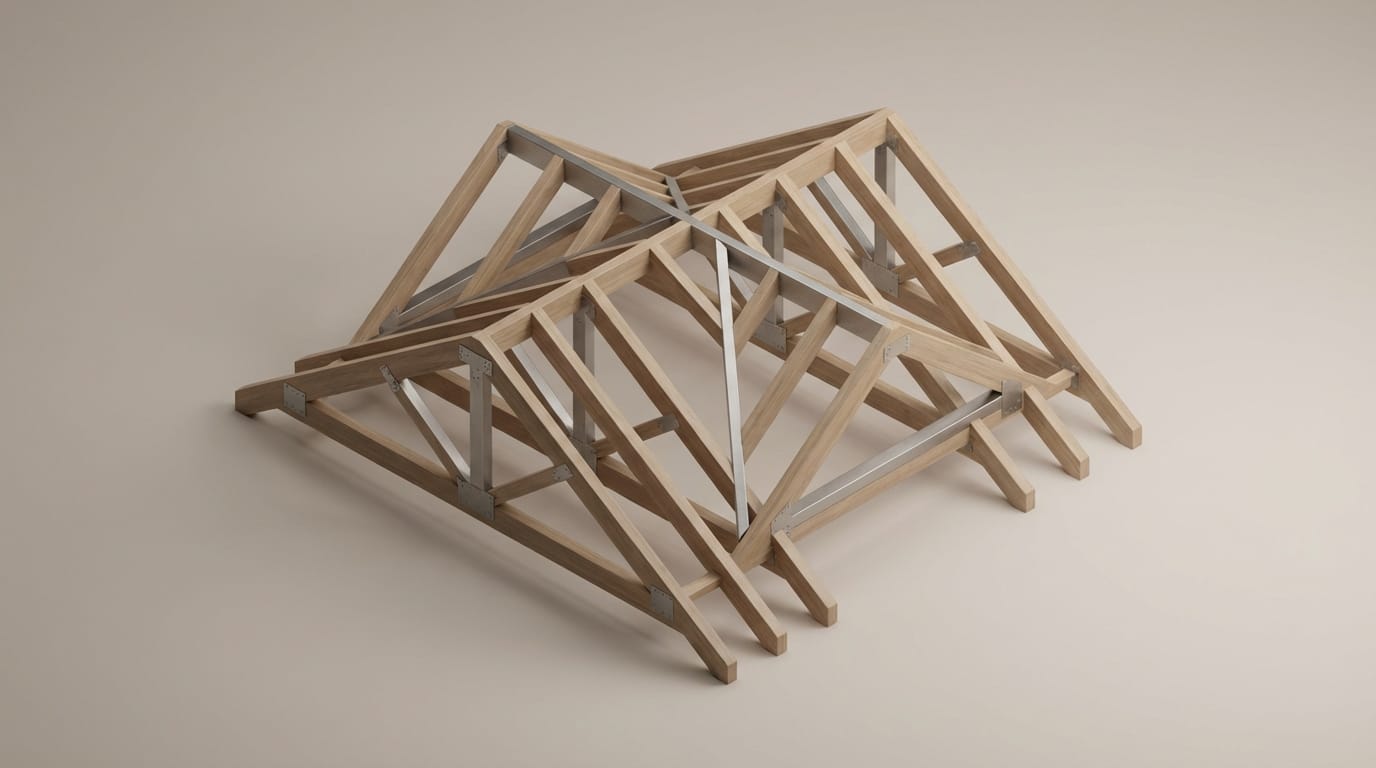
In a truss system, the design distributes the load through interconnected triangles. When gravity or wind applies pressure to the roof, the force travels through diagonal members, known as webs, and moves toward the vertical supports. This triangulation ensures the structure does not twist or buckle under stress, which makes it an ideal solution for areas prone to heavy snow or high winds.
Tension and Compression Dynamics
Every member within a truss experiences either tension or compression. The top chords are the slanted outer pieces that stay under compression as the weight of the roofing material squeezes them together. Conversely, the bottom chord is the horizontal base under tension, which prevents the walls from spreading outward. By balancing these internal forces, engineers create spans up to 16 meters without needing any support in the middle of the room.
The Manufacturing Process of Prefabricated Trusses
Unlike traditional rafters that workers cut by hand on a ladder, modern roof trusses are the product of a controlled industrial environment. This shift to prefabrication ensures a level of accuracy that is difficult to achieve in the field, where weather and fatigue can introduce cumulative errors.
Computer-Aided Design and Stress Analysis
The process begins with sophisticated software that models the specific loads a home will face, including local wind speeds and snow weight. This software performs a detailed stress analysis on every joint to determine exactly what grade of lumber each component requires. This data-driven approach optimizes materials so the roof remains as light as possible while staying structurally sound for safety.
Industrial Assembly and Mending Plate Application
Once technicians finish the design, automated saws cut the lumber to the millimeter. Workers then lay the pieces on massive magnetic tables where galvanized steel mending plates press into the wood. These plates feature hundreds of small teeth that grip the wood fibers, creating a joint that is often stronger than the timber itself. This mechanical bond replaces nails or bolts, which can split the wood or loosen as the house settles over time.
How Roof Trusses Eliminate the Need for Interior Load-Bearing Walls
The most profound impact of truss technology is the architectural freedom it provides on the ground floor. In older homes, interior walls served as essential structural pillars that caught the weight of the rafters. When you use roof trusses, the entire load transfers to the exterior walls, turning the interior into a blank canvas.
External Wall Load Transfer
Because the bottom chord of a truss acts as a tie that holds the exterior walls together, the roof essentially floats above the living space. The weight travels from the peak, through the webs, and directly into the top plates of the outer shell. This means every interior wall in a truss-built home is a partition wall. You can move them, remove them, or replace them with glass without affecting the integrity of the roof system.
Architectural Freedom for Open Living Spaces
This structural choice drives the open concept trend. It allows for massive rooms where the kitchen, dining, and living areas flow into one another without a single column breaking the line of sight. This flexibility also future-proofs the home. As needs change, owners can reconfigure the interior layout more easily than a home built with traditional load-bearing partitions. This is particularly useful when designing and building multifunctional outdoor living spaces that require wide, unobstructed transitions from the interior to the patio.
Common Truss Configurations and Their Functional Uses
Not all trusses follow the same design. The internal arrangement of the webs determines how the space beneath the roof looks and functions. Choosing the right configuration balances structural efficiency with aesthetic intent.
The King Post and Queen Post Fundamentals
The King Post is the simplest form of a truss and features a single vertical post in the center. It works efficiently for shorter spans, such as garages or small cottages. The Queen Post adds two vertical posts, which allows for wider spans while maintaining a traditional peaked look. These are common in residential construction because they provide a reliable and cost-effective way to cap a standard rectangular home.
Scissor Trusses for Vaulted Ceilings
For homeowners who want the volume of a cathedral ceiling without the high cost of custom timber framing, the scissor truss is the standard solution. The bottom chords angle upward rather than lying flat, which creates a vaulted interior space. This configuration provides height and a sense of grandeur while still transferring all loads to the exterior walls. It is an excellent way to add perceived square footage to a room without increasing the actual footprint of the building.
Roof Trusses vs Traditional Stick Framing
While some builders still prefer traditional stick framing where they cut rafters on-site, the data increasingly favors pre-engineered systems. These trade-offs involve the long-term health of the building and the efficiency of the construction budget.
Material Efficiency and Waste Reduction
Traditional framing often leads to significant lumber waste because carpenters must cut down standard lengths to fit the roof pitch. Trusses use smaller pieces of lumber that manufacturers calculate for specific roles. According to industry analysis, roof trusses cost an average of 10% to 15% less in labor than stick-built roofs because they arrive ready to install. This industrial efficiency reduces the environmental footprint of the build by minimizing the scrap sent to landfills.
Installation Speed and Labor Costs
A standard crew can often set an entire truss package in a single day, whereas stick framing a complex roof can take weeks. This speed protects the interior of the home from weather damage during construction. By drying in the building faster, builders reduce the risk of mold and moisture affecting the subfloor. This speed also requires high precision in other areas. For instance, when planning the perfect wall-mounted bathroom faucet layout, having a predictable, plumb framing system ensures all subsequent plumbing and tile work remains accurate.
Site Delivery and Precision Installation Requirements
The structural integrity of roof trusses is only as good as their installation. Because they handle loads in a vertical orientation, they are fragile when handled incorrectly. Mismanaging the delivery or the bracing can lead to failure before the roof is even finished.
Handling and Bracing Protocol
Operators must lift trusses using specific pick points to prevent them from bending out of plane. If a truss flexes horizontally, the metal connector plates can pull away from the wood and compromise the joint. Once in the air, the crew installs temporary bracing immediately to hold the units upright. Permanent bracing, usually horizontal wood strips across the webs, ensures the trusses work as a collective system rather than individual components.
Ensuring Vertical Alignment and Spacing
Builders typically space roof trusses 24 inches on center, as specified in the 2025 Fortified Home Standard. This spacing must stay perfectly consistent so workers can nail the roof sheathing into the center of each chord. If a truss is even an inch out of plumb, it creates a bow in the roof line that is visible from the street and can cause leaks or structural stress over time. Proper installation also provides the necessary cavities for modern utilities and insulation clearances in the attic space.
The transition from traditional rafters to engineered trusses represents a fundamental shift in how we think about domestic space. By treating the roof as a self-supporting machine, we have liberated the floor plan from the constraints of load-bearing walls. This system doesn’t just hold up shingles; it creates the structural room required for the light, airy, and interconnected spaces we now call home. As building materials continue to evolve, the truss will likely remain the most efficient way to span the gap between our need for shelter and our desire for openness. When you look up at a vaulted ceiling or across an unobstructed living room, you see the direct result of triangulation and tension at work. Does your current home layout reflect the freedom these systems provide, or are you still living within the boundaries of a previous century’s engineering?