
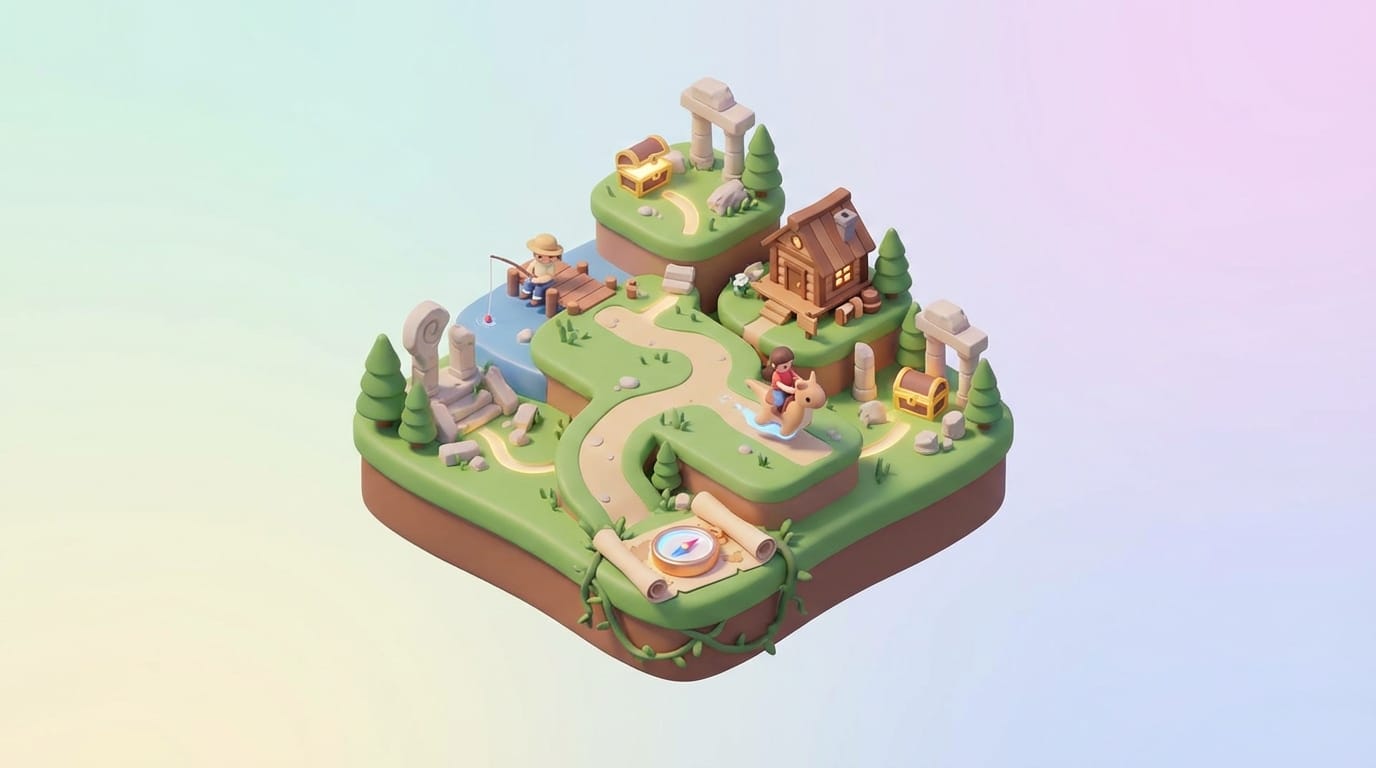
Entering a digital world should feel like a personal invitation rather than a mounting list of chores. For many, the appeal of open world games for casual players isn’t the promise of a hundred-hour quest log, but the simple, quiet agency of choosing a direction and walking until the sun sets. Currently, over 3 billion people identify as gamers; a majority of these individuals prefer casual experiences where the primary goal is to unwind, according to data from Exploding Topics showing global player growth. This shift in player behavior suggests that the joy of play often comes from the journey itself, not the destination or the difficulty of the task.
The design of these massive environments has moved from a niche interest into a primary focus for the industry. Modern titles are no longer just about beating a boss or solving a puzzle; they are about existing in a space that rewards curiosity without demanding perfection. When a developer removes the ticking clock and the penalty for failure, the game stops being a test and starts being a playground. This freedom allows players to engage on their own terms, turning a digital space into a personal sanctuary where the only rules are the ones they set for themselves.
The Secret Psychology of Virtual Exploration
For a hardcore player, an open world is often a series of efficiency problems to solve. They see a map and immediately begin calculating the fastest route to grow their character’s power. Casual players view these same spaces as a digital “third space,” which is a location outside of home and work where they can simply exist. The emotional appeal lies in the low stakes; the game does not punish a player who decides to spend three hours picking virtual flowers or watching the way the light hits a particular mountain range. This freedom from judgment creates a sense of peace that is hard to find in other media.
This move from task-oriented play to organic discovery is why the genre remains so popular. In a world where daily lives are governed by notifications and deadlines, the lack of a “correct” way to play offers a form of mental escape. The game becomes a tool for relaxation, letting the player set a pace that feels natural to them. This connection between calm and technology is why how gaming performance optimization stabilizes frametimes is so important; even a minor stutter can break the meditative flow of a long, scenic walk. When the software runs smoothly, the boundary between the player and the world fades away.
Solving the Paradox of Choice in open world games for casual players
One of the greatest hurdles in game design is the “Paradox of Choice,” where having too many options leads to stress. When a player opens a map and sees hundreds of icons screaming for attention, the result isn’t freedom (it is anxiety). Successful designers solve this by limiting the “active” choices presented at any given moment. Instead of a cluttered quest log, the best worlds use soft boundaries and subtle guidance to keep the player moving forward without feeling managed or overwhelmed. This approach ensures the world feels large but never impossible to navigate.
By structuring freedom, developers ensure that a player always has a few meaningful paths to take. This “Rule of Three” prevents the brain from entering a state of paralysis where it cannot decide what to do next. Whether it is a distant tower, a puff of smoke on the horizon, or a curiously shaped grove of trees, these choices feel like the player’s own ideas. This is a far cry from the rigid structures found in other digital systems, such as how modern productivity tools shape our work habits by forcing users into specific, narrow workflows. In a game, the choice belongs entirely to the person holding the controller.
Environmental Nudging Over Cluttered Quest Logs
To guide a player without using a glowing GPS line on the ground, designers use a technique called environmental nudging. This method relies on a philosophy that uses large, visible landmarks to naturally draw people toward them. In a game, this might be a glowing crystal atop a hill or a flock of birds circling a hidden ruin. These landmarks act as silent beacons, inviting the player to explore without the need for a text box or a pop-up notification. The world itself speaks to the player, telling them where the secrets are hidden through visual cues alone.
Subtle visual signs like lighting and silhouettes act as a silent language that the player learns over time. A path that is slightly brighter than the surrounding forest nudges the player to follow it; a clean display further reduces fatigue by removing the visual noise that reminds them they are using a software product. By embedding information directly into the world, such as using the wind to show direction, the immersion remains unbroken. This design philosophy focuses on keeping the player’s eyes on the horizon rather than on a mini-map in the corner of the screen. When the world provides the directions, the act of travel feels like a discovery rather than a commute.
Low Stress Systems That Keep Players Engaged
Engagement for a casual player does not always come from combat or conflict. In fact, many of the most successful open worlds thrive on activities that have nothing to do with fighting. Photography modes, base building, and deep crafting systems allow players to leave a permanent mark on the world without ever picking up a sword. These systems create a sense of how open world games redefine player agency, where the story is driven by the player’s actions rather than a pre-written script. A player might spend an entire week simply building a house by a lake, and that experience is just as valid as completing the main story.
Emergent storytelling occurs when the game’s systems interact in unexpected ways. Perhaps you were just trying to climb a mountain but got distracted by a rare butterfly, which led you to a hidden cave, which contained a view you just had to photograph. These “happy accidents” are the backbone of casual play; they provide rewards for curiosity rather than mechanical skill. Every session, no matter how short, feels productive because the player is the one defining what progress looks like. This flexibility makes the world feel alive and reactive, as if it is waiting for the player to uncover its secrets at their own speed.
Designing Worlds That Respect the Player’s Time
Designing open world games for casual players requires a deep understanding of time management. A massive world can be intimidating if you only have thirty minutes to play after work. The most effective games use “content chunking” to ensure that even a five-minute session provides a sense of achievement. Whether it is finding a single collectible or finishing a short conversation with a character, these micro-progressions keep the player coming back without making them feel like they are falling behind. This design respects the reality of a busy life while still offering a grand sense of scale.
The inclusion of “save anywhere” features and fast-travel systems are essential tools for accessibility. They acknowledge that the player has a life outside the screen and might need to stop at a moment’s notice. When a game respects your time, it stops feeling like a second job and starts feeling like a retreat. Most gamers cite relaxation as their primary reason for playing, according to surveys from industry analysts at Udonis. Designing for that relaxation means removing the friction of long travel times and punishing checkpoints. A game that allows you to pick up exactly where you left off is a game that values its audience.
The magic of open world games for casual players lies in the ability to make the person feel like a discoverer rather than a consumer. It provides a framework for stories that belong entirely to the player. As developers continue to refine the balance between guidance and freedom, these virtual spaces will only become more essential as tools for rest and reflection. The true value of these systems isn’t found in the size of the map, but in the depth of the peace they provide to those who enter them. When we step into a well-designed world, we are practicing a form of agency that the real world rarely allows. We choose a direction simply because it looks interesting, and in that choice, we find a rare kind of modern quiet.