The Hidden Physics of Soil Damage
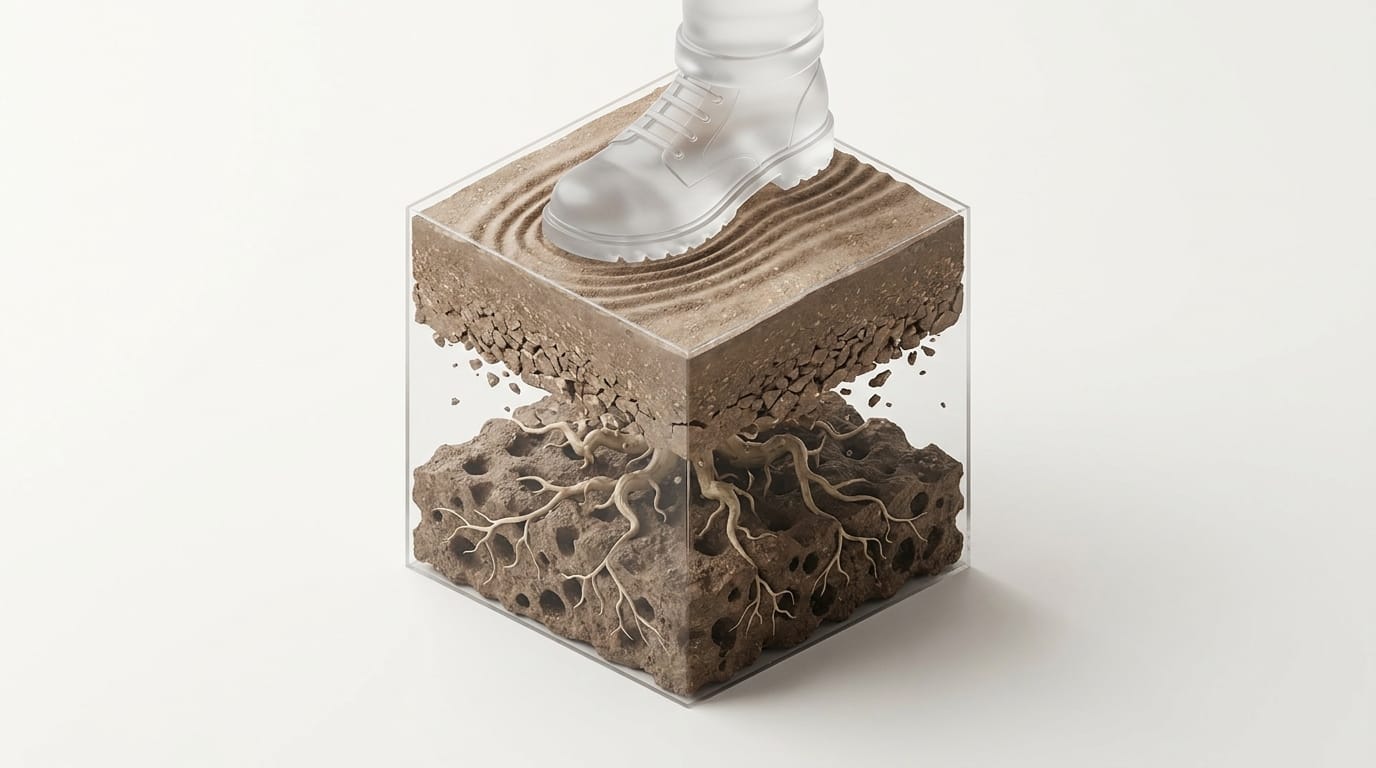
While most people view soil as a static surface, even a single footstep on wet earth triggers a physical shift that can stifle root systems for years. This immediate mechanical failure, known as soil compaction foot traffic, alters the architecture of the underground environment by collapsing the delicate network of gaps that transport oxygen and water. When we ignore the structural health of our growing mediums, we turn a functioning biological engine into a dense, unproductive waste product. Understanding the physics of this change is vital for anyone managing a garden, as the damage occurs at a molecular level long before ruts or wilting plants appear.
The Mechanics of Soil Structure and Pore Space
Healthy soil functions as a three-phase system consisting of solids, liquids, and gases. In a balanced, uncompacted state, roughly half of the soil volume consists of open pore space. Scientists sort these pores by size into macropores and micropores, where each serves a specific role in the health of the ground. Macropores act as the highways of the soil matrix. These larger openings allow water to drain quickly and, more importantly, let oxygen move from the air down to the roots. When soil compaction foot traffic occurs, these large pores are the first to collapse. This loss of space forces soil particles into a tighter arrangement, which experts measure as an increase in bulk density.
Bulk density represents the mass of dry soil within a specific volume. As this density rises, the physical space available for roots and helpful microbes shrinks. High bulk density means the soil has lost its elasticity. It becomes a closed system where the exchange of energy and matter stops. Instead of a sponge that breathes and holds water, the earth turns into a solid block that resists life.
Why Soil Is Most Vulnerable at Field Capacity
The most dangerous time to walk on your garden beds is when the soil reaches field capacity. This is the moment after a heavy rain when the ground has drained as much water as possible against gravity but remains fully hydrated. This state creates a physical trap. While many gardeners know to stay off muddy ground, the science of how particles slide provides a stronger reason to wait. At field capacity, the thin film of water surrounding each soil grain acts as a high-efficiency lubricant. Under the weight of a person, this lubrication allows soil grains to slide past one another with almost no friction.
Instead of holding their shape, the particles rotate and glide into the empty macropores. They lock into a matrix far tighter than they ever could when dry. Data from soil specialists studying the physics of compression suggests that compaction peaks when moisture fills about 80 percent of the pore space. This wet-state squeezing is permanent. In dry soil, friction and bonds provide a type of memory that helps the ground spring back. In wet soil, that memory disappears. The lubricated particles settle into a dense layer that stays hard even after the water evaporates, leaving a surface that acts more like concrete than a living medium.
This process is especially damaging because it happens invisibly. You might not see a deep footprint, but the pressure beneath the surface has already reordered the soil grains. Once the grains lock together, the natural expansion and contraction of the soil can rarely undo the damage on its own. It requires active intervention or years of biological activity to restore the original porosity.
How soil compaction foot traffic Disrupts Gas Exchange
The biggest biological cost of collapsed macropores is the total loss of the oxygen flow. Roots and aerobic microbes need a steady supply of oxygen to survive. However, oxygen moves through soil 10,000 times slower in water than it does in air. When compaction destroys air-filled pores, the path for gas exchange is cut off. A healthy garden relies on how living soil composting builds a biological engine to support life. Without air, the underground environment shifts from aerobic to anaerobic.
In heavily compacted urban spaces, oxygen levels can drop as low as 1 percent, while carbon dioxide levels can rise to 19 percent or higher. This shift causes a chain of chemical failures. Anaerobic conditions invite pathogens and create toxic byproducts like methane and hydrogen sulfide. These toxins can burn sensitive root tips and stop the plant from taking up nutrients. Furthermore, the lack of oxygen prevents minerals from breaking down into forms that plants can use. This stress often attracts pests. For example, disrupting the fungus gnat life cycle becomes much harder in compacted, low-oxygen soils where larvae flourish in the stagnant moisture near the surface.
The Relationship Between Compaction and Hydraulic Conductivity
Compaction creates a physical wall that limits hydraulic conductivity, or the ease with which water moves through the ground. When foot traffic seals the surface, the rate at which water enters the soil can drop to less than 1 percent of its original speed. This creates a confusing situation where a plant might drown and die of thirst at the same time. The sealed surface causes water to pool at the top, forming a saturated zone that keeps air out. Below this thin wet layer, the soil stays dry because the water cannot flow through the dense matrix.
This perched water table can trick a gardener into thinking the ground is wet. You might see standing water and assume your plants are fine, even though the roots are dying of thirst just a few inches below. This lack of movement also increases the risk of runoff and erosion. Instead of soaking in, water moves sideways across the surface, carrying away topsoil. Over time, fixing hydrophobic soil permanently becomes a major task, as the dry layers underneath may develop coatings that push water away even if the physical compaction is fixed later.
The loss of water movement also affects how salts and nutrients move through the profile. In a healthy system, water flushes excess minerals away from the root zone. In a compacted system, these minerals can build up to toxic levels or stay trapped in the upper inches of the soil. This prevents the deep leaching necessary to keep the soil chemistry balanced and healthy for long-term growth.
Mechanical Impedance and Root Growth Stunting
From an engineering perspective, roots are like hydraulic probes that use pressure to expand. Soil strength is measured by penetration resistance, which is the force needed to push a probe through the earth. When soil compaction foot traffic increases bulk density, it raises the resistance the root must fight against. Most plant roots have a limit to how much pressure they can exert. When the resistance of the soil is too high, root growth stops. Instead of growing deep to find stable water, the roots grow sideways along the surface or stay trapped in small cracks.
This shallow root system makes plants weak during weather changes. Without deep roots, a plant might fall over in high winds or dry out during a short drought. The smaller root system also means the plant cannot absorb enough phosphorus and other minerals that do not move easily through the soil. This leads to nutrient deficiencies even in soil that is otherwise rich in organic matter. The plant becomes a shadow of its potential because it is physically trapped by the ground itself.
Furthermore, the physical stress of pushing through dense soil consumes energy that the plant would otherwise use for fruit or flower production. Plants in compacted soil often look stunted and pale, not because they lack fertilizer, but because they are exhausted by the simple act of trying to grow. This mechanical stress can also make the plant more susceptible to diseases that target weakened tissues.
Strategies to Mitigate and Reverse Compaction Damage
Fixing compaction is a slow process of rebuilding the pore network. A common mechanical method is core aeration, which pulls small plugs of soil out of the ground to create new macropores. This gives the soil immediate air and lets water pass through the surface. However, aeration is only a temporary fix. If the foot traffic continues, the soil will eventually settle back into its hard state. A more effective approach uses organic matter to cushion the ground. Thick layers of wood chips or straw act as a buffer, spreading the weight of a footstep over a larger area to protect the structure below.
In many cases, how resilient groundcover plants build better soil than mulch shows that living roots are the best solution. These roots act as biological drills that keep the soil open even under light traffic. The best strategy is always prevention. Setting up permanent paths with stones or gravel ensures that compaction stays in specific zones, leaving your growing beds untouched. By viewing soil as a structural asset that needs protection when it is wet, you ensure the health and strength of your entire garden.
The complexity of soil structure shows us that plant health depends on the physical environment. When we crush a macropore, we are not just moving dirt; we are changing the laws of how air and water flow. By respecting the physics of the soil, we move from just planting seeds to managing a living, breathing infrastructure. If we view the soil as a fragile lung rather than just a floor, our approach to garden design changes. The most important tool in your kit is not always a shovel, but a well-planned path that keeps your feet off the living earth.