
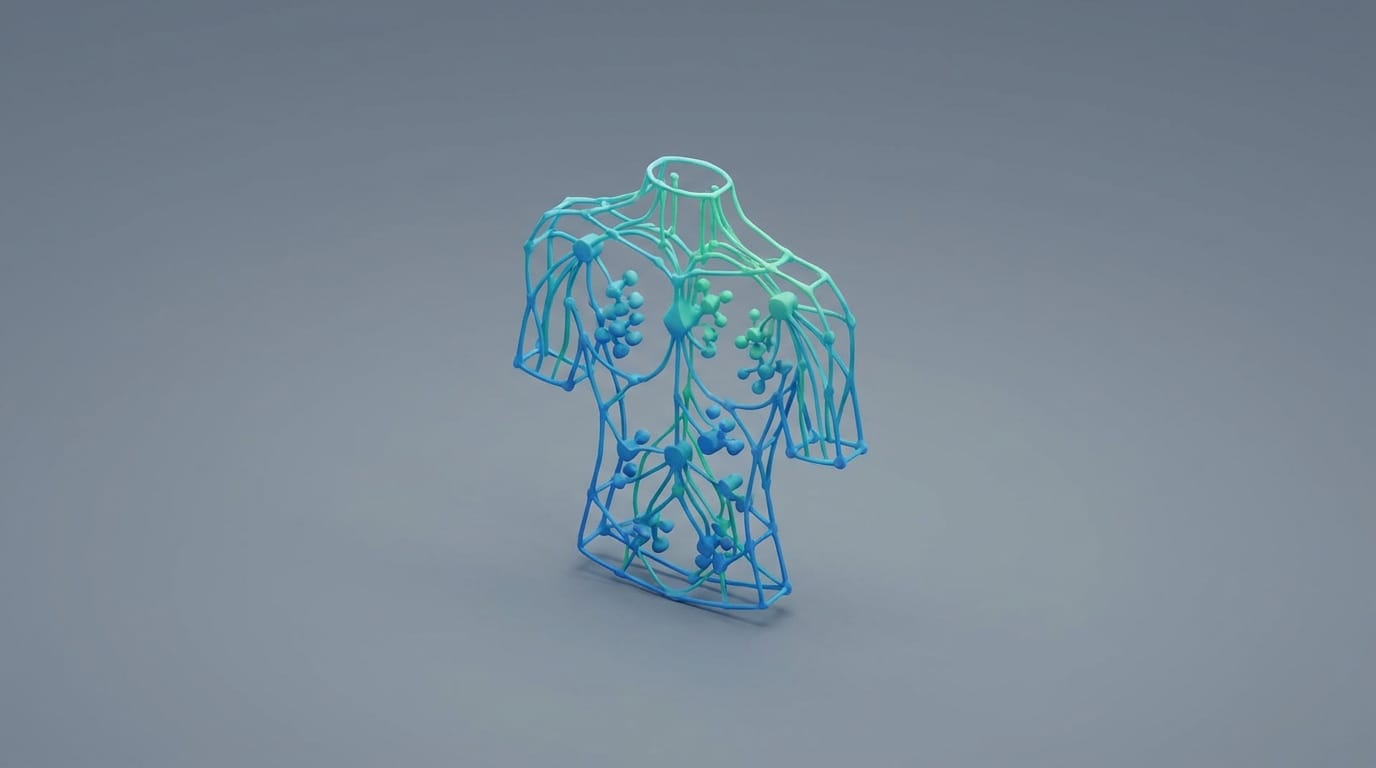
The Architecture of Peripheral Neural Architecture
When neurologists view peripheral ganglia as mere relay stations, they overlook the sophisticated data filtering that prevents the central nervous system from being overwhelmed by biological noise. In a high-traffic biological system, sending every raw signal directly to the brain would be as inefficient as a cloud server attempting to process the raw telemetry of every sensor in a smart city. Instead, peripheral ganglia function as decentralized processing hubs, filtering and gating information at the source. This architecture ensures that the brain receives only the most relevant data, preserving cognitive resources for high-level decision-making.
Many textbooks treat these clusters of neuronal cell bodies as simple junction boxes, yet modern research reveals a far more active role. These nodes perform complex synaptic integration, ensuring that the system prioritizes significant signals for transmission. By handling this pre-processing locally, the nervous system achieves a level of efficiency that allows the spinal cord and brain to focus on integration rather than signal maintenance. Understanding this architecture clarifies how we experience pain, maintain internal balance, and react to our surroundings.
Misinterpreting these nodes as passive conduits leads to an incomplete model of human physiology. By framing them as biological edge nodes, we can see the elegant solution evolution found for the bandwidth problem of complex organisms. This decentralized approach allows for rapid responses and precise control over metabolic costs, creating a system that is both sensitive and sustainable.
Defining the Ganglionic Node Structure
A ganglion is a cluster of neuron cell bodies located outside the central nervous system (CNS), functioning as a point of convergence for sensory and motor information. Structurally, these nodes consist of the soma, or cell bodies, of neurons along with their supporting satellite glial cells. Unlike the elongated axons that form nerves, the peripheral ganglia represent a transition point where the architecture of the signal itself can be modified through local interactions.
These nodes act like logic gates rather than mere physical anchors. Maintaining neural tissue is metabolically expensive; the presence of cell bodies in the periphery suggests a functional necessity that justifies the energy cost. These nodes are specialized, with sensory ganglia typically housing pseudo-unipolar neurons while autonomic ganglia contain multipolar neurons that facilitate complex synaptic interactions. This specialization allows each node to process specific types of data before the information moves deeper into the nervous system.
The internal environment of a ganglion is tightly regulated to ensure reliable signaling. Satellite glial cells surround the neurons, providing structural support and regulating the chemical environment. This close relationship allows the node to adjust its sensitivity based on the needs of the body, acting as a tunable filter for incoming sensory streams.
Spatial Distribution Across the Somatic and Autonomic Systems
The distribution of these nodes follows a strict logical topology. In the somatic system, the dorsal root ganglia (DRG) sit just outside the spinal cord, acting as the primary gateway for all sensory information entering the CNS. In contrast, the autonomic nervous system uses a chain of ganglia (the paravertebral and prevertebral clusters) to regulate visceral functions. This spatial arrangement ensures that sensory feedback and motor instructions have a localized checkpoint before reaching their final destination.
This organization creates a tiered hierarchy of control. Localized ganglia can handle routine adjustments without involving the brain, while more complex data is passed up the chain for further analysis. This division of labor prevents the central nervous system from becoming a bottleneck for simple, repetitive tasks. By placing these nodes at strategic intervals, the body maintains high sensitivity without sacrificing speed or efficiency.
Peripheral Ganglia as Active Signal Processing Centers
The Myth of the Passive Relay Station
The traditional view of the ganglion as a passive junction box is rapidly being replaced by a model of active computation. Historically, scientists saw the dorsal root ganglion as a waypoint where sensory signals passed through without alteration. However, evidence shows that peripheral afferent information undergoes dynamic filtering within the ganglion before it reaches the spinal cord, according to research published in PLOS Biology. This filtering occurs at specific anatomical features like axonal bifurcations, or T-junctions, where the signal can be gated or blocked entirely.
This biological gating mechanism allows the system to ignore background noise. For instance, the constant pressure of clothing on your skin is a signal that your brain does not need to process every millisecond. The ganglia help filter out these repetitive, low-priority inputs, effectively compressing the data stream for more efficient transmission. This process is highly dependent on how structure and function design governs every system in nature, where physical constraints dictate operational limits. By silencing redundant signals at the source, the nervous system avoids unnecessary energy expenditure and prevents sensory overload.
Biological Data Filtering and Signal Gating
Signal gating in the peripheral ganglia is often mediated by chemical signaling, specifically the GABAergic system. While GABA is well-known as an inhibitory neurotransmitter in the brain, it also acts within the DRG to modulate action potentials. This localized inhibition can selectively mute specific pain signals or amplify mechanical signals, acting as a programmable threshold for what qualifies as an impulse. This capability allows the system to prioritize urgent threats over minor discomforts.
This subthreshold processing is a critical component of neural efficiency. By integrating spatially and temporally distributed inputs without always triggering an action potential, the ganglia conserve energy while remaining sensitive to sudden changes in the environment. This mimics the goal of energy-efficient AI models, where the objective is to process as much data as possible using the least amount of energy, as explored in Frontiers in Computational Neuroscience. These nodes ensure that the biological hardware is not wasted on trivial data points.
The Edge Computing Model of Neural Efficiency
Reducing Bandwidth Pressure on the Spinal Cord
In technical terms, the nervous system faces a massive bandwidth challenge. If every sensory receptor in the human body sent a continuous, raw data stream to the brain, the spinal cord would need to be much larger to accommodate the volume. The peripheral ganglia solve this by acting as edge nodes. They perform initial analysis and summarize the data, sending only the relevant deviations or critical updates upstream. This summary allows the brain to understand the environment without having to track every individual receptor.
This decentralized approach is strikingly similar to how edge computing latency enables proactive intelligence in modern software. By moving the processing closer to the sensors (the receptors in our skin and organs), the system reduces the time it takes to respond to stimuli. This is a fundamental requirement for survival in a high-speed world where a delay of a few milliseconds can be the difference between avoiding an injury and suffering one.
Latency Reduction in Autonomic Reflex Arcs
This decentralization is clearly visible in the autonomic nervous system. Autonomic ganglia, such as those found in the vagus nerve anatomy, can facilitate rapid reflexes without requiring input from the brain. These local loops allow for the instantaneous adjustment of heart rate or digestion. If these signals had to travel to the cranium and back, the latency would be too high to maintain the precise homeostatic balance required for life. These nodes act as local supervisors that maintain the status quo while the central brain manages more complex tasks.
Functional Divergence in Sensory and Autonomic Ganglia
Sensory Pre-Processing in the Dorsal Root Ganglia
The dorsal root ganglia (DRG) are unique because they house pseudo-unipolar neurons. These neurons have a single process that splits into two branches: one going to the periphery and the other to the spinal cord. Because the cell body is located off to the side of the main signal path, researchers once thought it was a bystander. We now know the cell body actively maintains the chemical environment and electrical threshold of the T-junction, acting as a volume knob for sensory intensity. This allows the node to increase sensitivity during a period of threat or dampen it during rest.
Paravertebral and Prevertebral Autonomic Integration
Autonomic ganglia operate differently, using multipolar neurons that receive inputs from multiple preganglionic fibers. This allows for a massive amount of signal convergence and divergence. One single instruction from the brain can be broadcast to dozens of target cells in an organ, or multiple conflicting inputs can be resolved at the ganglionic level before a motor command is issued. This makes the autonomic hub a regulatory checkpoint. It evaluates incoming signals from both the brain and the organs to ensure the final output is appropriate for the current state of the body.
Clinical Pathophysiology of the Peripheral Nodes
Ganglionopathy and the Breakdown of Local Filtering
When the peripheral ganglia fail, the result is not just a loss of signal, but a breakdown in the system ability to interpret reality. Ganglionopathy (damage specifically to the cell bodies within the ganglia) often leads to sensory ataxia or chronic neuropathic pain. Without the local filtering provided by the node, the central nervous system is bombarded with phantom signals or is unable to distinguish between a light touch and a painful stimulus. The lack of a local checkpoint means the brain receives raw, unvetted data that it cannot properly interpret.
Chronic pain management has recently shifted toward targeting these nodes directly. Techniques like DRG stimulation involve placing electrodes over the ganglia to override the broken filtering mechanism. By introducing a controlled electrical signal at the edge node, clinicians can block pain signals from traveling further up the chain. This approach provides relief for conditions that standard medications cannot touch, demonstrating that the node itself is the key to managing how we perceive the world.
The Evolutionary Necessity of Neural Decentralization
Scaling Biological Systems Through Modular Design
Evolutionary biology shows that as organisms grew larger, they did not just build bigger brains; they built more sophisticated peripheries. This modular design allows the system to scale without becoming too heavy or slow. By distributing intelligence across these nodes, the body can manage thousands of concurrent tasks simultaneously. From pupil dilation to intestinal motility, these processes run with high reliability because they do not depend on constant central oversight.
This is particularly evident in the enteric nervous system, often called the second brain. The ganglia within the gut are so autonomous that they can manage the entire process of digestion even if the connection to the CNS is completely severed. This level of autonomy forces us to rethink the traditional hierarchy of the nervous system. The brain may act as the director, but the ganglia are the field engineers who actually run the operation day-to-day. This distribution of labor makes the entire organism more resilient to injury and stress.
Future Directions in Neuro-Peripheral Research
As we advance in how modern science is measuring consciousness and awareness, we are finding that the intelligence of an organism is more distributed than we previously believed. Future research is looking into how peripheral nodes might even store memories of pain or local immune responses. This suggests that the edge nodes of our nervous system are not just processing current data, but are adapting their filtering protocols based on past experience. They learn to ignore certain stimuli while becoming hyper-sensitive to others, creating a personalized sensory experience.
The realization that these ganglia are active computational units changes the way we approach everything from artificial intelligence to chronic disease. By acknowledging the power of decentralization, we gain a deeper appreciation for the efficient system that allows us to inhabit a complex world without being overwhelmed by it. This shift from a centralized to a distributed model of neural function reflects a broader truth in systemic engineering: the most resilient systems are those that empower their edges. As we continue to map the intricate synaptic conversations happening within these small clusters of cells, we find that the key to understanding human health lies in the nodes we once dismissed as mere relays.