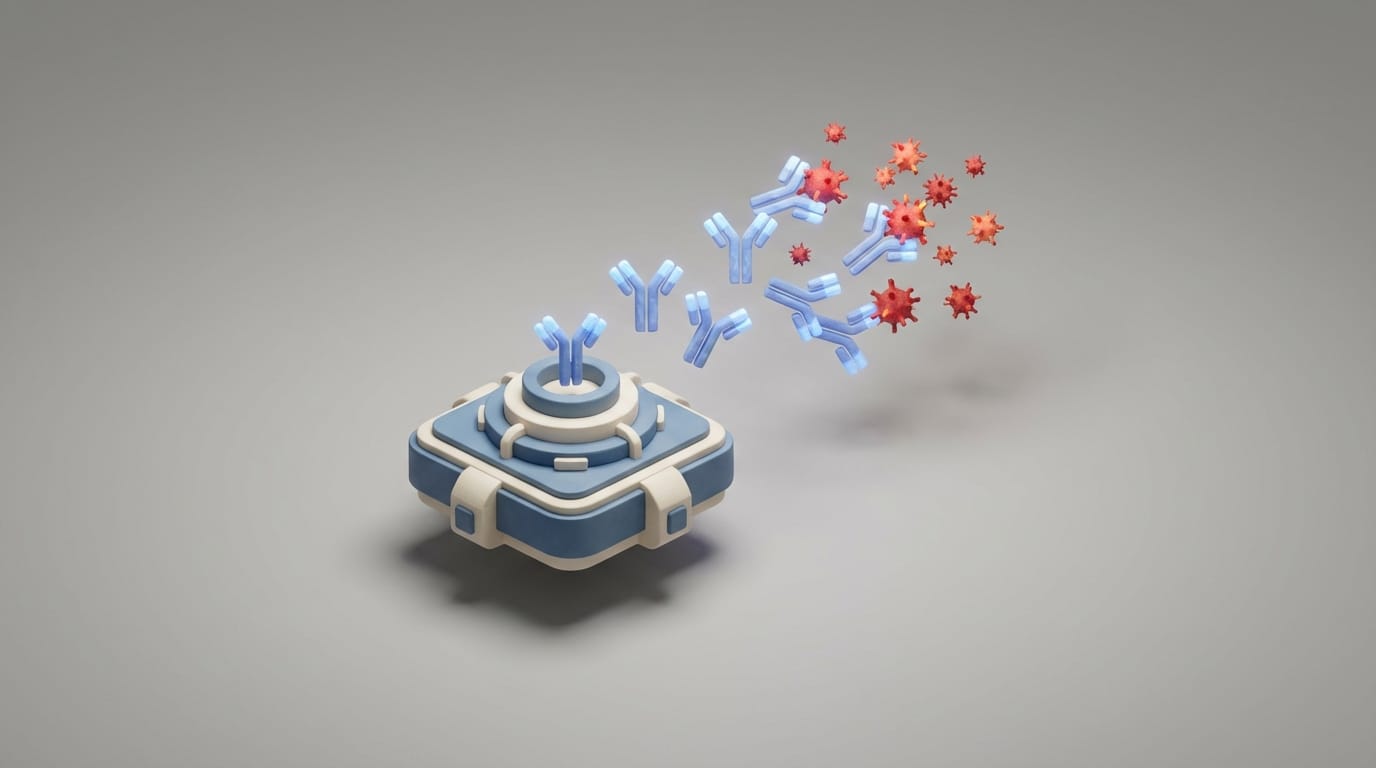
Traditional medicine often works like a wide net, catching both the bad and the good in its path. In contrast, monoclonal antibodies act like a guided tool that ignores healthy cells to hit a specific target. Scientists create these by cloning a single immune cell to find one molecular mark on a virus or cancer cell. This tech has grown from a niche cancer tool to a core part of modern health care. Today, it treats everything from chronic pain to sudden viral outbreaks.
Moving from general treatments to these targeted tools represents a big change in how we manage health. Instead of slowing down the entire immune system, doctors can now fix specific paths. Understanding this system helps patients and students see how these proteins work and why they sometimes cause strong reactions. Knowing the logic behind their design makes it easier to navigate a world where biological drugs are becoming the standard for care.
What distinguishes monoclonal antibodies from natural immunity
The difference between polyclonal and monoclonal responses
When a germ like a virus enters your body, your immune system sends out a mix of different fighters. This “shotgun” approach creates a diverse soup of antibodies that stick to various parts of the invader. While this helps you survive, it lacks the precision needed to hit one spot on a cancer cell without also hitting healthy tissue. This is a common theme in nature, where evolutionary trade-offs produce traits that are good enough for survival but lack the surgical accuracy of lab-made solutions.
How scientists replicate the body’s natural defense system
These engineered proteins represent a more focused version of natural defense. By picking one B-cell that makes the exact antibody needed, scientists can grow millions of identical copies. These clones bind to one specific spot, called an epitope, on a germ. This level of detail allows doctors to treat the cause of a disease at the molecular level while leaving the rest of the body alone. It marks a shift from just managing symptoms to stopping the actual machinery of a sickness.
How laboratories engineer identical protein clones
The hybridoma technology process
Making these identical clones takes a clever biological trick known as hybridoma technology. Because a healthy immune cell does not live long in a lab, scientists join it with a type of cell that can live forever. The new hybrid cell has the antibody-making power of the immune cell and the long life of the lab cell. This creates a permanent factory that can churn out the same precise protein for years. This consistency is vital for making drugs that work the same way every time.
From mouse proteins to fully humanized antibodies
Early versions of these drugs used mouse proteins, which the human body often saw as a threat and attacked. Over time, engineering has improved to make these proteins look more human by swapping out mouse DNA for human sequences. Modern techniques allow for the creation of fully human antibodies that stay in the blood longer and carry a lower risk of rejection. This progress has led to a surge in new treatments, with a vast number of antibody drugs approved by the FDA in recent years.
Decoding the naming conventions of monoclonal antibodies
What the suffix reveals about the protein source
The name of a drug can tell you a lot about where it came from if you look at the ending. For older drugs, these suffixes show the protein source clearly. A drug ending in -omab is made entirely of mouse protein, while -ximab means it is a mix of human and mouse parts. If the name ends in -zumab, it is mostly human with only the very tips being from a mouse. The goal is often a name ending in -umab, which signifies a fully human antibody that the body is less likely to fight.
Understanding -omab, -ximab, -zumab, and -umab
Doctors use these names to guess how a patient might react to a treatment. Mixed drugs carry a higher risk of reactions because the body can still find the mouse parts. While the World Health Organization updated the naming rules recently to cover more complex molecules, the older labels remain common. Patients still see these suffixes on many well-known drugs used to treat joint pain or skin conditions. This system keeps the history of the drug visible to those who prescribe and use it.
How engineered proteins find and destroy their targets
Direct neutralization of harmful proteins
The simplest way these proteins work is by blocking harmful signals directly. In diseases where the body attacks itself, it often makes too much of a protein that causes swelling. The antibody acts like a sponge, soaking up that protein so it cannot reach its target. This is similar to how molecular structures in caffeine change how the brain reacts to energy by blocking specific receptors. By stopping the signal, the drug stops the damage before it starts.
Flagging cells for destruction by the immune system
In cancer care, the antibody often acts as a tag rather than a killer. It sticks to a tumor cell and acts like a bright signal for the rest of the immune system. Once the antibody attaches, it makes the cancer cell easy to find for natural killer cells and other defenders. This helps the body use its own strength to destroy a target that was previously hidden. This partnership between human-made drugs and natural defenses is a core part of modern cancer therapy.
Delivering toxic payloads via antibody-drug conjugates
One of the most advanced uses for these proteins is as a delivery truck for medicine. In these cases, the antibody carries a small amount of chemotherapy or radiation directly to a cell. Because the protein only sticks to certain markers on cancer, it drops the toxic load inside the bad cell while sparing healthy ones. This lowers the side effects that usually come with older types of chemo. There are many approved antibody-drug conjugates currently changing how we treat tough tumors.
Why precision therapy is replacing broad treatments
Managing autoimmune flares by blocking specific cytokines
For a long time, the only way to treat a runaway immune system was to shut the whole thing down. This worked for the disease but left patients open to every cold and flu. Monoclonal antibodies changed this by blocking only the one part causing the flare. By leaving the rest of the immune system alone, patients can manage chronic health issues while keeping their natural ability to fight germs. This precision makes daily life much safer for those with long-term conditions.
The shift in oncology from chemotherapy to targeted biologics
The change in cancer care is even more striking. Old chemotherapy hits any cell that grows fast, which is why it causes hair loss and stomach issues. These new proteins instead look for specific mutations or marks that only the tumor has. This focus allows for longer treatment times and better results. It is a biological way of how batteries release energy to get the best work out of a system with the least amount of waste.
What happens when the immune system reacts to the treatment
The reality of cytokine release syndrome
Precision does not mean there are no risks. When an antibody sticks to its target and starts a fight, the immune system can sometimes overreact. This creates a storm of signals that causes high fever and low blood pressure. Because of this, many of these drugs are given in a clinic where doctors can watch the patient closely. It is a case where the body responds too strongly to the very help it was given, requiring quick care to keep the patient safe.
Long-term considerations for biologic therapy
Another hurdle is that the body might eventually see the drug itself as a foreign object. If this happens, the immune system builds a defense against the medicine, making it less effective over time. Doctors manage this by switching to a different version of the drug or one that looks more human. Patients should know that a lack of side effects does not mean the drug is failing, just as muscle soreness is not always needed to show that a body is changing or growing.
The rise of monoclonal antibodies has moved us away from a one-size-fits-all approach to health. By using the body’s own recognition tools and refining them in a lab, we have gained a level of control over disease that was once impossible. This system works because it respects the complexity of biology while applying the rules of engineering to its smallest parts. As these proteins become even more human in their design, the line between medicine and natural immunity will continue to blur. Our ability to create these tools may eventually outpace the speed at which diseases can hide from them.