
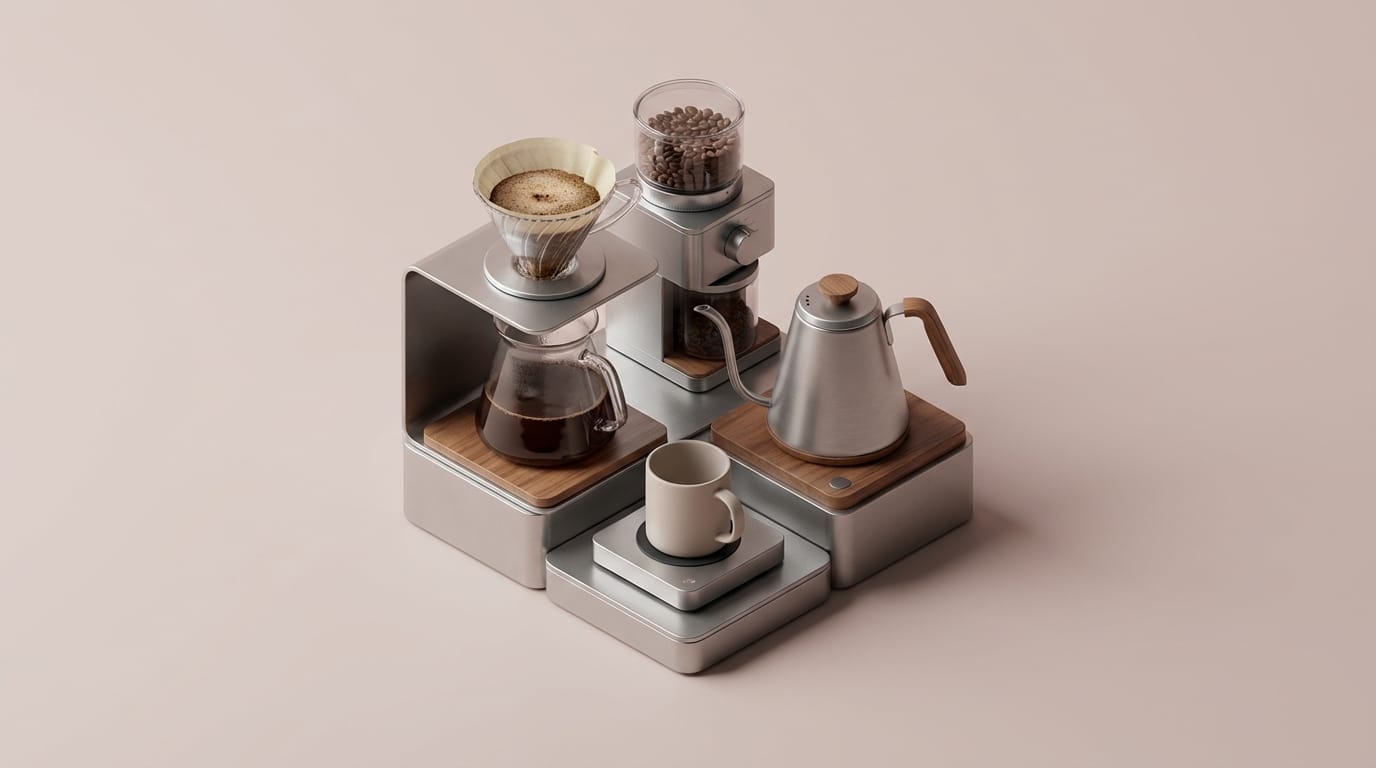
An elevated home coffee brewing experience comes less from the caffeine and more from the purpose behind the ritual. Moving away from simple caffeine delivery toward a focused process transforms a morning task into a disciplined sensory practice. This change mirrors the way high-fidelity audio or fine watchmaking treats technical precision as a path to pleasure. For the modern enthusiast, the goal involves recreating a boutique cafe environment within the home by understanding the chemical, mechanical, and sensory systems that dictate the quality of the final cup.
Currently, specialty coffee has moved from a niche interest to a significant market force. According to market data on specialty coffee trends, this category now represents roughly one quarter of the total coffee market. This growth happens because shoppers prioritize transparency, the origin of the beans, and the craft of preparation. Building a premium home coffee system requires looking at everything from the minerals in your water to the weight of the cup in your hand.
The Philosophy of the Boutique Home Coffee Experience
Most people treat coffee as a commodity, but in a boutique setting, enthusiasts treat it as a seasonal agricultural product. The transition toward purpose begins with the arrangement of your tools and space. A dedicated coffee station should do more than just function; it should reduce friction and improve the physical experience of brewing. This shift creates a measurable mental impact because a structured morning ritual provides an anchor for the day.
Much like structured morning habits signal the brain to focus, the weight of a hand grinder and the sound of water hitting the grounds create a state of flow. A boutique look in the kitchen often relies on having fewer but better items. Instead of a counter filled with automated machines, a premium setup favors high-quality tools that allow for manual control. This approach improves the coffee and fits with the trend of using adaptable storage options to create clean living spaces that prioritize quality over quantity.
Selecting Specialty Beans Based on Terroir and Processing
The foundation of any cup starts with the bean. In the world of specialty coffee, the origin tells the whole story. When you read a label, you should look for the altitude, the variety, and how the farmer processed the beans. Coffee grown at higher altitudes, specifically above 1,500 meters, tends to be denser and more complex. The cooler temperatures at these heights slow the growth of the coffee cherry, which allows sugars to develop fully.
The way a farmer removes the fruit from the seed drives the flavor profile. Washed coffees have all fruit removed before drying, which results in a clean, bright cup that highlights the natural acidity of the bean. In contrast, natural processed coffees dry with the fruit still attached. This leads to heavy-bodied cups with intense berry or tropical fruit notes. Knowing these differences allows you to choose beans based on your mood or the time of day, similar to choosing between different energy sources for specific needs.
Freshness remains a requirement for a good cup. Coffee reaches its peak between seven and twenty-one days after roasting. During this window, the beans have released enough gas to allow for even extraction while keeping the aromatic compounds that provide flavor. You should always look for a specific roast date rather than a generic expiration window, as these dates often hide the decline of the bean quality over time.
Curating Hardware for Elevated Home Coffee Brewing
In elevated home coffee brewing, your hardware acts as the interface for manipulating coffee chemistry. The most critical tool is the grinder. A high-end burr grinder is essential because it produces a consistent particle size. Blade grinders shatter beans into a mix of large chunks and fine dust, which leads to a cup that tastes both sour and bitter at the same time. Precise heating serves as the next pillar of the system.
A gooseneck kettle provides the control needed to manage the flow and placement of water. This control is vital for agitation, or the physical movement of the grounds during the brew. If you pour water too fast, it can create channels where the water misses the coffee entirely. If you pour too slowly, the temperature might drop below the optimal window of 90 to 96 degrees Celsius. Digital scales help maintain consistency because you must measure by weight in grams rather than by volume in scoops.
A standard ratio of 1:16 coffee to water serves as a good starting point, but the ability to adjust this by a single gram allows you to perfect a specific bean. This level of precision protects your flavor profile and ensures that your morning ritual remains a consistent success. By removing the guesswork, you turn the brewing process into a repeatable craft rather than a game of chance.
Why Water Chemistry Dictates the Final Flavor Profile
Coffee consists of approximately 98% water, yet many brewers ignore its chemical makeup. Tap water often contains chlorine or high levels of bicarbonates that act as a buffer, neutralizing the acids that give specialty coffee its life. To achieve clarity, you must look beyond simple filtration and consider the minerals in the water. Specific ions, such as magnesium and calcium, are better at pulling flavor compounds out of the grounds.
Magnesium has a high binding energy with the compounds found in coffee, according to research on mineral extraction. This results in a brighter, more vibrant cup compared to water that is too soft or too hard. Optimal extraction typically occurs at a total dissolved solids level of 75 to 150 mg/L. Many enthusiasts now use distilled water and add specific mineral packets to create a custom water profile designed specifically for coffee.
This level of control ensures that the path from farm to cup is not wasted. The hard work of the farmer and the roaster can easily be lost to poor local water chemistry at the final step. By treating water as an active ingredient rather than just a solvent, you ensure the bean reaches its full potential.
Advanced Manual Techniques for Precise Extraction
The bloom is the most visual phase of manual brewing. When hot water first hits the grounds, they release carbon dioxide, causing the coffee bed to swell and bubble. This phase is important because gas acts as a barrier to water. If you do not allow the coffee to degas for 30 to 45 seconds, the water cannot soak into the grounds properly, which leads to hollow flavors. After the bloom, you must manage the balance of immersion and percolation.
In a method like the V60, water passes through a bed of coffee and introduces fresh solvent to the grounds. This requires a precise drawdown time. If your brew takes five minutes instead of three, your grind is likely too fine, causing the water to stall and create harsh notes. If it drains in two minutes, the grind is too coarse, leaving the sweetness locked inside the beans. Managing turbulence is the final technical challenge.
Using a gooseneck kettle to pour in gentle circles ensures that every grain of coffee gets wet at the same time. This prevents coffee from sticking to the side of the filter where it cannot contribute to the flavor. The goal is a flat, even bed of grounds at the end of the pour. This flat bed signals a uniform extraction across the entire dose and indicates that you have successfully managed the flow of water.
Designing the Visual Presentation and Environment
The experience of coffee does not end when the brewing stops. The cup you choose impacts how you perceive flavor. Research into sensation transference suggests that the weight, texture, and shape of a cup can change how we taste acidity and sweetness. A bulbous cup tends to trap aromas, making fruit notes feel more intense, while a wide-rimmed cup spreads the liquid across the tongue to emphasize acidity.
A study on sensory perception by neuroscientists found that cup shape influences both enjoyment and the specific flavors identified by the drinker. This is why many high-end bars now serve coffee in glassware that looks like wine carafes. The visual clarity and the ability to swirl the liquid allow for better aeration. This unlocks the aromas that make up the majority of what we think of as taste.
Organizing your station for a smooth flow is the final touch of the experience. Every tool should have a designated place that reduces movement. This efficiency allows you to stay present in the ritual rather than searching for a misplaced scale. Your environment should be a sanctuary where you can take the first sip without the distraction of a screen or a messy workspace. By treating the presentation with care, you honor the effort put into the brew.
Refining the Daily Routine into a Mastery Practice
True mastery of elevated home coffee brewing comes from repetition and tracking. Keeping a simple tasting journal allows you to track your results over time. By noting the bean, the grind setting, and the water temperature, you can fix your technique. If a cup tastes thin, you can try a finer grind next time. If it tastes dry or ashy, you should use a coarser grind or lower the water temperature.
Maintenance provides the foundation for consistency. High-end grinders require regular cleaning to remove old oils and dust that build up in the burrs. If left alone, these old particles will oxidize and make every new brew taste bitter. Treating your equipment with respect ensures that your system remains capable of producing great results for years. This care extends the life of your tools and keeps your flavors clean.
Developing your palate is a long-term project that requires practice. Try brewing two different beans side-by-side to compare them. This contrast makes it much easier to identify specific notes like jasmine, stone fruit, or chocolate. Over time, your brain builds a library of flavors, allowing you to appreciate a specific harvest the way a critic understands a piece of art. This depth of understanding turns a habit into a pursuit of excellence. By mastering the variables of water, heat, and motion, you transform your kitchen into a space of professional craft and reclaim a portion of your day for intentionality.