
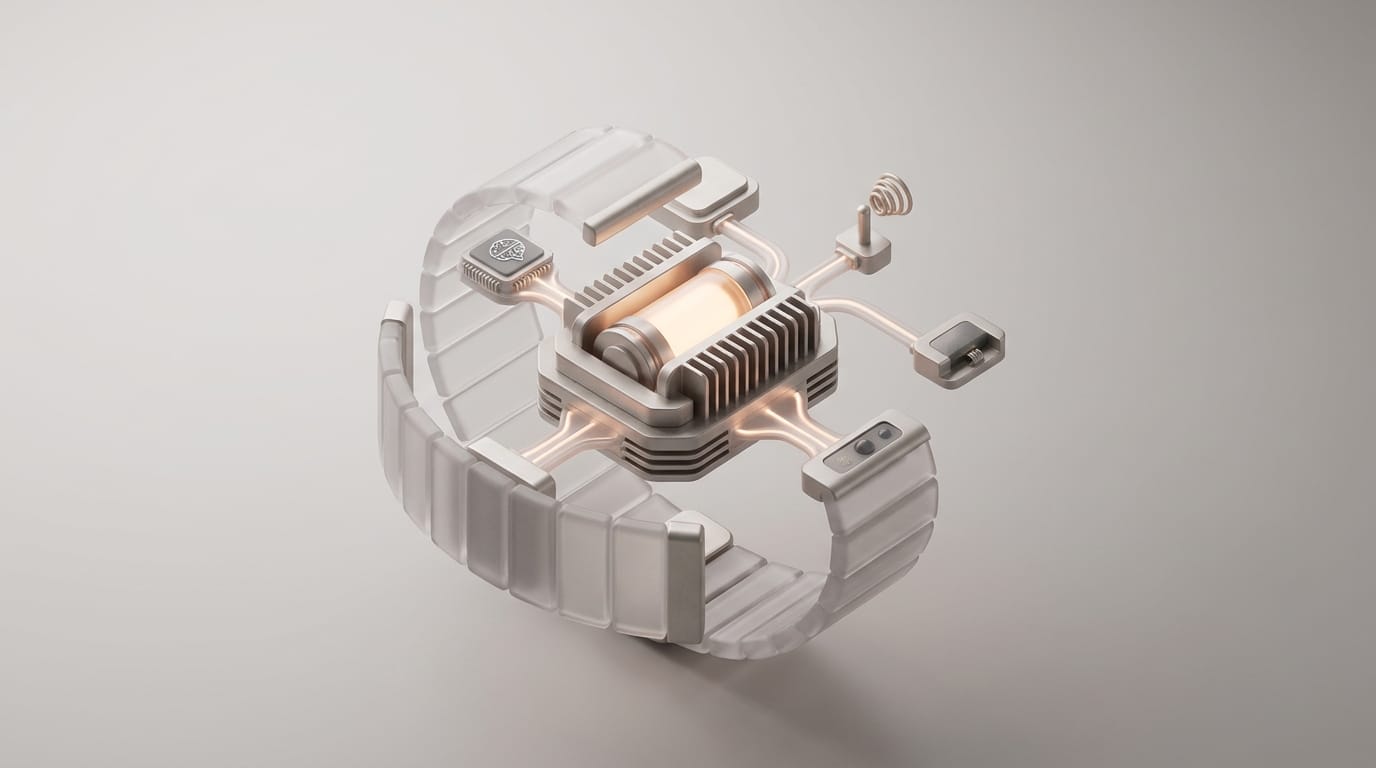
The Evolution of Wearable Battery Technology
The most advanced wearable device becomes an expensive bracelet the moment its battery dies. This reality highlights the critical gap between modern processing power and energy storage limits. Currently, the underlying systems of wearable battery technology are shifting away from traditional lithium-ion constraints toward a more resilient design. This evolution stems from the realization that simply packing more chemistry into a tiny frame has reached its physical limit.
For years, the “energy wall” dictated that a more capable smartwatch required a bulkier design or shorter runtimes. Engineers now bypass this wall by reimagining how devices store, harvest, and manage energy at the molecular level. We are moving toward a system where the battery is no longer a separate brick inside a casing; instead, it serves as a foundational, flexible part of the device structure itself. Understanding this shift requires looking past the marketing specs of milliamp-hours and into the physics of hybrid energy systems. The goal is no longer just a larger fuel tank; it is a more efficient engine combined with a self-refilling system that aims to make traditional wall chargers unnecessary.
The Chemical Evolution of Wearable Battery Technology
The core of the power problem lies in the liquid electrolytes found in standard lithium-ion cells. These liquids require rigid, protective housings to prevent leaks and fires, which limits how small or flexible a wearable can be. To understand the baseline of these reactions, it is helpful to look at how electrochemistry allows batteries to store energy, where the movement of ions defines the capacity and safety of the cell.
Transitioning to Solid-State Thin-Film Batteries
Solid-state technology replaces flammable liquid electrolytes with stable solid materials, often ceramics or polymers. This shift eliminates the risk of thermal runaway, providing a critical safety feature for devices worn directly against human skin. Today, semi-solid-state batteries using ceramic electrodes are becoming more common because they do not swell during charge cycles, according to industry analysis of thin battery design. These thin-film cells are incredibly resilient; some designs can withstand over 10,000 bending cycles while maintaining a thickness of just 0.45mm. This mechanical flexibility allows engineers to distribute energy storage throughout the device, such as within the curvature of a ring or the layers of a medical patch, rather than stacking it in a central hub.
The Role of Silicon Anodes in Energy Density
While solid-state design improves safety and form, silicon anodes provide the key to capacity. Manufacturers traditionally use graphite for anodes, which has a theoretical limit on how many lithium ions it can hold. Silicon can store up to ten times more lithium by mass than graphite. In practice, modern silicon-based anodes deliver three to five times the capacity of traditional cells, reaching energy densities of approximately 400 Wh/kg. The primary challenge with silicon has always been its tendency to expand and contract during charging, which causes the material to crack over time. Nano-engineering solves this by using silicon-carbon composites or nanowires that breathe without breaking. This allows for significantly thinner devices that still power GPS and heart rate sensors for several days on a single charge.
Software Optimization and the Power Budget
Even the best wearable battery technology can be drained quickly by inefficient software. The power budget of a modern wearable is a zero-sum game where every sensor ping and screen refresh must be justified. System designers use increasingly sophisticated methods to manage these draws without sacrificing the user experience. By focusing on how the device behaves when idle, manufacturers can extend runtime without adding physical weight.
Managing Sensor Duty Cycles for Efficiency
Health monitoring is the most expensive part of the power budget. Constant heart rate or pulse oximetry tracking requires significant current for the LEDs and signal processing. To mitigate this, modern wearables use adaptive sensing algorithms that predict user activity. If the accelerometer detects no movement and the user is asleep, the system throttles the heart rate sensor frequency. This strategy mirrors the ways users strategies to improve device battery life by reducing unnecessary radio pings in home automation. By intelligently choosing when to gather data, the device saves power for critical moments while maintaining an accurate health profile.
Display Technologies That Minimize Idle Drain
The screen remains the single largest power draw in any wearable. Two technologies compete to solve this: LTPO OLED and Micro-LED. Low-Temperature Polycrystalline Oxide (LTPO) allows a display to vary its refresh rate dynamically from 120Hz down to just 1Hz. When you look at a static watch face, the screen updates only once per second, which reduces power consumption by roughly 24% compared to standard OLED panels. Meanwhile, Micro-LED is emerging as a high-brightness, low-power alternative that offers better sunlight legibility without the same energy penalty as traditional backlighting, as detailed in guides comparing modern display types.
The Rise of Hybrid Energy Harvesting Systems
The hidden insight of the current endurance revolution is the shift from passive storage to active harvesting. We are moving away from the idea that a battery is a bucket you fill once a day. Instead, the goal is a hybrid system where ambient energy offsets the drain of background sensors, effectively slowing the rate at which the battery empties. This approach turns the environment around the wearer into a constant, if small, power source.
Converting Kinetic Motion Into Electrical Storage
Kinetic energy harvesting uses the natural movement of the human body to generate micro-currents. Piezoelectric materials, which generate a voltage when compressed or stretched, are being integrated into the joints of smart clothing and watch straps. While these systems do not yet produce enough power to run a full smartwatch display, they generate enough energy to keep a low-power Bluetooth connection alive or run a basic fitness tracker. This effectively extends the intervals between manual charges and ensures that basic functions remain active even when the primary cell is low.
Leveraging Thermoelectric Effects From Body Heat
The human body is a constant source of thermal energy. Thermoelectric generators exploit the temperature difference between your skin and the cooler ambient air. This Seebeck effect produces power densities sufficient to run basic sensors. While the output is small, research into self-sustaining wearables suggests this is enough to power medical sensors or clock functions indefinitely. These hybrid systems represent the first step toward perpetual runtime devices that never need to be removed for charging.
Why Charging Speed Matters as Much as Capacity
Until harvesting systems can fully offset power use, charging speed remains the primary fallback. However, charging a tiny wearable battery at high speeds presents engineering challenges that do not exist for smartphones. Heat is the enemy of both battery health and user comfort. Because the device sits against the skin, the thermal limit is very tight; a watch that reaches high temperatures during charging can cause discomfort or burns. Designers must balance the desire for a fast top-up with the physical limits of thermal conductivity in small form factors.
Rapid charging also stresses the delicate internal chemistry of the battery. High-current cycles can lead to the formation of dendrites, which are tiny, needle-like structures that can eventually puncture the separator and cause a short circuit. To combat this, modern hardware uses advanced Power Management Integrated Circuits (PMICs) that communicate with the charger to adjust current in real-time based on internal temperature and cell age. While large-scale energy storage technology stabilizes the electrical grid, these micro-scale PMICs perform a similar balancing act to ensure the wearable battery survives for years of daily use.
Architecting the Invisible Charger Future
The final stage of this evolution is the integration of energy storage into the materials we wear. This changes the industrial design of the device from a pendant on a string to a truly integrated system. We now see commercial watch straps that act as secondary battery reservoirs. By using flexible thin-film cells woven into silicone or fabric, manufacturers double the effective capacity without increasing the thickness of the watch case itself. Smart fabrics also use conductive threads that act as both sensors and energy harvesters, turning a simple shirt into a data hub with no visible battery at all.
This path leads toward an “invisible charger” future. In this scenario, the combination of high-density silicon anodes, solid-state safety, and hybrid harvesting creates a device that charges through ambient light and motion as you go about your day. The user experience shifts from managing a chore, such as plugging in a cable, to enjoying a system that maintains its own equilibrium. As hardware specifications continue to improve, the measure of a great wearable will no longer be how long it lasts, but how rarely you have to think about its power at all.
The shift in wearable battery technology reflects a broader transition from simple energy storage to complex, active energy management systems. By combining solid-state safety with silicon-driven density and ambient harvesting, engineers are finally closing the gap between the power our devices need and the energy they can carry. This moves wearables out of the category of high-maintenance toys and into the realm of essential, always-on infrastructure for health and communication. What happens to our relationship with technology when the devices we rely on never have to be taken off? The invisible charger is the prerequisite for a future of truly ambient computing.