A persistent drip does more than waste water; it signals a mechanical failure that simple part replacement often fails to solve without addressing the mineral buildup inside the valve. When homeowners search for how to fix a leaky faucet, they often focus on buying new washers or cartridges while overlooking the internal environment where these seals live. This oversight explains why many repairs fail within a few months. Every drip counts toward a significant environmental and financial cost, as a faucet dripping once per second wastes over 3,000 gallons of water annually. According to the Environmental Protection Agency’s WaterSense program, fixing these leaks preserves the integrity of your home’s plumbing system and prevents unnecessary waste.
Understanding the system starts with recognizing that a faucet acts as a pressure-control valve. When you turn the handle, you move a barrier against a pressurized stream of water. If the surfaces between that barrier and the faucet housing are not smooth, water finds a path through. To solve the issue permanently, you must look past the rubber components and focus on the metal housing itself. This structural approach ensures the repair lasts through years of daily use.
Identifying the Root Cause of Faucet Leaks
Recognizing Different Faucet Types
Before you pick up a wrench, you should identify the design of your fixture. Faucets generally fall into four types: compression, ball, cartridge, and ceramic disk. Compression faucets use a screw-like design to press a rubber washer against a metal seat; if you have separate handles for hot and cold that require multiple turns, you likely have this system. Modern single-handle fixtures usually use cartridge, ball, or ceramic disk parts. Cartridge faucets use a replaceable sleeve to regulate flow, while ball faucets use a rotating ball with internal chambers. Ceramic disk faucets remain the most durable option because two hard disks slide against each other to create a tight seal. Finding your specific type matters because the internal parts dictate which surfaces need the most care during cleaning.
Locating the Source of the Drip
Where the water appears tells you which internal seal has failed. A drip from the end of the spout usually indicates a failure at the primary valve seat or cartridge seal. However, if water pools around the base of the handle, the issue likely involves a worn O-ring or a loose packing nut. For leaks occurring under the sink, the problem may lie in the supply line connections or a failing seal where the faucet meets the countertop. In these cases, applying waterproof caulk to sinks and tubs provides extra protection against moisture seeping into your cabinetry.
Preparation and Safety Protocols
Shutting Off the Water Supply
Never disassemble a pressurized system. Locate the shut-off valves under the sink and turn them clockwise until they stop. If these valves feel stuck or show signs of rust, you may need to shut off the main water line for the house. Once the supply is off, open the handles to the “on” position to drain any leftover water. This step relieves internal pressure and prevents a sudden spray when you loosen the valve stem.
Gathering Essential Tools
To perform a clean repair, you will need a small kit of basic tools. Have a set of Allen wrenches for handle screws, slip-joint pliers, a flat-head screwdriver, and a small brush ready. Because small parts fall into drains easily, always close the sink stopper or lay a towel over the basin. If you have many small washers and screws to track, organizing tools with modular storage solutions helps you keep your workspace clear and prevents the loss of critical parts.
How to Fix a Leaky Faucet by Disassembling the Valve
Removing the Handle and Decorative Caps
Most modern faucets hide fasteners behind decorative caps or small plastic buttons labeled hot and cold. Gently pry these off with a thin screwdriver while taking care not to scratch the finish. Underneath, you will find a Phillips-head screw or a small hex screw. Once you loosen the screw, the handle should lift straight up. If it stays stuck due to mineral buildup, a gentle tap with a rubber mallet or a quick soak in vinegar can often break the bond of the white crust holding it in place.
Extracting the Valve Stem or Cartridge
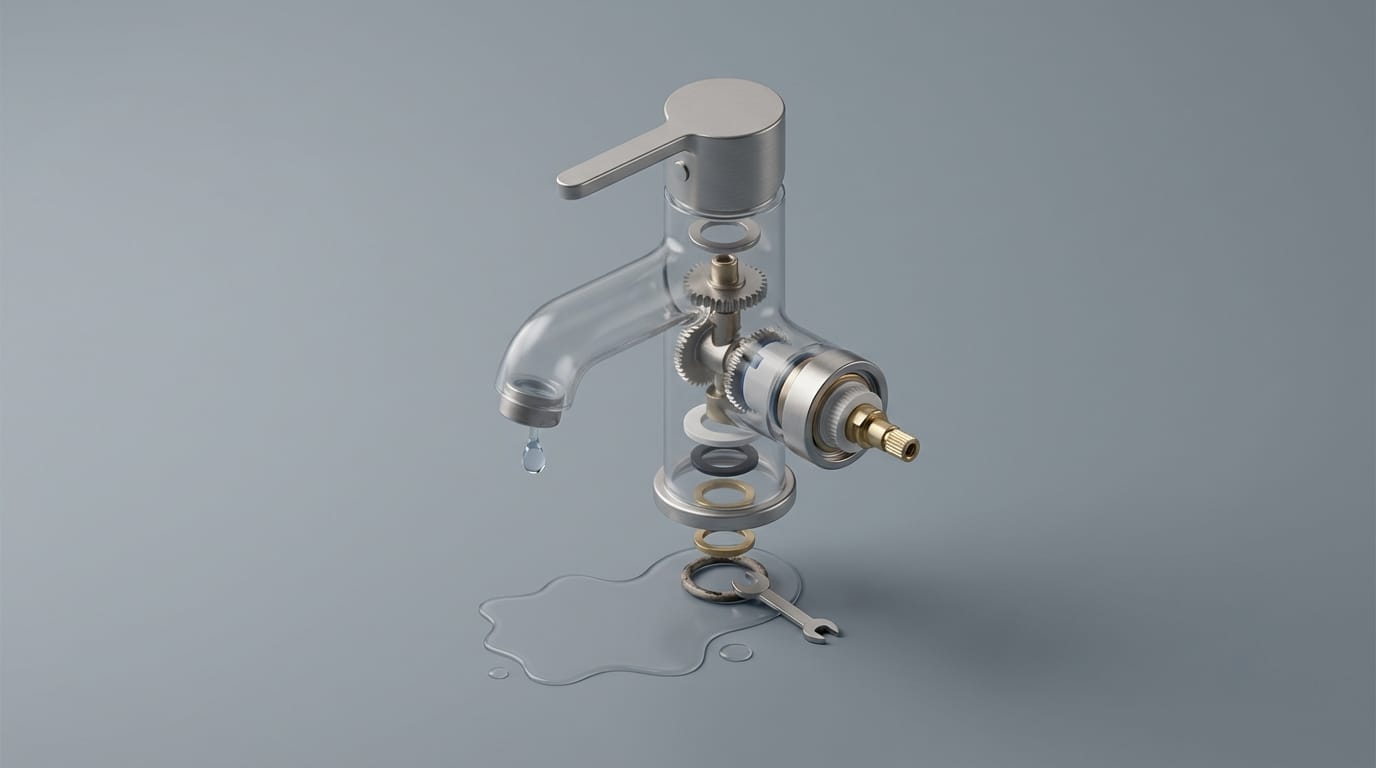
With the handle removed, you will see a brass or plastic assembly held in by a large nut. Use your pliers or a wrench to unscrew this nut and pull out the valve stem or cartridge. Note the orientation of the part; many cartridges have notches that must align with the faucet body during reassembly. Take a photo of the arrangement before you move anything to ensure the handle turns the correct way when you put it back together.
The Role of Internal Housing Maintenance
De-scaling the Valve Seat with White Vinegar
This step is why many people fail when learning how to fix a leaky faucet properly. Over years of use, hard water minerals like calcium solidify on the metal surfaces inside the faucet and create a rough texture. If you install a new, soft rubber washer onto a rough, calcified valve seat, the metal will shred the rubber within weeks. To fix this, create a 50/50 mix of white vinegar and warm water. Soak a rag in the mix and pack it into the internal cavity of the faucet body. Let it sit for at least 30 minutes to dissolve the calcium. Manufacturers like Kohler suggest using vinegar for safely maintaining metal fixtures without damaging the finish. After soaking, use an old toothbrush to scrub the internal threads until the metal feels smooth.
Polishing Internal Metal Surfaces
If the mineral buildup stays stuck, you may need a valve seat dresser to grind down the metal seat and create a fresh surface. For most modern faucets, a thorough cleaning and a light rub with a soft cloth work well. The goal is a flush fit where the seal and the housing meet with no gaps. If the internal metal shows deep pits or cracks, the housing has failed, and new parts will not stop the leak.
Replacing High-Wear Internal Components
Matching O-Rings and Washers
When purchasing replacement parts, bring your old parts to the store to match the exact size. You should look for high-grade rubber or silicone seals because they resist heat and chemicals better than standard options. While learning how to fix a leaky faucet, you might notice that modern parts feel lighter than older ones; always choose the highest quality materials available to ensure the repair lasts for years.
Applying Plumber’s Grease
Before installing new O-rings or a cartridge, apply a thin layer of silicone-based plumber’s grease to all rubber parts. This lubricant allows the parts to slide into place without tearing and provides a water-resistant barrier that protects the rubber from drying out. Never use petroleum-based lubricants like WD-40 on rubber seals, as these chemicals cause the rubber to swell and fall apart quickly.
Reassembling and Testing the System
Restoring the Internal Components
Reverse your disassembly steps and ensure the cartridge sits fully in its notches. Tighten the retaining nut firmly but do not force it, as overtightening can crush new seals or crack the faucet housing. A good rule is to tighten the nut by hand and then add a quarter-turn with a wrench. Reattach the handle and caps only after you confirm the leak has stopped.
Pressurizing the Lines Gradually
Turn the faucet handle to the “on” position before turning the water supply back on. This allows air trapped in the lines to escape without creating a pressure shock that could damage pipe joints. Slowly open the under-sink valves and let a steady stream of water flow for a minute. Finally, turn the faucet to the “off” position and inspect the spout and base for moisture. Let the water sit under pressure for five minutes to ensure the seals hold tight.
Extending the Life of Your Faucet
Cleaning the Aerator Screen
While you have your tools out, unscrew the aerator from the tip of the spout. This small mesh screen often traps grit and mineral flakes dislodged during your repair. Soak the aerator in vinegar and rinse it before reinstalling it. A clean aerator ensures a smooth flow and maintains the correct pressure within the faucet system.
Knowing how to fix a leaky faucet is a basic skill that saves money and prevents home damage. By focusing on the internal housing and mineral removal rather than just swapping out rubber parts, you address the environment that caused the failure in the first place. This approach doesn’t just stop a drip; it restores the fixture to its original state. In an era where many household items feel disposable, maintaining the core parts of your home is a practical and necessary act of preservation.