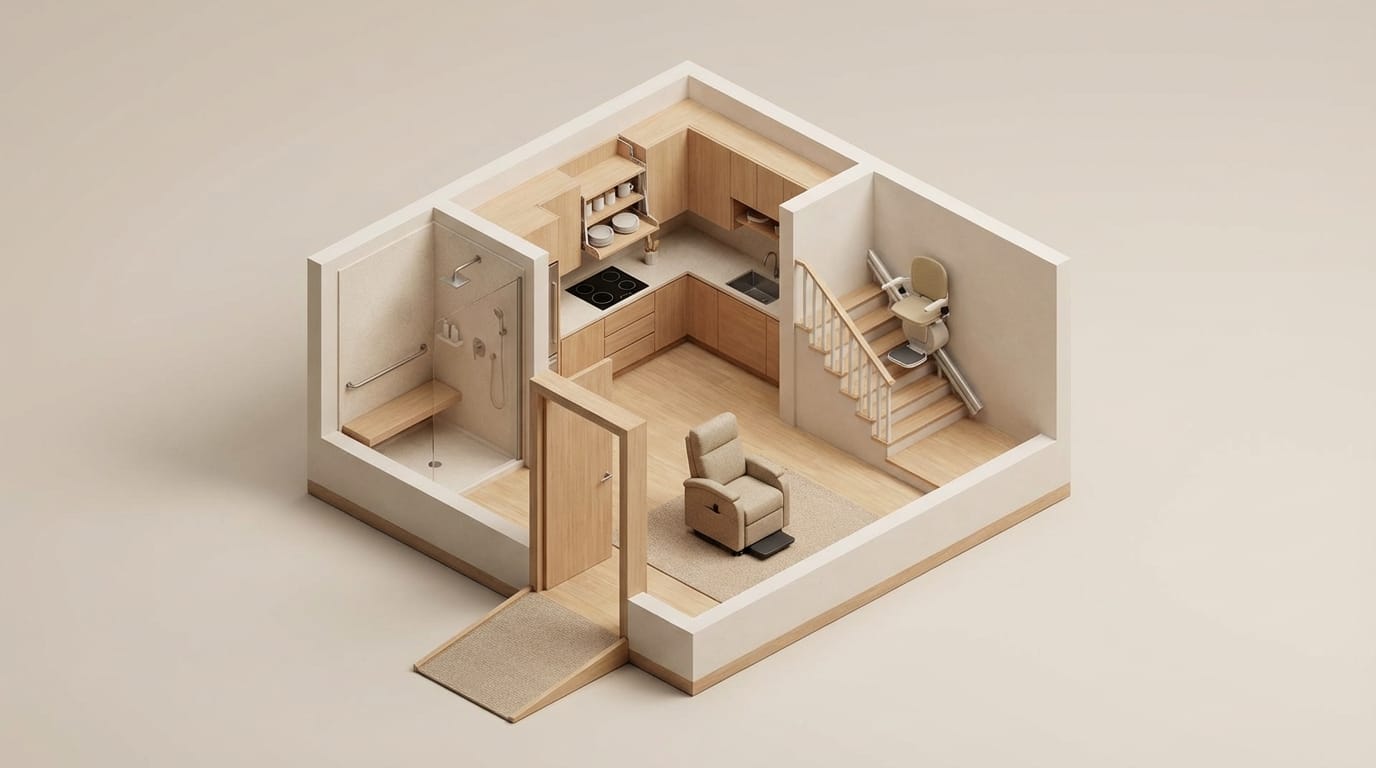
Home design often values looks over long-term use; this leaves residents in a tough spot when their physical needs change. Builders design most houses for a narrow group of able-bodied adults, often including narrow doors and high steps that become obstacles. Strategic aging in place home modifications help a house adapt to its owners so they do not have to move.
Long-term design follows the rules of universal design. This system makes an environment usable by everyone, no matter their age or physical ability. By shifting from reactive medical fixes to smart structural changes, homeowners create spaces that feel like high-end upgrades rather than medical clinics. This choice keeps the home attractive to buyers while ensuring it remains a safe place for many years.
This change is about more than safety; it makes the home run better. Removing daily friction like steep stairs or heavy knobs helps the whole house flow. These changes act as a personal insurance policy and increase the property value. In the following sections, we explore how these upgrades improve life and financial security.
Modern Standards for Aging in Place Home Modifications
The idea of accessibility usually brings to mind ugly ramps and metal rails, but home engineering has evolved. Today, the best aging in place home modifications stay hidden. These features make a home safer for a senior while making it more appealing to a young family or a professional buyer.
Universal Design Versus Clinical Fixtures
Universal design is a framework that makes environments naturally accessible to everyone. In a house, this means picking layouts that serve every person at once. For example, a wider hallway helps a wheelchair user move, but it also makes moving furniture or carrying groceries easier for any owner. When you avoid a medical look, you keep the high-end appeal of your property.
A wall-mounted sink with open space below can look like a modern feature instead of a requirement for access. This design logic ensures that when you sell, buyers see a smart, forward-thinking home. They will not see a specialized facility they need to fix or change. This approach treats accessibility as an upgrade rather than a compromise.
The Financial Logic of Future Proofing
Preparing a home for the future protects against the high costs of senior care facilities. While a big renovation might cost a significant amount, the yearly cost of assisted living is often much higher, according to recent financial data from BILD. Often, the price of a one-time renovation equals less than a year of facility fees. This makes the investment a practical way to save money over time.
From a resale view, bathroom remodels that use universal design features often return a large portion of their cost, based on current market trends reported by ValiantCEO. As the population grows older, homes that are already ready for seniors command higher prices. Buyers look for properties that will not need expensive changes if their parents move in or if they plan to stay for decades.
Improving Layouts with Open Concept Design
The layout of a home is its most basic system. Traditional floor plans with many walls create tight spots that limit movement. When you use an open concept, you reduce the number of turns and narrow paths. This helps prevent falls and makes the whole house feel more connected and easy to navigate.
Installing Zero-Step Entries and Thresholds
The transition between the outside and the inside is the first place many homes fail. A standard entrance has steps and raised thresholds that can trip anyone. Engineering a zero-step entry requires more than just a ramp; you must manage drainage and ground levels to keep water out. This removes the physical barrier of a step while keeping the home dry.
Low thresholds (half an inch or less) should exist throughout the house to create a flat floor. These changes are helpful when designing and building multifunctional outdoor living spaces because they allow a patio to feel like part of the living room. This smooth flow is a mark of modern architecture and appeals to almost all buyers.
Widening Hallways for Better Traffic Flow
Standard hallways are often too narrow, making a home feel tight. Widening these paths to 36 or 42 inches changes the feel of the house, making it look larger and more open. While this sounds like a huge task, you can often find extra space during a renovation by moving walls that do not hold up the roof. These small gains in space make a massive difference in daily comfort.
Replacing small doors with 36-inch versions is another high-impact change. If widening the frame is too hard, you can use swing-away hinges. These hinges move the door completely out of the way to add extra clearance. Sliding barn doors or pocket doors also work well because they do not swing into the room, which saves floor space and makes entry easier.
Designing a Kitchen for All Abilities
The kitchen is the heart of the home, but it also has risks like heat and heavy lifting. A smart kitchen design focuses on reducing physical strain and increasing safety. By changing how you store items and how you cook, you make the room safer for every member of the family.
Safety Benefits of Induction Cooktops
Induction technology is a great example of hidden accessibility. Unlike gas or old electric stoves, induction uses magnets to heat the pan directly. The surface stays cool to the touch, which stops accidental burns and prevents fires. The heat stops immediately when you move the pot, making it much safer for everyone.
These cooktops are also easier to clean and keep the air in the kitchen cleaner because they do not burn gas. You can mount them flush with the counter, allowing you to slide heavy pots instead of lifting them. This mix of safety and modern style makes induction a smart upgrade for any kitchen renovation.
Better Access with Pull-Out Shelves
Bending down to find a pot in a deep cabinet causes back strain and loss of balance. Modern cabinets solve this with pull-out shelves and rotating units. These systems bring the items to you, so you do not have to reach or stoop. This makes organizing the kitchen easier and keeps everything within reach.
Counter heights also matter. While most counters sit at 36 inches, adding a section at 30 inches allows you to work while sitting. This helps children help with cooking or allows adults to sit while chopping food. Replacing small knobs with large pulls or handles also makes opening drawers easier for people with less hand strength.
Making the Bathroom a Safe Haven
Bathrooms are often the most dangerous rooms because of wet, hard surfaces. However, safety for seniors does not have to look like a hospital. Using high-end materials allows you to create a wet room that feels like a spa while providing full access for everyone in the home.
Moving to Curbless Walk-In Showers
The walk-in, curbless shower is a top feature in modern bathrooms. By sloping the floor toward a drain, you remove the need for a step or a tub wall. This design is safer and makes the bathroom look much bigger. It creates a flat, continuous floor that looks high-end and elegant.
Technical skill is important for this change. You must ensure the floor is waterproofed correctly to protect the house. Planning the perfect wall-mounted bathroom faucet layout also helps because you can place controls where you can reach them without getting wet. This allows you to set the temperature before you step in.
Using Multipurpose Grab Bars
Old-fashioned grab bars often look like they belong in a clinic, but new versions serve two purposes. You can find towel bars or toilet paper holders that are strong enough to support a person’s weight. These provide stability without looking like medical equipment. They blend into the room while offering a firm grip when needed.
To be safe, you must bolt these bars into the wall studs. You should also use non-slip floors throughout the room. Toilets that sit slightly higher than standard models are another easy change. These reduce strain on the knees and hips, making them a better choice for almost every adult.
Using Smart Technology for Home Monitoring
Smart home technology is now a main part of living independently. These systems act like a digital brain for the house, doing tasks that once required physical effort. From lighting to temperature control, automation makes a home safer and more comfortable without needing constant attention.
Voice Controls and Motion Lighting
Smart lights allow you to control the room without looking for switches in the dark. Motion sensors in halls and bathrooms are vital for safety because they turn on automatically at night. This prevents trips and falls when you need to move around in the evening. These systems can even help your body stay on a schedule by mimicking natural light patterns.
Climate control also adds value. A smart thermostat keeps the home at a safe temperature without you having to touch it. If the Wi-Fi is weak because you have many new devices, you can fix your connection with smart home Wi-fi troubleshooting to keep these safety tools online. Reliable internet is essential for a modern, safe home.
Sensors for Leaks and Fall Detection
Small sensors can now find water leaks under a sink or detect a fall in the living room. Modern fall detection uses radar or smart cameras that protect your privacy by tracking movement patterns instead of recording video. These tools give residents and their families peace of mind because the house can call for help automatically if an accident happens.
Water sensors are also great for protecting the value of the house. They can turn off the main water valve if a pipe breaks, preventing the kind of major damage that forces people to sell their homes. These smart tools make the house active in protecting itself and the people inside.
Choosing Better Hardware and Finishes
The small details like handles and switches define how you experience your home every day. For those with less hand strength, old hardware can cause pain. Simple changes to these items make the home much more intuitive to use for everyone, including guests and children.
Rocker Panels and Lever Handles
Standard light switches require you to pinch and flip them. Rocker switches have a large flat surface that you can press with a knuckle or an elbow. This change makes the home easier to use and gives the walls a clean, modern look. It is a small upgrade that provides a much better daily experience.
Round doorknobs are hard to turn if you have grip issues or if you are carrying something. Lever handles allow you to open a door by pushing down. These handles give you more power with less effort, making them a better choice for any home. They are easier for children and seniors alike.
Color choice is also a tool for safety. Using different colors for the floor and the walls helps people see where the room ends. This is helpful as vision changes over time. Picking a counter color that stands out from the floor also helps people avoid bumping into corners. These design choices are simple but make the home much safer.
Planning Your Upgrade Timeline
Renovating a home is a long process. Trying to do every project at once is often too expensive and stressful. It is better to think of it as a series of smart upgrades that you finish over time based on what you need most. This allows you to focus on quality rather than speed.
Starting with High-Impact Changes
If you have a budget, focus on the bathroom and the entries first because these areas have the highest risk of injury. Adding grab bars and better lights or removing rugs that might cause a trip are cheap, fast ways to improve safety. After those are done, you can move to bigger tasks like widening doors or fixing the shower.
Doing the work in stages helps you manage the mess in your home. It also lets you buy better materials for each job. High-quality finishes last longer and help the house sell for more money later. Taking your time ensures the job is done correctly the first time.
Consulting with Specialists
For big structural changes, it helps to talk to a professional who understands universal design. These experts can find hidden risks and suggest the best products for your specific house. They know the local building rules and can help you get the right permits for the work. This ensures your aging in place home modifications are a safe financial bet.
A professional can also help you avoid spending more than the house is worth for your neighborhood. By balancing your needs with what buyers want, they ensure your investment is smart. They help you decide which jobs you can do yourself and which ones need a licensed contractor to handle the plumbing or electrical work.
Building a home for the long term is a smart commitment to staying independent. When you use universal design, you turn accessibility into a high-end feature. This approach ensures every change makes your daily life easier while adding value to the property. Whether you use the safety of an induction stove, the open feel of a curbless shower, or the ease of lever handles, these aging in place home modifications create a space that works for everyone. As the world changes, homes that adapt will become the new standard for excellence.