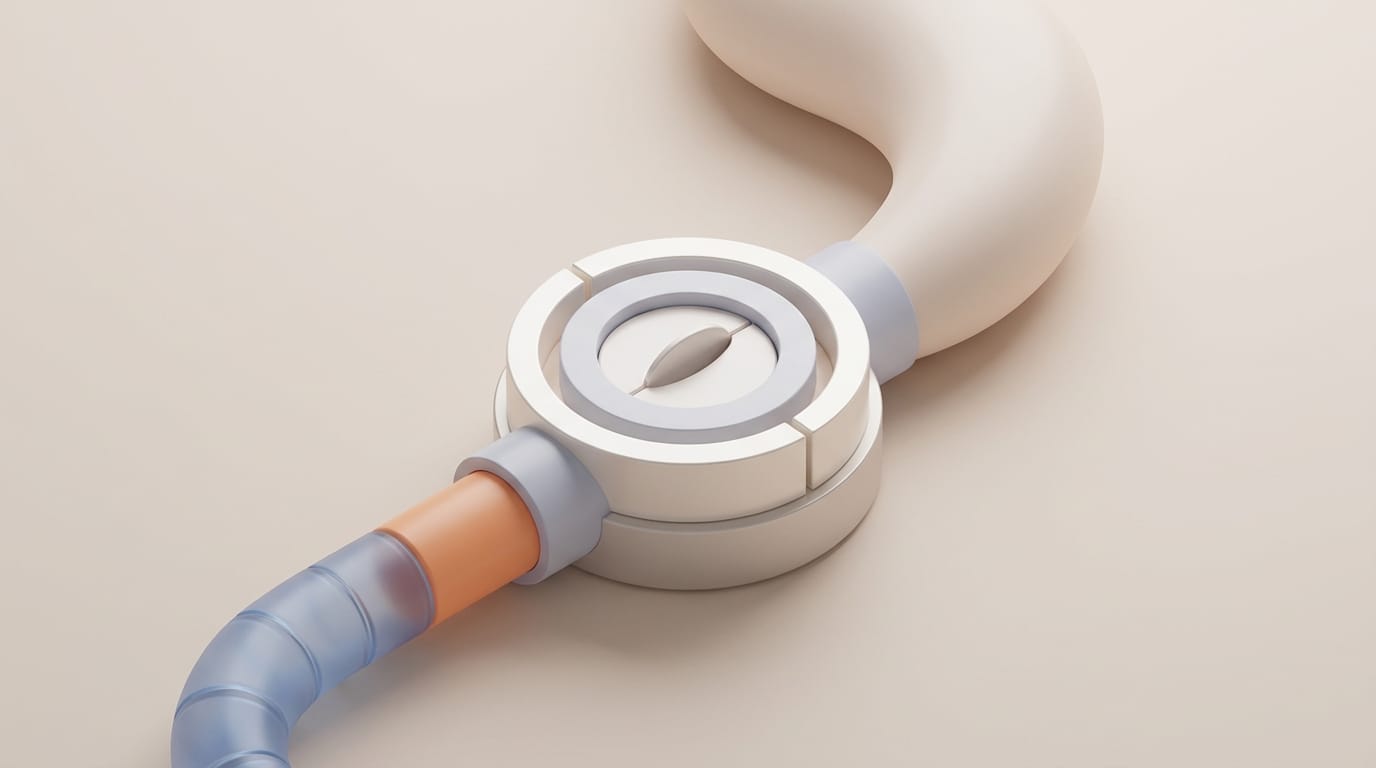
When this muscular gateway fails to seal properly, stomach acid begins to erode the delicate lining of your esophagus, transforming a routine digestive process into a chronic health concern. At the heart of this defense is the lower esophageal sphincter, a specialized bundle of muscle that regulates the passage of nutrients while preventing the backflow of caustic gastric juices. While the digestive tract may look like a simple plumbing system, the gastroesophageal junction is a sophisticated high-pressure zone that requires a precise balance of physical force and nerve signaling to remain closed against abdominal pressure. Understanding how this system maintains its integrity provides the foundation for managing everything from occasional heartburn to chronic reflux conditions.
This sphincter does not work alone; it operates as part of a dual-valve system that relies on the surrounding anatomy to reinforce its seal. This makes it one of the most critical yet misunderstood regulatory points in human biology. By looking at the system through the lens of a dual-valve mechanism, we can clarify why certain movements, foods, and physical shifts lead to failure. This knowledge is essential for anyone seeking to protect their digestive health through lifestyle changes rather than just relying on symptom management.
The Lower Esophageal Sphincter as a Muscular Gateway
Defining the sphincter and its function
The lower esophageal sphincter (LES) is a squeezed ring of smooth muscle located at the bottom of the esophagus. While the upper esophageal sphincter allows for some voluntary control during swallowing, the LES is entirely involuntary. It spends most of its time in a state of contraction, maintaining a resting pressure that keeps the stomach’s contents contained. Unlike heart valves that use physical flaps to block flow, the LES is a physiological sphincter. This means it is a localized thickening of the muscle that stays shut due to its own inherent tone, which is the muscle’s ability to contract without a constant external signal.
This persistent closed state is the default setting of the system. It protects the esophagus from the acidic environment of the stomach, which can reach a pH as low as 1.5. Because the stomach is essentially a pressurized bag of acid and enzymes, the sphincter must act as a one-way gate that can resist significant force. This pressure barrier ensures that digestion remains a downward process, shielding the sensitive tissues of the chest from the harsh chemicals required to break down food.
Anatomy and structural components
The LES sits at the gastroesophageal junction, where the esophagus passes through the diaphragm to meet the stomach. This region acts as a transition zone between the low-pressure chest cavity and the high-pressure abdominal cavity. To handle these different pressures, the sphincter contains two types of muscle fibers known as clasp and sling fibers. Clasp fibers are semicircular and sit on one side of the stomach junction, while sling fibers form a U-shape around the opening. This design allows the sphincter to tighten in a way that is not just a simple circular squeeze, but a multi-directional seal that adapts as the stomach fills and moves.
How the Dual Valve System Maintains Gastric Pressure
The diaphragm as an external support
One of the most important insights into esophageal health is that the lower esophageal sphincter works with the crural diaphragm. This muscular part of the diaphragm surrounds the esophagus and acts as an external sphincter or a pinchcock mechanism. While the LES provides a steady resting pressure, the diaphragm provides extra pressure every time you breathe. When you inhale, the diaphragm contracts and tightens around the esophagus, which is a clever design that prevents reflux when internal pressure is highest. This ensures that when you take a deep breath or strain your muscles, the gate stays clamped shut.
Synchronizing the internal and external valves
The internal LES and the external diaphragmatic valve stay aligned thanks to the phrenoesophageal ligament. This connective tissue ensures that the two valves work together to maintain the Angle of His, which is the sharp angle where the esophagus enters the stomach. This angle creates a natural flap; as the stomach fills, it pushes against the esophageal wall to seal the hole from the inside. Research on GI motility mechanisms shows that this synchronization is essential for keeping the barrier impenetrable. When this alignment is lost, even a strong muscle cannot prevent backflow because the physical relationship between the parts has collapsed.
The Mechanics of Opening and Closing During a Meal
Nerve signaling and relaxation
When you swallow, the lower esophageal sphincter must move from its closed state to a relaxed state to let food pass. The vagus nerve orchestrates this process by carrying signals from the brain to the nerves embedded in the esophageal walls. Within two seconds of starting a swallow, the LES receives a signal to relax, which is triggered by specific chemical messengers like nitric oxide. This relaxation typically lasts between five and ten seconds, allowing the muscular squeeze of the esophagus to move food downward before the sphincter snaps shut again. This timing is critical; if the gate opens too late or closes too early, food can become stuck or reflux can occur immediately.
The role of peristaltic waves
The LES also responds to secondary waves of muscle movement. If food gets stuck or acid splashes back into the esophagus, sensory nerves detect the irritation and trigger a secondary wave to sweep the area clean. This process requires the LES to relax and then re-tighten in a rhythmic cycle. However, the system also experiences spontaneous openings known as transient relaxations. These occur without a swallow and are often triggered by gas in the stomach. While these relaxations allow for belching, they are also the most common cause of acid reflux in healthy people because they leave the gateway completely unprotected for several seconds.
Biochemical Factors That Influence Sphincter Tone
Hormonal regulation of the valve
Resting pressure in the sphincter is not static; it changes based on signals from the endocrine system. For instance, the hormone gastrin, which the stomach releases when you eat protein, increases the pressure of the LES. This creates a protective loop where the stomach signals the gate to tighten as acid production rises. Conversely, other hormones released when fats enter the small intestine can decrease sphincter tone. This helps the body slow down for fat absorption but can weaken the barrier, which is why fatty meals often trigger heartburn. Progesterone also relaxes smooth muscle, which explains why many people experience chronic reflux during pregnancy.
Dietary triggers and chemical sensitivity
Specific compounds in our diet can directly impact the strength of the sphincter. Caffeine, chocolate, and peppermint are known to decrease the resting pressure of the valve. While many people enjoy tea for its health benefits, the caffeine and tannins in some varieties can affect the gastroesophageal junction. It is worth noting that tea consumption does not cause dehydration, but the chemical impact on the valve might be a bigger concern for those with a sensitive digestive tract. Alcohol and nicotine are even more disruptive, as they act as direct muscle relaxants that reduce sphincter pressure and increase the frequency of spontaneous openings.
Many common medications can also weaken the sphincter as a side effect. This includes certain blood pressure drugs and sedatives that relax smooth muscle throughout the body. When managing these symptoms, it is helpful to understand how digestive medication ingredients work, as some products only neutralize acid rather than strengthening the muscle itself. Addressing the underlying tone of the LES is often more effective for long-term relief than simply masking the acidity of the reflux.
When the Barrier Fails to Protect the Esophagus
The impact of hiatal hernias
The most significant failure of this system occurs when the dual-valve structure is physically disrupted, usually by a hiatal hernia. This happens when the upper part of the stomach slides through the diaphragm and into the chest. In this state, the LES is no longer supported by the diaphragm’s pinchcock mechanism, leaving it to work alone against the negative pressure of the chest. This misalignment flattens the Angle of His and destroys the natural flap-valve effect. Patients with these hernias often suffer from severe reflux even if their sphincter muscle is technically strong, simply because the structural support system has vanished.
Chronic reflux and GERD development
Long-term exposure to stomach acid leads to Gastroesophageal Reflux Disease (GERD). In these cases, the resting pressure of the sphincter is often much lower than the standard range, sometimes dropping to nearly zero. According to the Journal of Neurogastroenterology and Motility, GERD is becoming more common, partly due to rising rates of obesity. Extra weight in the midsection increases the pressure pushing against the LES from below, forcing it to open more often. Over time, this acid exposure can cause inflammation, scar tissue, or even cellular changes in the esophageal lining that increase the risk of serious disease.
Strategies for Supporting Healthy Sphincter Function
Postural habits and gastric pressure
Since the sphincter is a pressure-sensitive valve, managing the physical forces in your torso is an effective way to support it. Posture is a major factor; slouching compresses the abdomen and pushes stomach contents against the LES. Similarly, lying down right after a meal removes the help of gravity, which normally keeps acid at the bottom of the stomach. Staying upright for at least three hours after eating gives the stomach time to empty, which reduces the load on the sphincter. Small changes in how we sit and move can significantly improve the mechanical environment of the gut, much like how different body systems work together to improve recovery after exercise.
Long-term maintenance of esophageal health
Weight management is perhaps the most impactful factor for long-term health in this area. Reducing abdominal fat lowers the constant pressure on the junction, allowing the sphincter to maintain its seal with less effort. Eating smaller, more frequent meals also prevents the stomach from stretching too much, which limits the triggers for spontaneous relaxations. In some cases, medical procedures can help by wrapping part of the stomach around the esophagus to create a new high-pressure zone. These interventions aim to restore the natural relationship between the stomach and esophagus, proving that structural integrity is the key to a healthy and comfortable digestive system.