
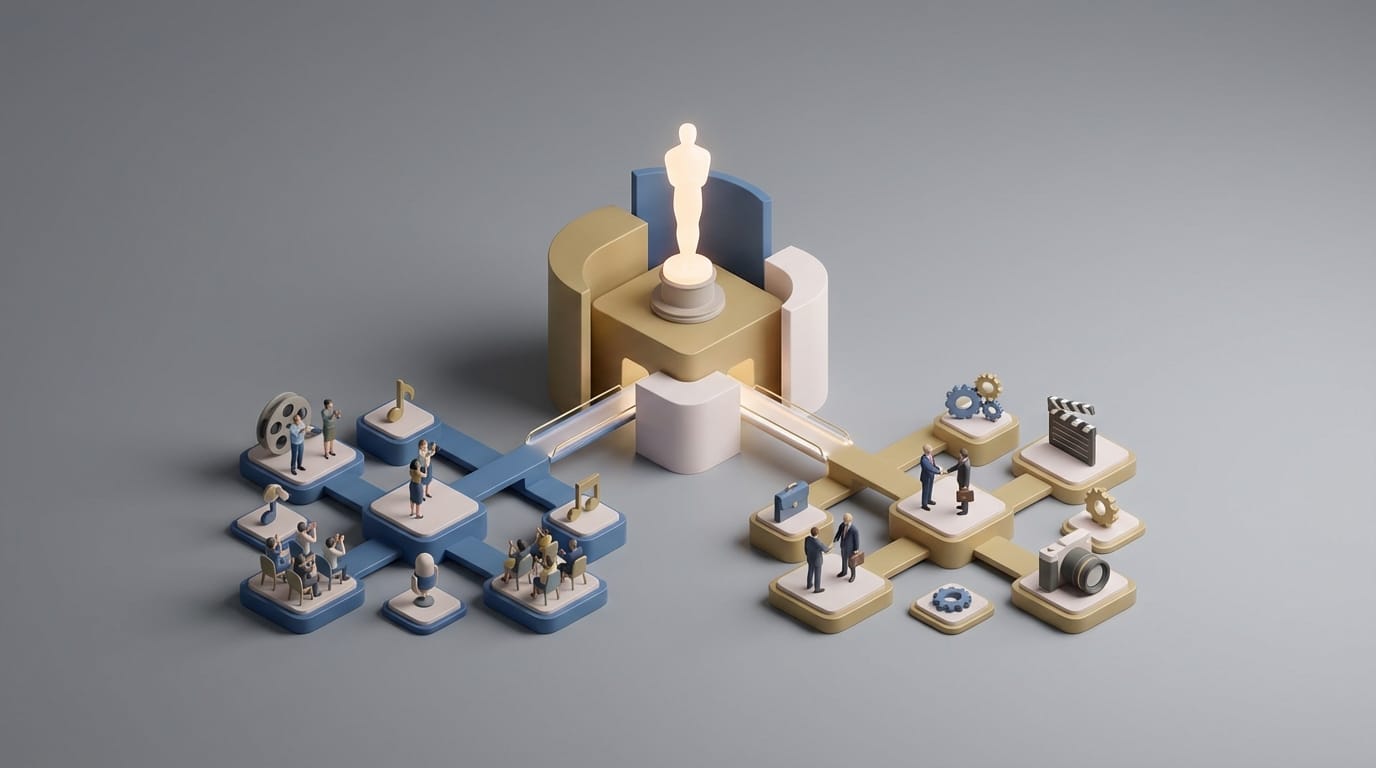
When we judge award shows by live viewership alone, we miss the deep machinery of cultural influence and digital ritual moving beneath the surface. It is tempting to look at the decline from the 55 million viewers of the late 1990s to the lower numbers seen today and conclude that these ceremonies are becoming obsolete. However, this narrow focus on television ratings ignores the role these events play in the media environment. The purpose of award shows goes far beyond the three-hour broadcast; it serves as a critical vetting tool for the industry and a shared frame for social talk. While the way we watch has moved across different platforms, industry leaders still need a centralized moment of recognition. This ceremony acts as the anchor for a social ritual where the second-screen experience (the memes, debates, and fan discussions) often carries more weight than the program itself.
Understanding these shows requires looking at them as professional protocols rather than mere entertainment. They provide the industry with a standard way to assign value, certify talent, and pull global attention together in an age of personalized content. When the system is viewed through this lens, the ratings slump appears less like a slow death and more like a shift to a new type of relevance. By setting a schedule for what the world discusses, these ceremonies maintain their grip on the cultural pulse.
The Economic Engine of Industry Recognition
The primary purpose of award shows within the entertainment world is to create and stabilize professional status. In a field where talent is often a matter of opinion and project-based, awards serve as a standard vetting process for hiring. For a studio leader or a casting director, a nomination or a win acts as a verified signal of excellence. This signal goes past individual taste and helps talented people move up in their careers more quickly.
Professional Accreditation and Career Mobility
An award is more than a trophy; it is a permanent change in how much an artist is worth to the market. This status allows creators to secure better contracts, more creative control, and access to money that was out of reach before. By centralizing recognition, the industry creates a ladder that helps manage the risk of expensive productions. This system functions like the way tech investment cycles identify high-value assets during periods of market change.
The Financial Impact of the Winner Label
The “Oscar Bump” remains a powerful financial reality even in the age of streaming. Recent data shows that winning or being nominated for a top prize can significantly change how much money a film makes. For example, the film Anora operated on a modest budget but saw its box office earnings climb significantly following its awards success, according to box office tracking from FilmBudget.
Similarly, smaller films have historically earned a large portion of their total domestic ticket sales after nominations were announced. This financial boost is vital for unique or experimental projects that lack the massive marketing budgets of traditional blockbusters. By providing a platform for critical praise to turn into commercial success, award shows ensure that high-quality filmmaking continues to receive the funding it needs to survive.
Establishing Cultural and Social Agendas
Beyond the bank accounts, award ceremonies act as the main way society sets and reflects its cultural goals. Because these shows pull in global attention, they have the power to validate stories that used to stay on the sidelines. This role makes them a snapshot of how social values change over time, capturing the tension between old ways and new progress in the present moment.
Elevating Diverse Narratives to the Mainstream
The power of major awards to shift social norms is clear in the recent push for inclusion. When actors from diverse backgrounds win major honors, it signals a shift in what the industry considers important. These moments act as a public validation of voices that were once ignored, often forcing a broader conversation about representation that reaches far beyond the theater. These wins do not just honor a single person; they tell the world which stories are now part of our shared history.
Defining Eras through Collective Recognition
If you look at winners from several decades ago compared to winners today, you are looking at a record of what society cared about at the time. Awards ceremonies act as a historical file that saves the mood of an era. They serve a function similar to the way calendars synchronize how we understand time and cultural progress. They define which stories are worth remembering and which artists represent the current spirit of the world.
Awards Ceremonies as Frameworks for Digital Conversation
The most significant shift in the purpose of award shows is their move toward becoming frameworks for digital conversation. Critics who focus on dropping TV numbers often ignore the massive growth of engagement on social apps. While traditional ratings recently remained steady but modest, social media reactions for major ceremonies reached new highs. For instance, the Golden Globes recently reached a record of over 40 million social media reactions, even as broadcast numbers faced pressure, as noted in an analysis of the shift by EMARKETER.
The Rise of the Second-Screen Social Ritual
We no longer watch award shows as a one-way broadcast; we use them as a social ritual involving two screens. The ceremony provides a set date for political debate, fashion critiques, and fan excitement. The live broadcast matters less than the short clips shared on Instagram and TikTok. In this model, the broadcast is just the raw material that the audience uses to build their own entertainment experience in the moment. People watch the show to participate in the online conversation rather than just to see who wins.
Ceremonies as Engines for Global Meme Culture
The true reach of an award show is measured in how many memes it creates. Whether it is a surprise win, an awkward speech, or a political statement, these moments become part of a global digital language. This shift from passive watching to active online participation ensures that the ceremony remains relevant even to those who never turn on a TV. These highlights thrive on their ability to cause immediate reactions that people want to share with their friends and followers.
The Psychology of Communal Viewing
In a world of streaming algorithms that show everyone something different, award shows are one of the few remaining “water cooler” moments. They provide a rare time where millions of people watch the same thing at once, creating a shared language. This communal watching satisfies a deep psychological need for people to feel in sync with others. In an age where media consumption is often done alone, these events bring people back together.
Maintaining a Shared Global Language
Without these central events, cultural talk would break into thousands of tiny bubbles. Award shows act as a common ground where different groups of people can interact. They are the last stand for live television, functioning much like major sports events. As analyzed in the context of how live events aggregate mass audiences, the value of live content has gone up because it is the only content that can still bring a huge group of people together at the same time.
The Appeal of Achievement
There is a specific satisfaction in seeing talent honored in a public way. The tension between a star’s polished image and their raw emotion during an acceptance speech provides a human moment. This allows the audience to feel a connection to the winner, reinforcing the idea that hard work can lead to success and that the world notices great art. It gives the audience a sense of closure and validation for the movies and shows they loved throughout the year.
Future Relevance in an On-Demand World
As we look to the future, the format of award shows will continue to change. The move toward digital engagement is already happening. The Academy Awards recently successfully streamed on apps alongside traditional TV, reaching younger audiences who have left cable behind. This move shows that the industry is no longer fighting the internet; it is building the show to be used by it. The goal is to reach people wherever they are, regardless of the device they use.
Adapting Ceremony Formats for Short Media
Success is being redefined by more than just the number of viewers per minute. Brands and organizers now look at the total time spent watching across all platforms and how long viral clips stay popular. This focus on details allows award shows to remain valuable for sponsors. Even as television numbers change, major companies continue to invest in these time slots because they offer a level of cultural noise that a simple social media ad cannot match. The show creates a peak in attention that brands want to join.
Measuring Success Beyond Traditional Ratings
The future purpose of award shows lies in their ability to help brands connect with pop culture, according to marketing insights from G7 Entertainment. By hosting a celebrity who is having a big moment, brands can raise their own visibility. This system of status, social talk, and financial credit ensures that while the way we watch may change, the need for the ceremony will stay. These events provide a burst of relevance that lasts long after the final trophy is handed out.
The true value of these ceremonies lies in their ability to act as the heartbeat of a massive cultural system. They are the rules we use to decide what matters, who is talented, and what our shared values look like today. As long as we need to focus our attention and give a clear value to art, the award show will remain a necessary part of our lives. The question is not whether people are still watching the broadcast, but whether they are still talking about the winners. By that measure, the system is more active than it has ever been.