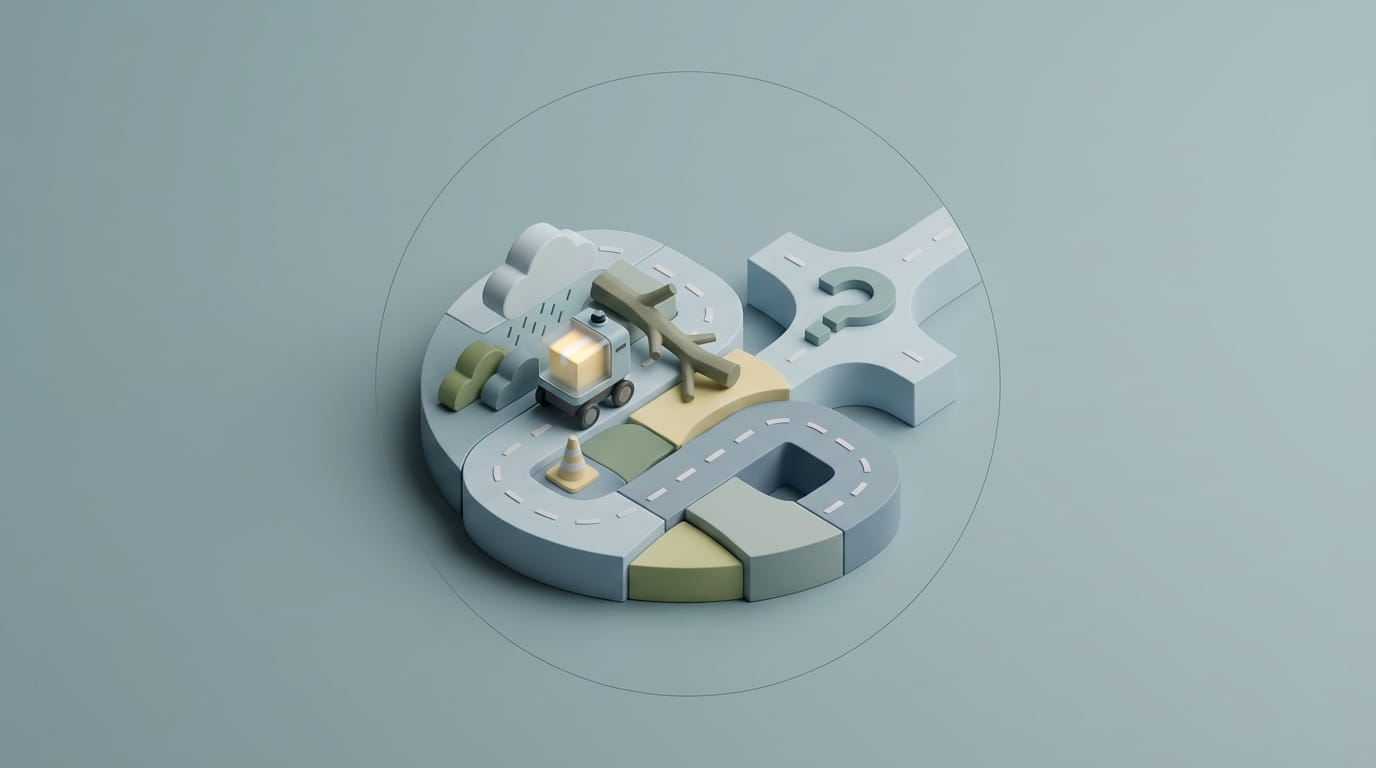
When an autonomous delivery vehicle encounters a locked security gate and a non-responsive recipient, the failure rarely stems from poor navigation. Instead, the machine lacks the social intelligence required to finish the job. Addressing these autonomous delivery challenges represents the next major step for logistics as the industry moves from basic pathfinding toward high-stakes urban use.
Engineers have spent years solving the mechanical problem of driving, yet driving acts only as the first step in the delivery process. A human courier works as a mobile problem-solver who manages complex social and procedural tasks that machines currently view as unusual errors. Moving from small pilots to large deployments requires the vehicle to understand the nuances of human environments rather than just processing sensor data.
The Operational Realities of Urban Autonomous Logistics
Most modern autonomous systems operate effectively within geofenced areas where variables stay predictable. Inside a controlled warehouse or campus, a robot understands exactly where the curb sits and where sensor data might become unreliable. When these systems move onto public sidewalks and roads, the unpredictability of human behavior introduces a level of chaos that standard mapping cannot resolve.
The current industry shift focuses on moving away from small sidewalk bots toward road-ready delivery vans. While sidewalk droids face fewer regulations, they struggle with physical hurdles like steep curbs and heavy pedestrian traffic. Larger road-ready vehicles solve the capacity problem, but they introduce the last-fifty-feet dilemma. A van might navigate a four-way stop without error, but it cannot step out to walk a package to a third-floor apartment door.
This transition highlights the vulnerabilities within global supply chains when machines lack human adaptability. To make financial sense, autonomous fleets must achieve higher success rates than traditional drivers, yet they remain more sensitive to environmental changes. Mapping no longer focuses only on the road; it must now account for door handle heights, intercom placement, and temporary construction zones that change the physical layout daily.
Technical Obstacles in Dynamic Infrastructure Environments
Physical geometry in modern cities often compromises technical reliability. High-density urban canyons create signal interference that causes positioning errors known as multipath reflections. When GPS signals bounce off glass buildings before reaching an antenna, the location data can be off by several meters. Because a robot needs centimeter-level precision to find a specific drop-off box, these errors often stop the mission entirely.
To fix GPS problems, engineers use advanced sensor fusion. Modern vehicles combine satellite data with inertial navigation systems and visual sensors. This setup allows a robot to feel its own movement and recognize landmarks even when buildings block the sky. While this improves accuracy, it increases the demand on the computer, which requires more power and better cooling systems inside the vehicle chassis.
The inability of a machine to read non-verbal human cues remains a persistent bottleneck. A human driver understands a pedestrian’s intent through a slight head tilt or eye contact at a crosswalk, but robots rely on rigid data boxes and speed vectors. Analysis from Transvirtual suggests these gaps lead to overly cautious behavior where robots freeze in complex traffic, which causes congestion instead of helping the flow of goods.
The Autonomous Delivery Challenges of the Human-as-a-Service Gap
The primary oversight in current development involves the human-as-a-service gap. Many developers think a driver’s job is simply moving a vehicle from one point to another, but the driver actually provides a secondary layer of service. They navigate gate codes, verify who is receiving the package, and handle customer service issues that software cannot yet process. Overcoming these autonomous delivery challenges requires a new way to think about how machines interact with physical security.
When a robot reaches a gated community, it often hits a digital wall. Unlike a human who can call a resident or wait for another car to enter, a robot without a specific digital connection to that gate becomes a roadblock. This creates a situation where the final phase of the delivery requires more manual help than the actual transit phase. Solving these autonomous delivery challenges requires the industry to standardize physical access protocols that currently do not exist.
Interpersonal troubleshooting also adds value to the courier’s role. If a customer is unhappy with a package or wants to return an item immediately, a human can handle that interaction on the spot. For an autonomous unit, a return becomes a brand-new mission with its own set of hurdles. Without the social intelligence to manage these soft variables, the machine stays a simple tool rather than a complete service provider.
Procedural Limits of Identity and Product Verification
Delivering age-restricted or high-value items introduces liability risks that current hardware cannot easily satisfy. Alcohol or prescription medication deliveries require strict identity checks. While facial recognition and biometric scanners continue to improve, they lack the common sense a human uses to ensure a recipient is not under duress or trying to bypass security. This friction limits the types of goods that companies can safely hand over to autonomous fleets.
Technical requirements for verification are shifting toward security frameworks like zero trust architecture. In this model, the vehicle and the recipient’s smartphone perform a secure digital handshake to confirm identity. While this solves the verification problem, it creates a new failure point if the user’s phone battery dies. Because the robot cannot verify the person by sight, it must return the package to the hub, which increases the cost and carbon footprint of the trip.
Spontaneous disputes also create logic loops for software. If a customer claims someone tampered with a package during transit, a human courier can document the state of the box and offer immediate help. A robot can only record the video and move to the next task. This lack of resolution can hurt brand trust because customers feel they are dealing with an indifferent system instead of a responsive business.
Regulatory Frameworks and Public Policy Constraints
Varying local regulations currently throttle the ability to grow these fleets. Some cities allow sidewalk robots but stop them from crossing busy streets, while others permit delivery vans but restrict them to daylight hours. This inconsistency prevents firms from using the same fleet across a whole region. Instead, they must maintain different types of vehicles for different neighborhoods, which makes the logistics more expensive.
Liability in accidents remains a major legal question. If an autonomous van swerves to avoid a pet and hits a parked car, the fault might lie with the manufacturer, the software company, or the fleet owner. As the impact of self-driving tech on city infrastructure grows, local governments are trying to decide who pays for the digital and physical wear caused by constant autonomous traffic.
Data privacy also concerns the public because these vehicles work as mobile surveillance platforms. They carry high-resolution cameras and sensors that scan residential areas constantly. Finding a balance between the need for navigation data and the privacy rights of citizens is a tension that regulators must address soon. Without clear rules on how companies store or hide personal data, public pushback could lead to strict bans on autonomous operations in certain areas.
Engineering Solutions for a Hybrid Delivery Future
The bridge to a fully autonomous future likely involves human-in-the-loop systems that help machines through difficult moments. Remote operation allows one human technician to monitor a fleet of twenty robots at once. When a vehicle faces a blocked driveway or a broken gate, the technician takes control to navigate the hurdle before handing the reins back to the AI. This method keeps the machine’s efficiency while ensuring it does not get stuck on simple problems.
Modular hub designs also help by creating points where humans and robots can hand off packages. Instead of a robot trying to reach every front door, a large autonomous van might serve as a mobile locker. It parks in a designated zone, and customers walk to the van to get their items using a secure code. This removes the last-fifty-feet problem by moving the final step back to the consumer, which helps in overcoming persistent autonomous delivery challenges.
Market data suggests this hybrid approach will create significant value. The global autonomous last-mile delivery market should grow to nearly nine billion dollars over the next decade, according to market data from Global Market Insights. This growth depends on the use of physical AI for business use, which allows robots to interact more naturally with the world. The goal is a system where the machine understands the purpose of a delivery mission rather than just following coordinates.
Integrating autonomous fleets into cities depends on recognizing that delivery is a social contract. Once the novelty of self-driving hardware wears off, the hardest problems to solve are the ones human drivers handle without thinking. Future development will focus on building machines that do more than navigate roads; they must understand the unwritten rules of our society.
The way we design cities will likely change as we stop building for human drivers and start building for robotic service agents. This shift will define the next phase of urban planning and how companies manage their supply chains.