
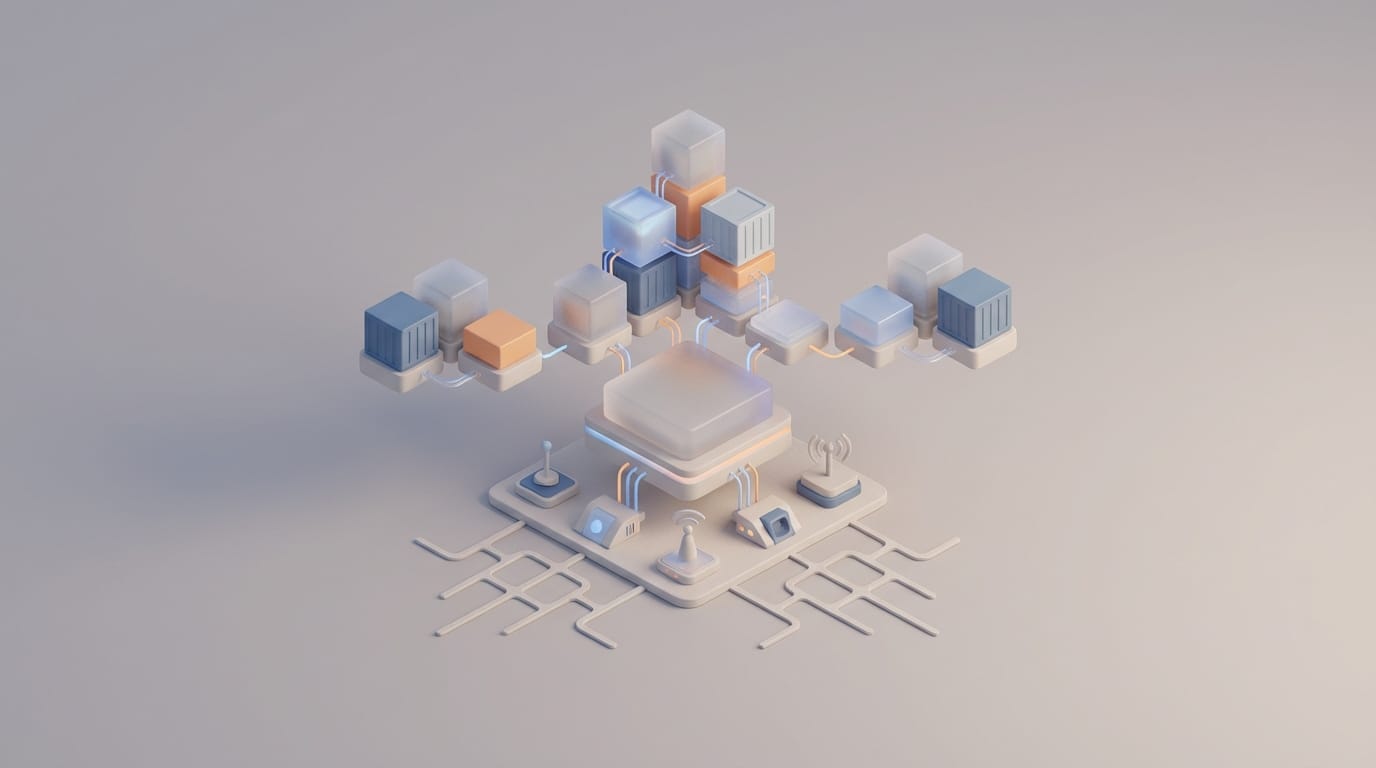
When a network partition severs the link to a central cloud, standard management tools fail; however, true edge-native container orchestration maintains operational integrity through localized fleet autonomy. In the centralized cloud model, the control plane acts as the source of truth, but at the edge, a node must become its own source of truth when the world goes dark. This shift represents a fundamental change in how engineers build distributed systems and ensure reliability across remote sites.
The challenge goes beyond shrinking a Kubernetes binary to fit on a small gateway or an industrial sensor. It involves redefining the relationship between the node and the network, ensuring that applications continue to serve their purpose even when they lose contact with the rest of the fleet. For engineers building systems today, understanding this autonomy makes the difference between a resilient system and one that breaks under pressure. Local autonomy allows a device to manage its own lifecycle, making decisions based on immediate physical needs rather than waiting for a remote command that may never arrive.
Most technical discussions around edge computing focus on how to install software, yet the real architectural bottleneck remains fleet autonomy. This concept describes the ability for edge nodes to perform self-healing and maintain application state during long network outages without a reachable central control plane. These environments, often called Disconnected, Intermittent, and Limited (DIL) settings, require a node to function as a standalone unit. Without this capability, the edge stays a remote part of the cloud, vulnerable to every flicker of the wide area network.
How Distributed Logic Redefines Edge-Native Container Orchestration
The transition from static data centers to nodes spread across the globe forces a move from central control to local execution. In a traditional data center, the network stays reliable, and fast links allow a central scheduler to monitor every heartbeat of every application. This setup assumes that if a node stops talking, it has failed and its work should move elsewhere; however, at the edge, a silent node is often just a disconnected one. Treating a disconnected node as a failed one leads to mass evictions and system instability.
Defining this new paradigm requires us to look at how the cloud works and then flip those rules. While cloud data centers centralize logic for efficiency, the edge must distribute logic for survival. This distribution allows nodes to make local scheduling decisions based on local data rather than waiting for a command from a remote region. When a factory floor or a ship at sea loses its link, the local system must keep the cooling fans running or the sensors logging without human help from a distant office.
The scale of modern hardware deployments drives this shift toward autonomy. Market research from Grand View Research predicts the global edge computing market will reach over $327 billion in the coming years. This massive volume of hardware cannot rely on manual fixes or always-on monitoring. It requires a system that treats each node as an independent actor that can keep its intended state. To manage thousands of sites, engineers must move away from micromanagement and toward intent-based systems where the node understands the goal and pursues it locally.
Critical Differences Between Cloud and Edge-Native Architectures
Resource limits and hardware variety at the network edge create a setting vastly different from the uniform racks of a public cloud. In a cloud zone, you can assume standard processors and nearly infinite scale; at the edge, you often deal with specialized chips, IoT sensors, and very tight memory. The orchestration software must stay small enough to leave room for the actual application while remaining strong enough to handle these diverse hardware profiles. A system that uses 80% of a device’s RAM just to run the management layer leaves no room for the code that actually provides value.
Handling unpredictable network links is the biggest factor that sets these systems apart. Cloud clusters work in zones where delay is almost zero; edge-native systems, by contrast, treat each site as an island. When an island loses its link to the mainland, the local manager must handle resource fights among running containers. It cannot ask a remote API server which task takes priority during a power dip or a hardware failure. The local logic must know that the safety monitor takes priority over the data uploader.
The orchestrator also manages specialized hardware at the edge. A node might connect to specific motors or cameras using protocols like MQTT or Modbus; therefore, the container life cycle must link directly to these physical parts. This level of software-defined hardware management goes beyond simple CPU and RAM use. The system must know if a specific camera is available before it starts the image analysis code, making the orchestrator aware of the physical context surrounding the device.
Implementing Fleet Autonomy for Disconnected Operations
The core of fleet autonomy involves decoupling node health from central control heartbeats. In standard Kubernetes, a node that misses its check-in for too long is marked as unready, and the system starts moving its tasks to other nodes. This creates a disaster at the edge where the node is fine but the network is down. A truly autonomous node knows its own health and continues to run local tasks regardless of what the central plane thinks. It ignores the lack of a central signal and stays focused on the local mission.
Managing the state of an application during long outages requires a local control plane or a metadata cache. When the network link returns, the system must perform state reconciliation to fix any conflicts that started while the node was alone. This offline-first method ensures that if a local sensor triggered a change, that change eventually syncs with the central database once the system reaches the cloud again. Engineers use local databases to store these changes, acting as a buffer that holds data until the path to the cloud clears.
Tools like KubeEdge use a split-plane design to solve this. The CloudCore manages the global state, while the EdgeCore keeps a local copy of the data needed to keep containers running. This setup lets the node restart its own tasks after a crash even if it cannot talk to the master. By baking the logic into the edge rather than leasing it from the center, the system remains operational in the most difficult conditions. This approach moves the intelligence to where the work happens, reducing the need for constant long-distance communication.
Architecture Patterns for Lightweight Edge Deployments
Keeping the software footprint small is vital when sending code to thousands of remote sites with limited storage. K3s has become a standard because it removes old drivers and cloud-specific code, providing a full Kubernetes experience in a single small file. This smaller size saves space and also reduces the security risks that come with extra code. By using SQLite instead of more complex databases, these lightweight tools can run on devices that lack the power of a full server rack.
Zero-touch provisioning is the only way to scale these fleets. In this workflow, a worker simply plugs a device into power and a network; the device then proves who it is, downloads its tasks from a registry, and joins the autonomous fleet. This process allows teams to send containerized work to thousands of sites without needing a specialist at every location. The device handles the setup, the security checks, and the initial software pull, making the growth of the network much faster and cheaper.
While K3s provides a full experience, KubeEdge uses an extension model. It uses a light agent that talks back to a standard master over a tuned protocol, making it great for IoT cases where devices are too small for a full node. According to deployment guides from Octopus, KubeEdge works well when network bandwidth is very low and delay is high. Its design assumes the network will fail, so it focuses on sending the smallest amount of data possible to keep the system in sync.
Solving Data Consistency Challenges Across Distributed Nodes
Data consistency at the edge requires a balance between local speed and remote sync. Because you cannot promise a live connection, the system must use local state to make real-time choices. An autonomous edge node might log data locally and only send summaries to the cloud, which cuts the cost and lag of constant traffic. This requires a strong local storage plan that survives power losses and hardware resets. Engineers often use write-ahead logs to ensure no data disappears during a sudden reboot.
Event-driven messaging helps handle these shaky connections. By using a store-and-forward queue, an edge application can send messages to a local broker, which then waits for a working network path to push those messages to the hub. This stops the application from freezing while it waits for a network response. In a high-latency setting, a blocking call can bring the entire local system to a halt; avoiding this is a key part of edge-native container orchestration design.
Conflict resolution is the final step when the network reconnects. If a person in the cloud and a script at the edge both changed a setting during the outage, the system needs a way to decide which one wins. Usually, this involves using timestamps and priority rules to ensure the most important local data stays safe while keeping the global state as the final record. By planning for these conflicts before they happen, engineers build systems that can merge data without manual help from a database admin.
Securing the Edge Perimeter in Untrusted Environments
Securing the edge requires a new mindset because the hardware often sits in places anyone can reach, like a retail closet or a roadside box. This risk of physical theft or tampering makes zero trust security frameworks a requirement. Every node must prove its identity before the cluster lets it join, and all talk between nodes must use encryption. You cannot assume the local network is safe just because it is private.
Tools like workload attestation and automated certificate management secure the system. By using a Trusted Platform Module (TPM) on the hardware, the manager can check that the operating system and the containers have not been changed by an attacker. Mutual TLS then ensures that even if someone gets onto the local network, they cannot read or change the traffic between the edge node and the cloud. This creates a secure tunnel that protects the integrity of the application code and the data it collects.
Managing these security keys at scale is impossible to do by hand. Edge-native systems must include ways to rotate secrets and update certificates without breaking the node’s autonomy. If a key expires during a network outage, the node must stay smart enough to allow critical local work to continue while locking down external links until it gets a new identity. This balance ensures that security never becomes a point of failure for the physical operations the device controls.
Observability and Monitoring Across Unreliable Networks
Monitoring at the edge faces a unique hurdle: the data about the system can use up all the bandwidth. Standard methods where a central server asks every node for data every few seconds often fail over bad links. Instead, edge-native systems use push models where the node filters its own stats and only sends vital alerts or summaries back to the center. This saves the network for actual business data while still keeping the central team informed about the health of the fleet.
Finding problems in remote clusters requires detailed local logs and simple remote reports. If a container starts failing, the local manager should save the details to a disk for later but only send a critical alert to the main dashboard. This saves bandwidth while ensuring that if a silent failure happens, the data stays on the node for a later look. Once the link is strong again, the node can upload the full log files for a deeper dive into what went wrong.
Setting up baseline health checks is vital for spotting zombie nodes—those that stay on but stop doing their job. By tracking simple signs like local disk use and restart counts, architects see the health of the fleet without needing a constant stream of logs. This makes for a monitor plan that grows with the fleet without crashing the network. Reports from Fortune Business Insights show that hardware spending on gateways is rising, and orchestration software is the layer that makes this hardware useful by managing millions of moving parts.
The need for fleet autonomy shows a broad truth: the edge is not just a small version of the cloud. Designing for the edge means planning for failure, isolation, and limited power as the normal state. By moving the logic of self-healing and state management from the center to the outside, engineers create systems that are truly resilient. This edge-native container orchestration approach builds a foundation that can withstand the messy realities of the physical world.
As we look forward, the growth of these systems will focus on tighter links between hardware security and application autonomy. This leads to a key question for any architect: if your network went offline today, how many of your smart locations would keep working? A system that relies too much on a central brain will fail when the connection drops. The answer to building a lasting fleet lies in how much power you are willing to give to the edge nodes themselves.