
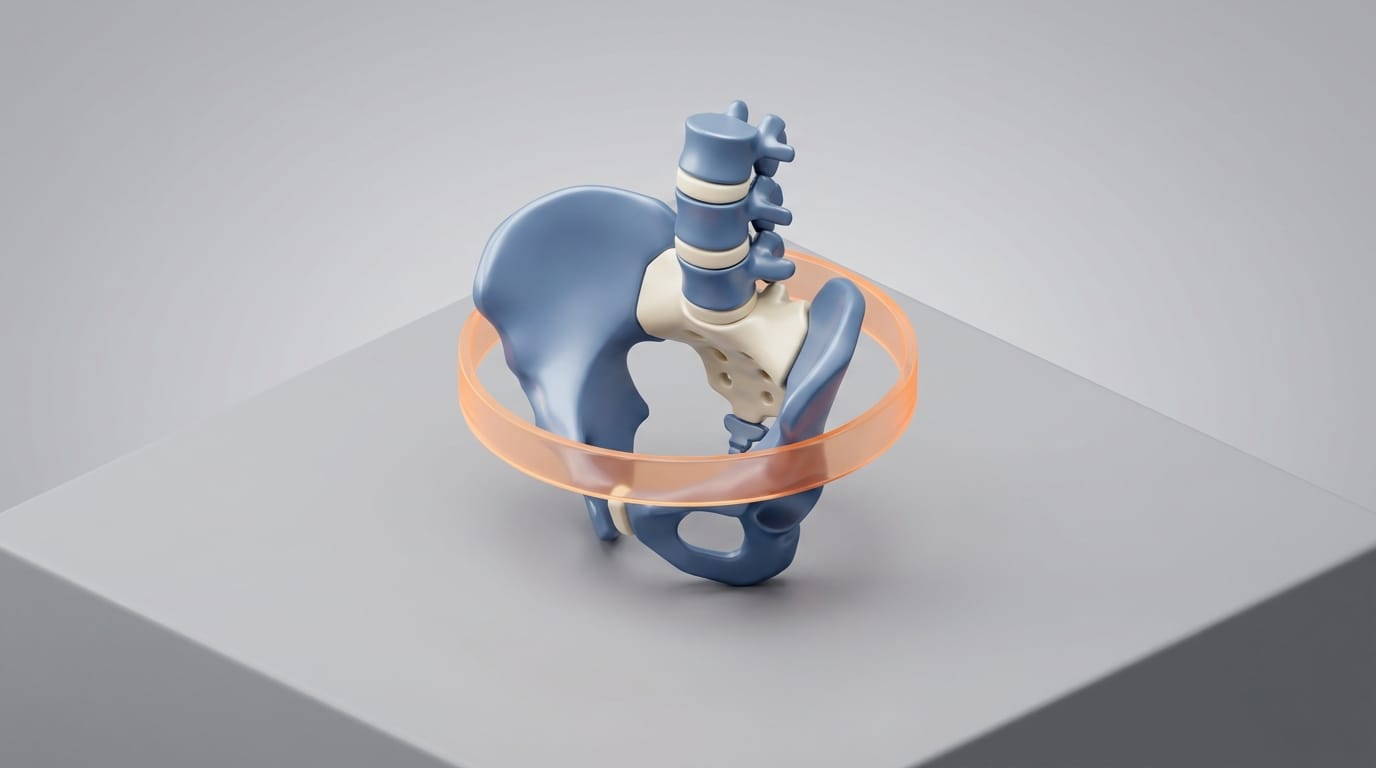
When the brain loses its ability to locate a neutral spine, even the strongest core muscles cannot protect the lower back from the structural stress of daily sitting. The pelvic tilt exercise serves as the foundational tool for restoring this connection; it acts as a diagnostic check-in rather than a traditional strength-building movement. By isolating the subtle rotation of the pelvis, you can recalibrate the internal sensors that govern your spinal alignment. For the modern office worker who spends hours in static positions, the ability to find a neutral pelvis is a critical skill for lumbar health.
Research indicates that approximately 37.8% of office workers experience chronic lower back pain, according to a study on sedentary work environments. This pain often results from a phenomenon where the brain forgets how to relax certain muscles and engage others, leading to a permanent postural shift that the body eventually accepts as normal. Understanding the pelvic tilt involves more than moving your hips back and forth; it requires reclaiming the foundation of your movement. When the pelvis is misaligned, every motion from walking to squatting sits on a compromised base. By treating this exercise as a form of neurological re-education, you can begin to undo the damage of a sedentary lifestyle and build a spine that resists the pressures of everyday life.
The Mechanics of Pelvic Alignment
The pelvis functions as the central hub of human movement by connecting the lower limbs to the spinal column. Its orientation dictates the curvature of the lumbar spine, which influences the positioning of the ribcage and neck. If the pelvis is the foundation of the house, the spine is the frame; if the foundation is tilted, the entire structure remains under constant, uneven tension. There are two primary deviations from a neutral pelvis: anterior and posterior pelvic tilt.
An anterior tilt occurs when the front of the pelvis drops and the back rises, which creates an exaggerated arch in the lower back and a protruding abdomen. This position is common in individuals with tight hip flexors and weak glutes. Conversely, a posterior tilt occurs when the tailbone tucks under and the front of the pelvis rises, flattening the natural curve of the lower back. While less common in sedentary populations, it can lead to significant disc pressure and a swayback appearance. The goal of the pelvic tilt exercise is not to live in one of these extremes, but to develop the control necessary to move between them and find the stable middle ground.
The pelvis also acts as a stabilizer for the lumbar vertebrae. When you maintain a neutral position, the forces of gravity and movement distribute evenly across the intervertebral discs and joints. Misalignment creates stress concentrations where specific tissues must bear weight they were not designed for, leading to the wear and tear often diagnosed as chronic strain or degenerative conditions.
Why the Pelvic Tilt Exercise Is a Diagnostic Skill
Most fitness guides categorize the pelvic tilt as a core exercise similar to crunches or planks. However, its true value lies in its role as a diagnostic tool for neuromuscular re-education. It is less about how much force you can generate and more about whether your brain can feel where your spine is in space. Neutral spine is the position where the back is most resilient to load. It is not perfectly flat, nor is it heavily arched; it is a gentle S-curve that allows the spinal stabilizers to function at their highest efficiency.
For many, this position is difficult to find because the nervous system has adapted to a chronic tilt. The exercise allows you to map the boundaries of your pelvic mobility so you can identify exactly where that neutral center resides. Neuromuscular re-education is the process of training the nervous system to control muscles more effectively. In the context of back pain, this means teaching the deep abdominal muscles to fire independently of the larger, louder muscles like the hip flexors. This is a subtle skill where you look for clarity of movement rather than intensity of contraction.
By performing these tilts daily, you check your nervous system for blind spots. If you find that one direction of movement is jerky or limited, you have identified a neurological disconnect that needs attention. This foundational control is essential for returning to sports after an injury, as it ensures stability is present before you add external weight.
Executing the Fundamental Supine Pelvic Tilt
The supine version of the exercise, where you lie on your back, is the gold standard for beginners because the floor provides immediate physical feedback. The hard surface acts as a guide, telling your brain exactly when your lower back arches or flattens. To perform the movement correctly, follow these steps:
- Lie on your back on a firm surface with your knees bent and feet flat on the floor, roughly hip-width apart.
- Place your hands on your hip bones so you can feel the physical rotation of the pelvis.
- Inhale and gently arch your lower back away from the floor, keeping your tailbone in contact with the ground.
- Exhale and use your lower abdominals to pull your belly button toward your spine, flattening your lower back into the floor.
The key to success is keeping the movement isolated to the pelvis. Your ribs should not flare upward during the arch, and your glutes should not lift off the floor during the flatten. If your glutes squeeze hard, you are using your power muscles to do the job of your postural muscles. During a posterior pelvic tilt exercise, you should feel a deep, low tension across your lower abdomen, just inside your hip bones. This tension signals the engagement of the transverse abdominis, which is your body’s internal corset. Research indicates that targeted activation of these deep stabilizers can reduce pain intensity, according to clinical findings on dynamic neuromuscular stabilization.
Common Errors That Sabotage Results
Because the pelvic tilt is a subtle movement, it is easy to cheat by using larger muscle groups. When you cheat, you might complete the movement, but you bypass the neuromuscular learning that is the actual goal. The most common error involves using the hamstrings and glutes to force the lower back into the floor. You can tell if you are doing this if your hips start to lift or if you feel a clunk in your hip joints. The movement should come from the middle of your body rather than from pushing through your feet.
Over-reliance on the legs only reinforces the muscle imbalances that lead to pain. This is a reminder that muscle soreness and growth are not partners; effort does not always equal the desired physiological outcome. Another frequent mistake is forcing the lower back into the floor with maximum effort. This often leads to breath-holding, which increases internal pressure but prevents you from learning fine motor control. You should be able to hold a conversation while performing the tilt. If you have to strain, you are moving too far or too fast. The goal is the smallest, smoothest movement possible that still achieves the desired tilt.
Progressing to Functional Movement
Once you master the movement on the floor, the challenge is to bring that awareness into your daily life. A pelvic tilt on a mat is helpful, but a pelvic tilt while sitting at your desk or standing in line is what actually changes your long-term posture. For office workers, the seated tilt provides immediate relief. Sit on the edge of your chair with your feet flat and your spine tall, then perform the same anterior and posterior tilts you practiced on the floor. This helps refresh the spinal discs by creating a gentle pumping action and prevents the hip flexors from locking into a shortened position.
The final stage of progression is the standing tilt. This is significantly harder because you no longer have the floor for feedback and must fight gravity. Mastering the standing tilt is a prerequisite for heavy lifting. If you cannot maintain a neutral pelvis while standing, you will likely lose your spinal integrity during a squat or deadlift. Practice finding your center while standing by ensuring your ribs are stacked over your pelvis and your weight is balanced over your mid-foot.
Building a Daily Neuromuscular Routine
Postural change does not happen through intensity; it happens through frequency. Your nervous system needs constant reminders to break old habits. A single long session once a week is far less effective than two minutes of tilting performed four times a day. Aim for 10 to 15 controlled repetitions several times a day as a system reboot for your spine. Use triggers throughout your day, such as receiving an email or standing up from your desk, to check your pelvic alignment. Over time, the neutral position becomes your body’s new default setting.
Consistent practice of the pelvic tilt exercise has been shown to significantly reduce disability scores in patients with chronic pain. By improving your proprioception, you reduce the likelihood of injuring your back during sudden movements. This foundational stability is the first step in optimizing post-workout recovery, as it ensures your body is not wasting energy fighting against its own structural misalignment. The pelvic tilt is a quiet, unassuming movement that holds the key to spinal health. By shifting your focus from muscling through the exercise to feeling the movement, you transform a simple stretch into a powerful tool for change. The real victory is not flattening your back against the floor; it is the moment you are standing in a grocery line and realize your body has automatically found its own stable, painless center.