
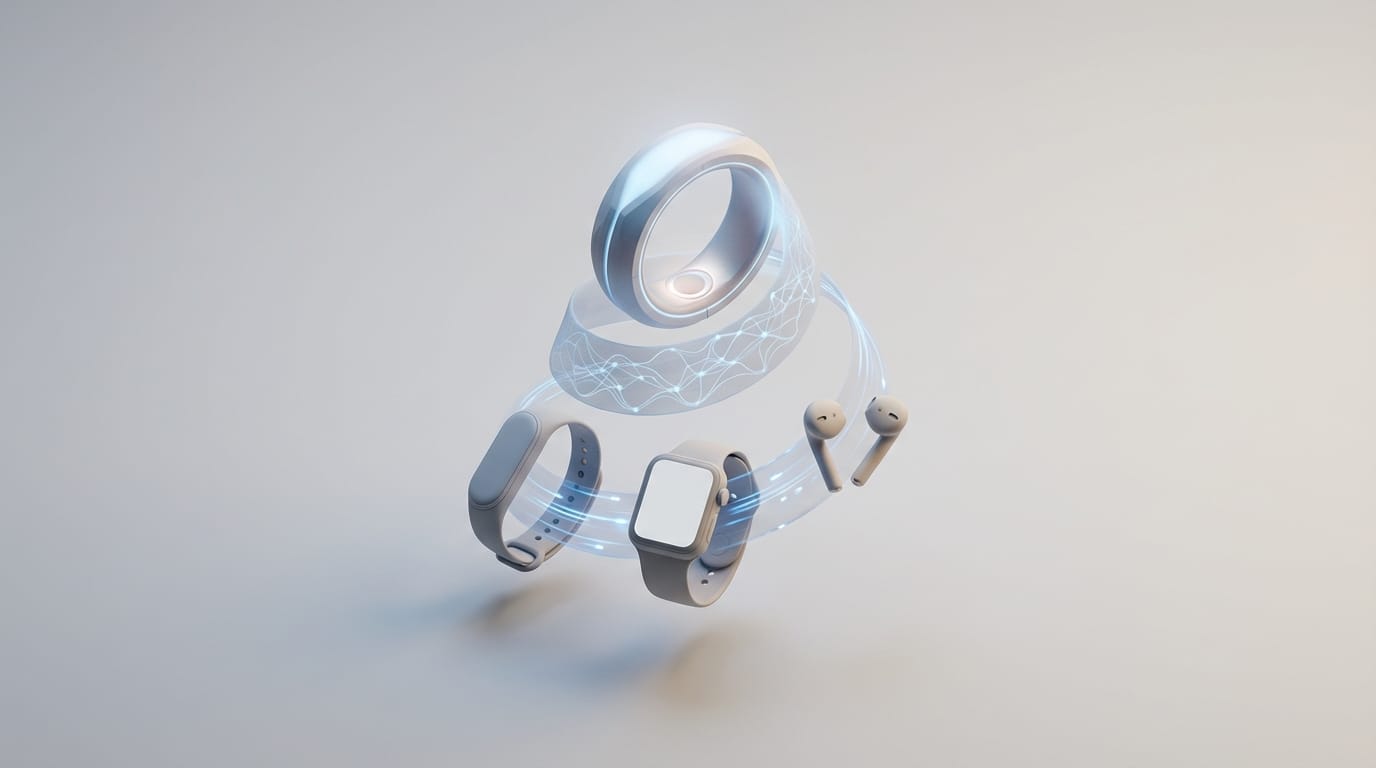
The Evolution of Screens to Ambient Technology
The most advanced tools in your life should be the ones you forget you are wearing. For more than ten years, smartwatches have filled our lives with glowing screens and buzzing alerts that pull our eyes away from the world. Now, a shift is happening as designers focus on ambient technology, which refers to systems that give us deep insights without constant noise. At the heart of this change are AI smart rings. They go beyond simple step counting and move into the world of predicting health. By using the thin skin of the finger and the power of smart software, these rings change what it means to stay connected. They move away from the battle for our attention and offer a future where tech works quietly in the background.
In 2026, the global market for these devices is growing fast. Experts expect the industry to grow from roughly $518 million to over $3.7 billion by 2034, according to recent industry analysis from Fortune Business Insights. This surge stems from a move toward invisible automation and better ways to track metabolic health. For a professional who needs to focus or an athlete who needs to rest, the ring is no longer just an accessory; it is the most efficient way to collect data in their personal system.
The main problem with modern wearables is the screen. While smartwatches are powerful, they often act as an extension of the smartphone. Every alert that hits a wrist can break a person’s focus during deep work or a personal talk. Smart rings solve this by staying passive. They gather and process data without asking the user to do anything. Users are starting to prefer devices that protect their focus rather than compete for it. A ring offers a set-and-forget experience that remains quiet throughout the day. By taking away the display, these rings allow for a more intentional relationship with our digital lives. The focus moves from the alert to the actual insight.
A ring is a shape humans have worn for thousands of years, which makes it a natural fit for daily life. This small size allows for 24/7 data collection, including high-quality sleep tracking, that many find too bulky or annoying to do with a watch. This constant monitoring is a necessity for accurate data over long periods. When a device is easy to wear, the data stays continuous. This allows software models to see the full picture of a person’s body without the gaps caused by taking a device off to charge it.
How AI Smart Rings Process Biometric Data
The finger is the best place on the body to gather high-quality signals. Unlike the wrist, which is full of tendons, bone, and thick skin, the finger has a clear path to the digital arteries. This anatomical setup allows sensors to capture data with a level of clarity that wrist devices struggle to match. Most wearables use light sensors to measure blood volume changes. Research shows that finger-based sensors can reach 95% accuracy compared to much lower rates for wrist devices, as detailed in clinical reviews published via PubMed Central. The thin skin and high blood flow on the palm side of the finger mean the signal is naturally stronger.
Because rings fit more snugly than watches, they also have fewer errors caused by the device sliding around during movement. This stability is vital for accurate metabolic health monitoring and tracking heart rate variability. Raw data from sensors is often messy, so the software on the ring acts as a filter. It uses smart networks to tell the difference between real body changes and outside noise. These tools learn to recognize the small signals of the heart’s rhythm and find subtle changes that might show stress or fatigue. By learning your personal baseline, the ring can tell when your data shifts away from your unique normal.
Turning Raw Data into Health Insights
The real power of these devices is their ability to move from telling you what happened to telling you what to do. This change is powered by models that look at many data points at once, such as heart rate, skin temperature, and breathing. While a standard tracker tells you how many steps you walked, an AI smart rings setup looks deeper. It connects poor sleep with a fast heart rate to suggest you take a rest day instead of a hard workout. This type of athletic recovery science helps users avoid burnout by listening to the body’s internal signals rather than fixed goals.
Because these rings monitor data all day and night, they are very good at spotting the early signs of getting sick. A small, steady rise in skin temperature or a sudden drop in heart variability often happens a day or two before you feel any symptoms. By alerting the user to these shifts, the ring allows for proactive health choices. You might decide to drink more water or cancel a long meeting to rest before the illness fully hits. This predictive power turns the device into an early warning system for the body.
Productivity and Cognitive Management
For high-performing professionals, the benefit of a smart ring goes beyond health. By removing the screen, these devices support a state of deep work while still keeping the user informed of vital updates through light vibrations or finger movements. Managing the mental load is essential for staying productive in a world of constant pings. Smart rings act as a quiet partner that tracks stress levels and focus times without adding to your mental burden. Some models even work with AI productivity assistants to help you plan tasks when your body data suggests your brain is at its best performance.
Beyond collecting data, some rings are becoming active tools to control our space. Using sensors that track movement, rings can detect specific finger gestures to control smart lights, scroll through slides, or log into accounts. This turns the hand into a tool that lets you interact with your workspace without ever touching a mouse. This way of working feels more natural and keeps the focus on the task at hand rather than the device itself.
The Engineering of Small Devices
Creating these rings is a lesson in making things very small. Engineers must fit a processor, many sensors, a battery, and an antenna into a device that weighs less than five grams. This requires many trade-offs in design. Power is the biggest challenge because a ring needs to last five to seven days on one charge. To save power, makers use chips that require very little energy. This limits the amount of heavy processing that can happen on the ring itself. Most rings collect data and then send it to a phone or a server to do the hard math, which is a common step in the mechanics of cloud computing.
The industry is now moving toward doing more analysis on the ring to improve speed and privacy. While the ring might handle simple data cleaning, deep trend analysis still happens in an app. However, as the global semiconductor supply chain creates better chips, future rings will handle more tasks locally. This will make them even faster and less dependent on a phone connection.
Choosing the Right Ring for Your Life
As more products enter the market, smart rings are splitting into two groups: those for health and those for daily utility. Choosing the right one depends on whether you want deep body data or simple ways to interact with your world. Health-focused models focus on sensor accuracy and are great for users tracking sleep apnea or strict fitness goals. Utility-focused models often include chips for tap-to-pay and better gesture controls. These are meant for the professional who wants to replace their wallet and keys with a single wearable.
Many ring companies use a monthly fee to pay for their software updates. When picking a ring, it is important to look at the total cost and what happens to your data if you stop paying. Because these devices collect very private information, checking the company’s data privacy strategies is a must. Look for brands that offer clear data ownership and strong encryption for your health profile. You want to ensure that your most personal metrics stay under your control.
In the end, AI smart rings represent a shift back to design that focuses on the human body. By looking at internal rhythms rather than the demands of the digital world, they offer a way to live a more balanced and focused life. They are not just gadgets; they are the quiet tools helping us build a healthier and more productive future.