
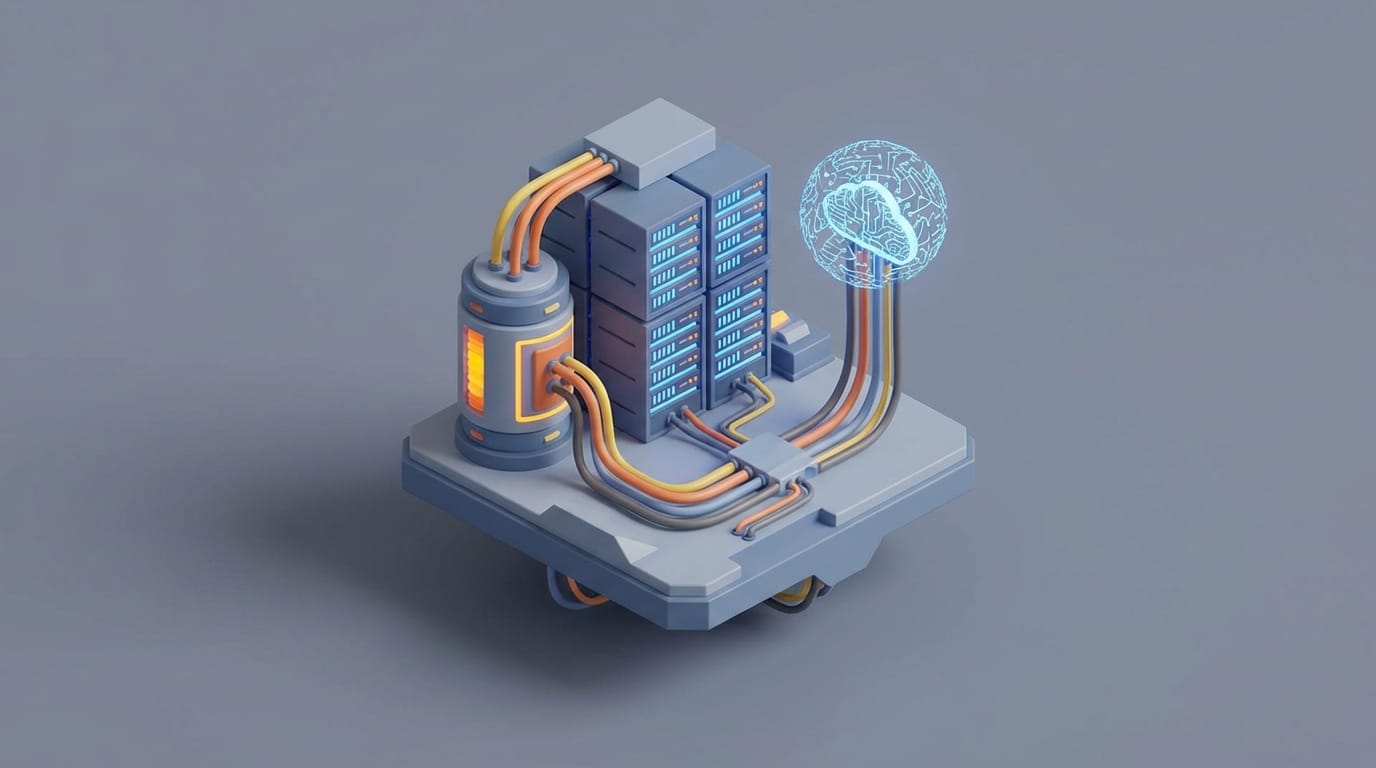
Digital services no longer grow based only on chip speed or software. Today, growth depends on the power grid. The grid must have the physical strength to send enough electricity to every rack. We are moving into the era of pervasive AI. Managing data center energy consumption is now a top goal for the global economy.
The Mechanics of Data Center Energy Consumption
In the past, data centers were simple. You had a building with rows of racks. Each rack used 5kW to 10kW of power. A cooling system moved heat away with cold air. Most work involved web servers and databases. These tasks used CPUs in small bursts. You could predict the power needs easily. This made data center energy consumption easy to manage for years.
From General Computing to High-Density Workloads
Modern data centers now use high-density clusters. AI chips do not work like old CPUs. The chips used for AI run at full power almost all the time. This creates a steady need for power. It puts constant stress on the wires and the cooling systems. You cannot rely on the old ways of cooling anymore.
Look at Equinix or Digital Realty today. You will see two different types of rack designs. A standard rack might pull 10kW. An AI rack can pull 60kW. That is a huge jump. It forces engineers to rethink how they move power through a building. They now move high-voltage lines closer to the servers to save energy.
Understanding Power Usage Effectiveness (PUE) Metrics
Pros use Power Usage Effectiveness (PUE) to measure success. This is a simple ratio. You divide the total energy used by the building by the energy used by the servers. A PUE of 1.0 is a perfect score. It means every watt goes into a chip. No power is lost to fans or lights.
Older buildings often have a PUE of 1.5 or 2.0. This means for every watt of compute, another watt goes to cooling. Modern giants like Google or Microsoft aim for 1.1. PUE is a helpful tool. But it only measures the building. It does not tell you if the server itself is fast or slow.
The Time-to-Power Bottleneck in Digital Expansion
The biggest problem today is not the price of energy. It is “Time-to-Power.” In big hubs like Northern Virginia or Dublin, the grid is full. The wires and substations cannot take more load. You can build a data center shell in two years. However, getting a power connection can take eight years. This wait stops growth in its tracks.
Why Utility Grid Upgrades Lag Behind Demand
Power companies plan for long periods. They often look decades ahead. They focus on keeping power steady for homes. A developer might ask for 100MW for one building. That is enough power for 80,000 homes. The current lines cannot carry that much heat. Upgrading lines involves land laws and long reviews. Tech moves fast. The grid moves slow.
The Economic Impact of Deployment Delays
This delay creates a big problem for the economy. If a firm cannot run its AI, it loses billions of dollars. This is why firms are looking at new places to build. They no longer care as much about being close to big cities. They look for “stranded power.” These are places with lots of energy but few people. You may see more centers in the American Midwest or Nordic countries.
Energy Demands of Artificial Intelligence and High-Density Racks
AI development is changing the world of hardware. Now, data center energy consumption per square foot is reaching new highs. We used to only see these levels in supercomputer labs. This shift breaks the air-cooling model. Air-cooling worked for thirty years. Now it is hitting a wall.
The Transition to 60kW+ Per Rack Environments
In a standard center, fans blow cold air through the floor. This works well up to 20kW per rack. Above that point, you cannot move air fast enough. The fans would use too much power themselves. They would also be too loud. The noise can actually shake and break hard drives. You cannot just use bigger fans to solve this.
At 60kW per rack, air cannot pull the heat away fast enough. We are hitting the limits of physics. This forces a move to liquid cooling. Liquid is much better at moving heat than air. It is the only way to keep AI chips from melting.
The Necessity of Liquid Cooling Systems
There are two main ways to use liquid. You can use cold plates or immersion cooling. Cold plates sit right on the chip. Liquid flows through them to take the heat away. In immersion cooling, you sink the whole server in a special fluid. This fluid does not conduct electricity. It is safe for the parts.
Firms like Vertiv or Schneider Electric now sell these systems. This change requires new pipes in the building. It also requires stronger floors. Liquid systems weigh much more than air systems. You must plan for this weight when you design the building.
Moving Off-Grid with Onsite Power Generation
The public grid cannot keep up with tech. Now, data center developers are building their own power plants. They are cutting out the middleman. They make power right where the servers are. This helps them grow faster without waiting for the local utility.
The Rise of Small Modular Reactors (SMRs)
Many people talk about Small Modular Reactors (SMRs). These are small nuclear plants. Factories build them and ship them to the site. They provide steady power every hour of the day. This power is clean and has no carbon. It matches the steady draw of a data center perfectly. Firms like NuScale are leading this work. They show that nuclear can work for a single campus.
Hydrogen Fuel Cells and Microgrid Integration
In the short term, firms use hydrogen fuel cells. Old centers used diesel for backup power. New centers use fuel cells as the main source. If you use green hydrogen, the center has zero emissions. This lets a facility run on its own. It does not need the public grid. Developers can build exactly where they find the best fiber cables.
Sustainable Infrastructure and Heat Reuse Strategies
People often focus on how much power a center takes from the world. But data center energy consumption produces something useful. It produces heat. Next-generation centers do not throw this heat away. They use it to help the community.
District Heating and Waste Heat Recovery
A data center is a giant heater. In cold cities, firms pipe waste heat to homes. Helsinki and Stockholm do this now. Data centers heat thousands of flats. The waste heat is often around 40°C. You might need a heat pump to make it hotter for some uses. But the total gain is huge. The center and the city work together to save energy.
Renewable Energy Procurement Beyond Offsets
Green power is changing. It is no longer about buying credits once a year. The new goal is “24/7 Carbon-Free Energy.” This means you match every hour of use with clean power on your local grid. You must use a mix of wind, solar, and batteries. This ensures the facility never uses coal or gas. Even when the sun is down, the center stays green.
Future Directions for Data Center Energy Management
In the future, software will manage energy like it manages data. We are moving to a new model. The “load” of the data center will follow the energy source. This makes the whole system much smarter.
Software-Defined Power and Load Balancing
You can use AI to run the energy systems of an AI hub. Software can find when green power is most available. It can then start big tasks like training a new model. If the grid is stressed, the center can stop some work. It can also use its own batteries to help the city. This helps the grid stay stable instead of hurting it.
The Long-term Outlook for Grid-Independent Facilities
The industry is moving toward campuses that own everything. These sites own their power and their cooling. They also own their fiber routes. Demand for compute is growing very fast. Breaking away from the old grid is now a must for survival. The firms that solve the power problem first will win the next decade.
You must understand these physical limits. This helps you choose between speed and green goals. The data center is no longer just a house for computers. It is a complex energy system. It needs precise engineering to run the code of the future.