
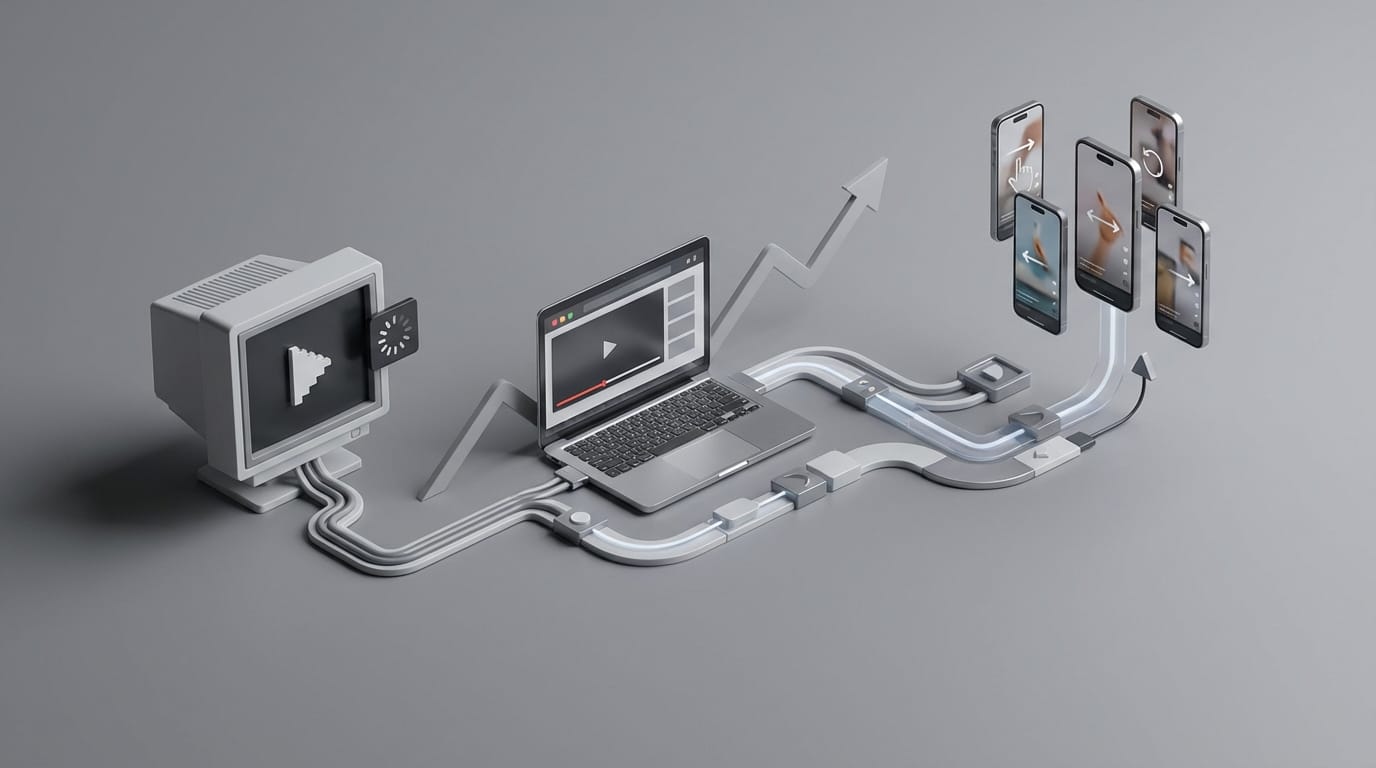
Online video has changed. It is no longer just about shorter attention spans. It is a big shift in how we find things to watch. In the past, you searched for content. Today, algorithms search for you. To see the evolution of online video, you must look under the screen. You need to see the tools and the math that decide what you watch.
The history of digital media is not just about viral clips. The real story is about how we get those clips. We moved from a time when watching was hard work to a time when it is easy. This shift changed the link between the creator and the viewer. Platforms now hold the power.
The Systems of Early Digital Video
In the late 1990s, video was a guest on the web. It was not a natural part of the internet. Slow speeds were the main problem. Dial-up was common. The goal was to get a few megabytes to your computer without the link breaking. You had to download a file or wait for it to stop and start. This was the “download and play” model.
The Speed Barrier and Early Tools
Early video files were heavy. They did not work well. Apps like RealPlayer and Windows Media Player were the main tools. They were hard to use. They needed special parts for your browser that often crashed. The picture was poor. The motion was not smooth. The math used to shrink video files was not yet good enough to keep them clear.
The Flash Video Change
The web changed when Adobe Flash arrived. Before Flash, you had to open a separate app to watch. Flash let people put video right into a webpage. It was light and fast. It worked on most computers. This made video sites possible. It was the spark that let people start sharing their own clips.
The Time of Search and Choice
Internet speeds got faster. The evolution of online video moved into a new phase. This was the time of the big storehouse. You did not find video by accident. You went looking for it. You used a search bar. This made the web feel like a giant library.
YouTube and the Central Hub
When YouTube launched, it solved the cost problem. Before this, you had to pay for server space. YouTube paid the bill for you. It was a giant database. You typed a word to find a fix for your sink. You searched for a movie trailer. You were the boss of what you saw. You made an active choice to click.
The Growth of the Creator Brand
You had to choose what to watch. This meant that a creator’s name was very important. They built groups of fans through the “Subscribe” button. A subscription was a deal. You promised to watch. The creator promised to make more. This model liked long videos. It gave the creator time to tell a story and build a bond with you.
Tech Wins in Speed and Quality
The back end of the web was also changing. Data moved faster through the air. Browsers got better at reading that data. These steps were needed for video to move to phones. Now you can watch anywhere.
From Waiting to Smart Streaming
In the early days, the video stopped if your internet slowed down. Then came Adaptive Bitrate Streaming. It checks your speed in real time. It switches the quality of the video to keep it playing. This is why a video might look blurry at first. Then it snaps into focus. Companies like Akamai also help. They store copies of videos near you. This makes the wait wheel go away.
The Move to Phones and HTML5
Flash died. People started using phones for the web. The industry moved to HTML5. This was a faster way to show video. Apple helped make this happen. It moved the evolution of online video toward phones first. You stopped sitting at a desk to watch. You watched while waiting for a bus. You watched while standing in line.
The Move to Passive Discovery
The biggest change in the last ten years is how you get your video. We moved from “Search” to “The Feed.” This is a move from choosing to just watching. It takes very little effort from you. You do not have to think about what to pick.
Short Videos and TikTok
Apps like Vine and TikTok made videos very short. This forced people to get to the point fast. But the real change was how you use the app. TikTok removed the search bar. When you open the app, a video starts. You do not choose what to watch. You only choose what to skip. This changed everything.
The Math of the Infinite Scroll
The scroll creates a loop. It helps the app more than the person who made the video. In a search model, you stop when you find your video. In a feed, the goal is to keep you looking. You keep swiping because the next video might be the best one. You stay longer than you planned. The app learns what you like with every swipe.
The Shift in Power
The evolution of online video has a hidden cost. It hurts the name of the person making the video. The platform now has all the power. In the old model, you followed a creator. In the new model, the app decides what you see based on your habits. The math is the boss now.
The move to short videos is not just about short attention spans. It is a shift from choosing what to watch to letting an app choose for you. This moves power from the creator to the app engine.
App Engines vs. Big Names
In a feed, your follower count matters less. The app looks at how people react to one single video. A big star can fail if the first few people do not like a post. A new user can get millions of views in one night. This makes fame easier to get but harder to keep. Creators must try to win over the math every time they upload.
The Role of Filters and Signals
Apps handle a huge amount of video. They use smart tools to see what you like. They watch how long you stay on a clip. They check if you watch a part twice. These signals go back into the math. The app builds a profile of you. This can create a bubble. You only see things you already like. You do not see new or different ideas.
The Future of How We Watch
The lines between different types of media are fading. The evolution of online video is moving toward a new state. Video is no longer a flat file. It is a live experience. It reacts to you in real time.
Interactive Video and Sales
Entertainment and shopping are joining together. Tools on Instagram now let you buy things in a video. You see a shirt and click to buy it. This makes it very easy to spend money. Live streams also let you talk to the person on screen. Your words can change what they do next. It is a two-way street.
Search Moves Into the Feed
Search is coming back but in a new way. Young people use social feeds to find info. They search for food reviews or travel tips on TikTok. They do not use Google as much. The next phase of video will be a mix. The feed will entertain you. It will also act like a smart helper when you need to find a fact. It will know what you need before you ask.
The history of online video is a path from tech hurdles to mind games. We solved the speed problems. Now, the industry wants your time. Apps are getting better at knowing your wants. Your new goal is to stay in charge of what you watch. You must choose to be more than just a passive viewer.