
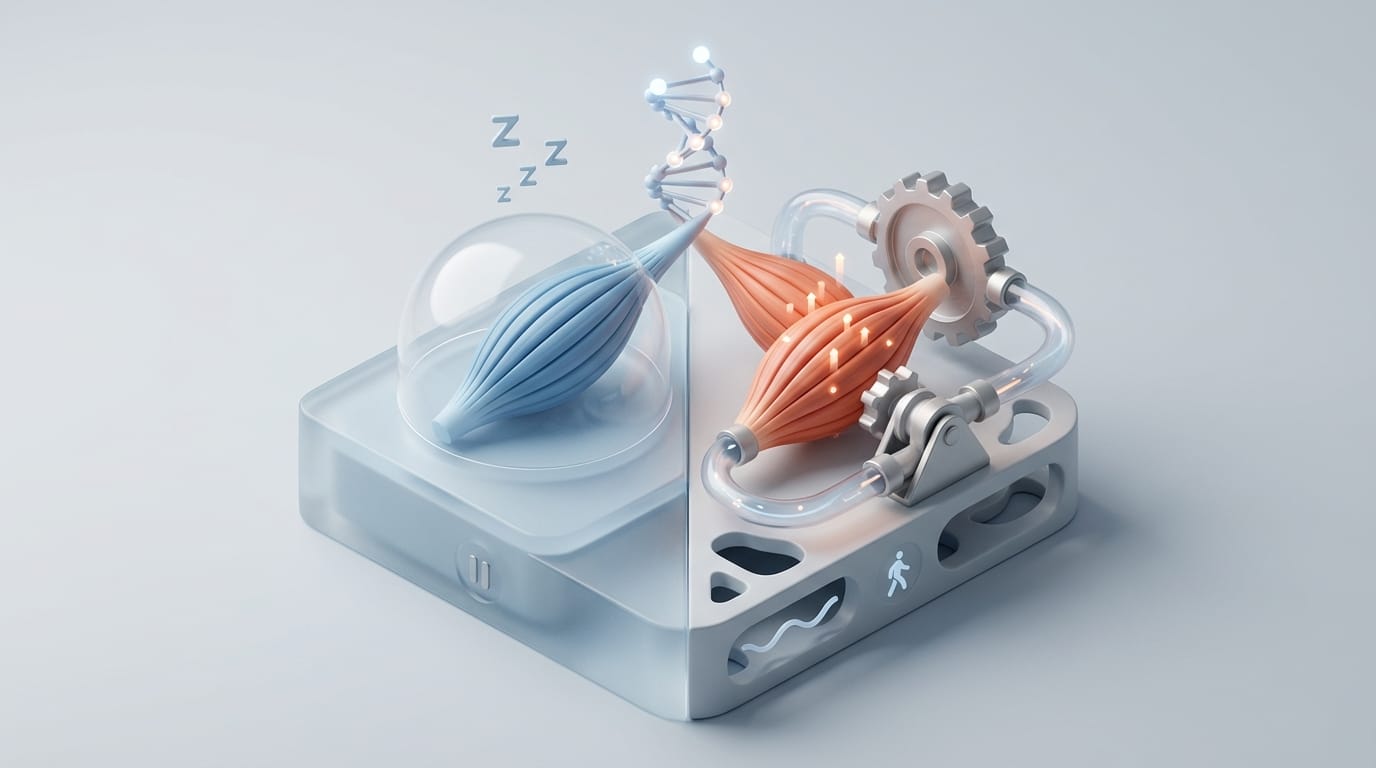
Misunderstanding the time between workouts often stops progress because muscle repair is a biological process that movement cannot rush. While the gym provides the spark for growth, the physical changes that build size and strength happen only during downtime. This creates a choice between active recovery vs complete rest to gain the most from every session.
The difference between these two paths involves more than just how hard you move; it is a choice of which system you want to fix first. Complete rest stops all physical stress, which lets the body focus on its internal balance. Active recovery uses light movement to keep blood flowing and joints healthy. Learning how to switch between these states helps you avoid overtraining and ensures that your hard work leads to real physical gains.
The Biological Foundation of Muscle Tissue Repair
Muscle growth results from a clear response to physical stress. When you lift heavy weights, you cause tiny tears in muscle fibers. This damage acts as a signal that starts a chain of repair. The body does not just fix these tears; it builds the fibers back stronger to handle future stress. This leads to the increase in muscle volume known as hypertrophy.
Satellite Cell Activation and Protein Synthesis
Special cells called satellite cells lead this repair process. These cells sit on the edges of muscle fibers and wake up when they sense damage. They move to the injury and join with existing fibers, which helps the tissue grow. This process increases the muscle’s ability to make protein and replace what was lost during the workout. Recent studies on muscle stem cells show that this process depends on your hormones and nutrition during rest phases.
The Role of Inflammation in Muscle Growth
Short-term inflammation helps muscles grow. After a workout, the immune system sends white blood cells to the damaged area. These cells clear away waste and signal the body to start rebuilding. Managing this window is why timing matters. Staying still allows the body to finish this work without new stress getting in the way. If you add more stress too soon, you might blunt the signals the body needs to grow.
How Complete Rest Facilitates Physical Restoration
Sometimes, any movement can slow down the body’s repair. Athletes often misunderstand complete rest as laziness, but it is a choice to send all your energy toward improving post-workout recovery systems. This is vital after heavy sessions that tax more than just the muscles.
Central Nervous System Recovery Needs
Heavy lifting puts a heavy load on the Central Nervous System (CNS). Every squat or deadlift requires the brain and spinal cord to send fast signals to the muscles. This leads to CNS fatigue, which lasts longer than muscle soreness. This exhaustion affects the whole body and lowers strength, coordination, and focus. Staying still is often the only way to help the nervous system return to a normal state.
Glycogen Replenishment and Hormonal Balancing
Total rest allows the body to move into a calm state where it refills energy stores. This is when the body has the best levels of growth hormones. High levels of cortisol, often caused by too much activity, can stop muscle growth by breaking down protein. Choosing total rest ensures cortisol drops enough to let the body build tissue. This reset gives your biology a fresh start for the next session.
The Mechanics of Active Recovery and Blood Flow
Active recovery involves low-intensity activity that helps the body without causing new fatigue. The goal is to keep your heart rate low so the movement feels easy. This acts as a bridge between heavy days, keeping the body ready without using up energy reserves.
Low Intensity Movement as a Circulatory Aid
Movement acts as a pump for the heart and blood vessels. This better flow brings fresh nutrients and oxygen to tired muscles while clearing out waste. Walking or light cycling works well because these activities do not cause new damage. It keeps the system moving and prevents the body from feeling sluggish.
Maintaining Joint Mobility and Fascial Health
Staying too still can make muscles feel tight and joints feel stiff. Light sessions with stretching help keep the connective tissue around your muscles healthy. Moving through a full range of motion keeps joints lubricated with fluid. This ensures that when you return to the gym, your body moves well and avoids that stiff feeling that follows a long break.
Examining the active recovery vs complete rest Paradox
Many believe moving more clears waste faster, but data suggests a different reality. When looking at muscle repair, active recovery vs complete rest often shows no difference in how fast the body heals. This suggests that light movement does not physically speed up the rebuilding of protein.
Physiological Realities vs Subjective Perception
Research in Frontiers in Physiology found that while light activity clears blood lactate faster, it does not fix muscle power any sooner than sitting still. The benefit seems to be mental. If you feel less stiff, you are more likely to train harder in your next session. Feeling ready to train is often just as useful as the repair itself.
The Minimal Impact of Lactate Clearance on Hypertrophy
Clearing lactic acid was once the main goal of recovery. However, the body clears lactate quickly even without movement. Lactate clearance does not affect muscle growth or repair. Your choice should depend on your mental state. If a walk makes you feel fresh, go for it; if you feel drained, a nap is better for your results.
Matching Recovery Strategies to Training Intensity
The best method depends on your training style. Heavy strength work needs different rest than high-volume bodybuilding. Learning your body’s signs helps you choose the right path at the right time.
When Total Rest Is Non-Negotiable
Some signs show your body needs to stop moving. If you cannot sleep, have a high resting heart rate, or lose your appetite, your system is tired. In these moments, even a walk is a stressor. Total rest is required to fix these issues. Just as downtime protects a machine from breaking, rest allows your body to fix its weak spots.
Ideal Scenarios for Active Recovery Sessions
Active recovery works best for mild soreness when you still have energy. A 20-minute walk can shake off stiffness after a high-volume day. This is a good time to work on mobility that you usually skip. If you can talk easily while moving, you are at the right intensity for this strategy.
Creating a Balanced Weekly Recovery Architecture
A good program uses both methods. A training week needs both heavy work and gaps for rest. Using only one method leads to burnout or a loss of progress. The history of the weekend shows how vital it is to balance work with downtime to stay productive.
Integrating Deload Phases and Rest Days
Most athletes do well with two days of light activity and one day of total rest per week. Every few weeks, you should also plan a deload. During this time, you lower your intensity for a full week. This lets the deep fatigue in your joints fade away. Many people find they are much stronger after this planned break.
Monitoring Recovery Through Heart Rate and HRV
You can use tools to help you choose your path. Monitoring your heart rate and Heart Rate Variability (HRV) shows how your nervous system feels. A high HRV means your body is ready to handle stress, making it a good day for light movement. A big drop in HRV is a sign that you need total rest. These numbers help you plan your week based on how your body is actually doing.
The choice between active recovery vs complete rest is about managing your energy. Your body has a set amount of power to use for repair. Your job is to make sure that energy goes where it helps most. Sometimes that means a walk to keep the blood moving; other times, it means staying on the couch to let the body rebuild in peace.