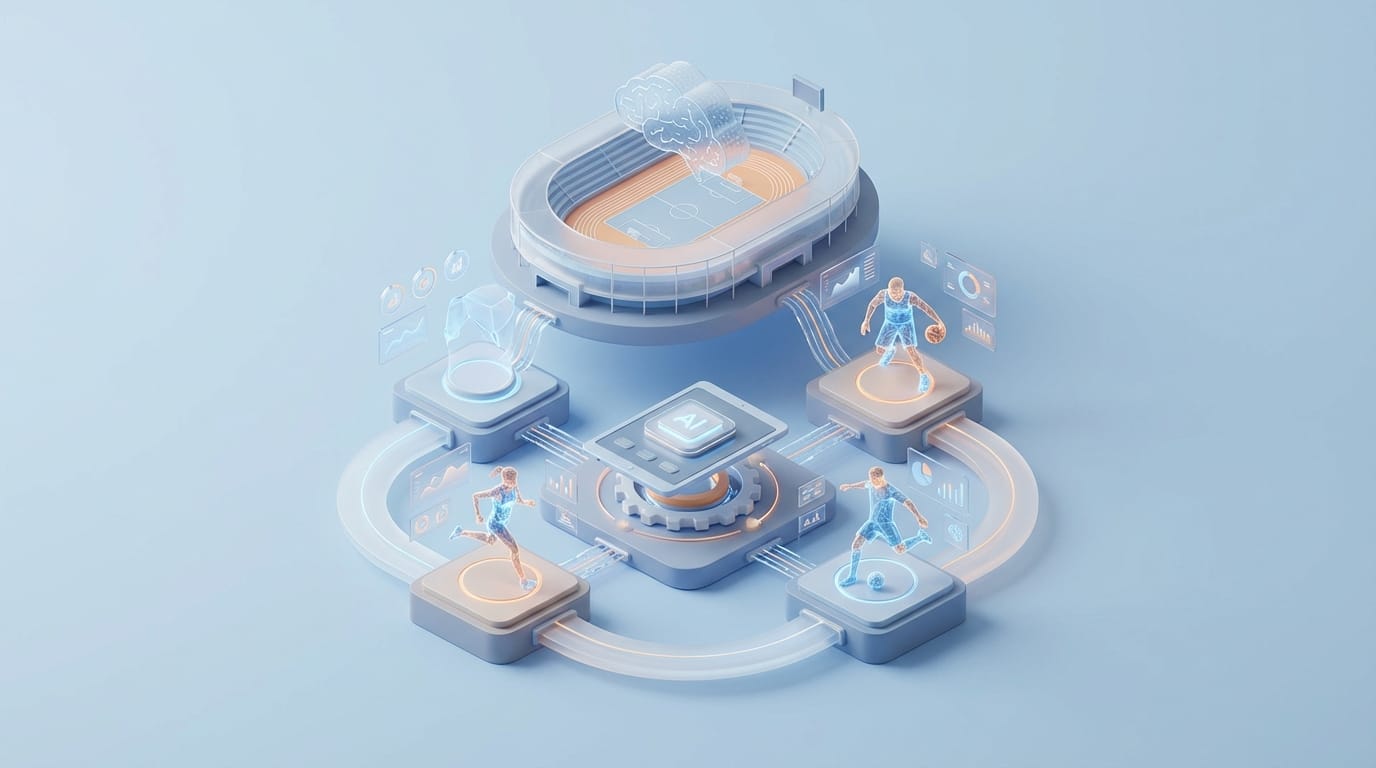
Winning or losing in pro sports is not just about training. It is about reading data. You must track every move and heartbeat. You must track every hour of rest. Teams want every edge they can get. Using AI in sports is no longer a luxury. It is the heart of how teams win today.
The Role of AI in Sports Today
Predicting the Future with Better Numbers
For a long time, sports used box scores. These stats only told you what already happened. You saw batting scores or how far a player ran. These numbers were helpful. But they did not explain why things happened. They did not tell you what would happen tomorrow.
Now, AI in sports changes the plan. Systems do more than record a goal. They use sensors and cameras to grab data points every second. These systems find patterns. They see things that human eyes miss. For example, a pitcher might drop his arm by one inch. A computer sees this as a sign of tire. It knows the pitcher will fail three innings before he actually does.
Making Faster Decisions with Data
In top sports, the gap between first and fourth place is tiny. It is often less than one percent. Teams use data to close this gap. They use math to stop making choices based on feelings. Think about a coach who rests a star player. He does not use his gut. He uses a score from a computer. This score tells him if the player is ready to go.
This way of working gives teams more certainty. They look at a team as a set of moving parts. This includes health and what the other team does. It even includes the weather. Computers help teams make every part work better at the same time.
Improving Players with AI in Sports
Tracking Bodies and Giving Feedback
Modern athletes act like test subjects. They wear tools from companies like Catapult. These tools track how hard a heart beats. They track how fast a player moves. This creates a loop. Coaches can change a workout while it happens. They match the work to how the athlete feels right then.
The system finds a normal level for each player. It sends a signal if a player acts differently. This is not about just working harder. It is about staying in a safe zone. You want to work hard enough to get better. You do not want to work so hard that you break.
Managing the Whole Person
The next big step is looking at life off the field. Teams no longer just look at practice. They look at the whole athlete. They use a method called sensor fusion. They take data from many places. They look at sleep trackers like Whoop. They look at genes and how a person feels. They put all this into one computer model.
This helps teams spot burnout early. A player might still run fast. But his brain might be tired. The computer sees this in his sleep and reaction times. The team can step in before he gets hurt. This stops the mental slips that lead to bad plays.
Stopping Injuries Before They Happen
Using Cameras to Fix Form
In the past, teams waited for pain. Then they did a scan. Now, AI in sports lets teams act first. They use smart cameras and math to track joints in 3D. They do not even need wires or sensors on the skin. The cameras just watch.
The computer compares the player to their healthy self. It finds tiny changes. A knee might turn in just three degrees when they land. These tiny moves lead to big tears. Fixing these moves in the gym makes the athlete stronger. It protects them from the stress of a real game.
Predicting Muscle and Tissue Risk
Muscle tears can ruin a whole season. Teams use models from Kitman Labs to find the risk of these tears. The model looks at how much work a player did this week. It compares that to what they did last month. This is the workload ratio.
If work goes up too fast, risk goes up. The computer does more than tell a player to stop. It gives them a new plan to recover. This helps managers keep a full team on the field. Having healthy players is the best way to win a title.
Better Game Plans and Tactics
Testing Games Before They Start
Strategy in sports is now about odds. Teams use AI in sports to run thousands of tests before a game. These tests think about the players and the weather. They even think about the refs. You can see how a game might end before it starts.
A coach can ask the computer a question. He might ask if he should play fast or slow. The computer shows him which choice wins more often. This makes his job easier during the game. He has already seen the match play out thousands of times in his mind.
Learning the Other Team’s Moves
People often remember only the last play they saw. Computers do not have this bias. They watch every second of every game. They use data from Second Spectrum to find what the other team does. They find habits that humans miss.
The computer might find a pattern. Maybe a player always moves left when he is tired. Or a server in tennis always hits to the same spot when losing. The computer gives this info to the players. This gives them a split-second head start. That small lead can win the game.
Finding New Talent and Scouting
Fair Scouting Around the World
Old scouting was hard. A person can only be in one place at a time. Smart platforms can watch every league in the world at once. They use the same math for every player. This lets you compare a player in Brazil to a player in Europe fairly.
This helps small teams find players who cost less. They look for players with great hidden stats. These players might not have many goals. But they make the right moves that lead to goals. This is a new way to build a team with less money.
Predicting Success for Young Players
Moving from college to the pros is hard. AI helps predict who will make it. These models find things that matter for long-term growth. They find that some things are more important than speed. They look at how fast a player improves. They look at how they act under pressure.
By using these numbers, teams avoid bad picks. They want a roster that stays good for many years. They want players who will get better over the next five years. This is how you build a winning team for the long haul.
Better Fan Experiences and Business
Making Fans Happy with Data
Teams use machine learning to know their fans. They look at what you buy and what you post. They use this to send you things you actually like. This might be a jersey from your favorite player. Or it might be a ticket deal for a game you want to see.
This makes the fan experience better. The system knows what you want before you ask. This keeps fans coming back. It turns a person who just watches into a real part of the team family.
Running a Stadium the Smart Way
Running a stadium is hard work. AI helps with things like ticket prices and staff. Prices might change based on the weather or how the team is doing. This fills the seats and makes more money. It also keeps the stadium full of energy.
On game day, cameras watch the crowds. If a line gets too long, the computer tells the staff. They can send more workers to that spot. This makes things easy for the fans. No one likes waiting in long lines for food or the bathroom.
Rules and the Future of AI
Data Privacy and Who Owns It
Collecting data on sleep and genes brings up big questions. Who owns that data? Can a team use it to pay a player less? This is a big worry for players and their unions. They want to make sure the data stays private.
Teams must set clear rules. Players should have their own data lockers. They should see what the team sees. The goal is to work together. The player gets a longer career. The team gets more wins. Both sides must agree on the rules.
Making Sure the Math is Fair
No computer model is perfect. AI is only as good as the info we give it. If a model only likes one style of play, it might be unfair. A player who is good in a different way might look bad. For example, a player who stands in the right spot might not get credit if the computer only counts tackles.
Teams need to know why a computer made a choice. This is called Explainable AI. Coaches need to see the logic. AI should help people make choices. It should not make choices on its own. The human touch still matters most in sports.
“The goal of AI in sports is not to replace the coach. It is to give the coach a better map of the game.”
To use AI well, a team must change its culture. It takes more than just buying software. Everyone from the scout to the boss must learn to use it. The teams that mix smart math with human skill will lead the future of sports.