
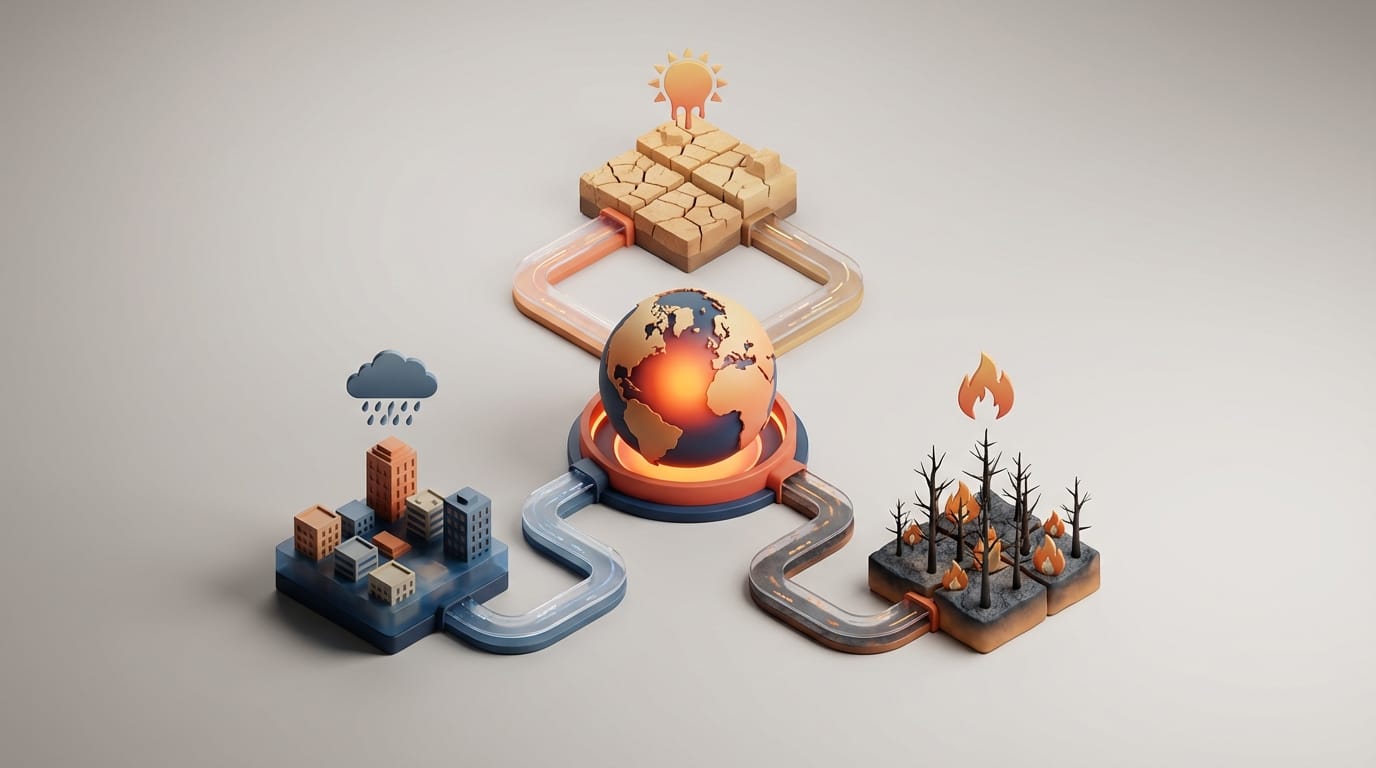
The Science of Extreme Weather
Experts can now tell the difference between natural weather cycles and changes caused by humans. This shift has changed how we look at big storms. We no longer see them as just bad luck. Instead, we see them as data points that show human influence. The science of extreme weather helps us measure how much we have changed the odds. We can move past simple guesses and look at hard facts to see how we cause specific disasters.
The History of Finding the Cause
For a long time, weather experts followed a strict rule. They said that no single storm or heatwave could be blamed on climate change. This was a smart choice at the time. Weather is messy and changes on its own. Natural cycles like El Niño move heat around the planet. These shifts happen without any help from humans. As computers got faster, our data grew better. This led to a new field called attribution science.
What Makes Weather Extreme?
In science, an extreme event is a record-breaker. These events fall into the top or bottom 1% of history. When you hear about extreme weather, you are hearing about a big change from the norm. The challenge for scientists is simple but hard. They must decide if a flood is a rare natural event or a sign of a broken system. They look for patterns that do not fit the old rules of nature.
Finding the Real Reason
Weather science has moved from watching patterns to finding forced signals. A forced signal is a change caused by something outside the normal cycle. These things include volcanoes, changes in the sun, or greenhouse gases. Scientists try to separate these signals from the noise of natural weather. This allows them to be specific. They no longer say that the planet is just getting warmer. They can now say that a specific storm was 30% stronger because of human-made warming.
How the Science of Extreme Weather Uses Models
Modern science uses two versions of the world to find answers. To understand the science of extreme weather, we must see how researchers isolate facts. If we want to know if humans caused a heatwave, we cannot just look at a thermometer. We have to look at two different versions of our planet at the same time.
Simulating Two Worlds
Scientists use powerful computers to build Earth System Models. They run thousands of tests on two different scenarios. The first version is The World That Is. This model includes everything we see today. It includes the 1.2 degrees of warming caused by human smoke and gas. The second version is The World That Might Have Been. In this model, the air stays the same as it was before factories and cars. It has much less carbon dioxide.
Researchers run these tests thousands of times to see what happens. If a storm happens 100 times in the first world but only once in the second world, the answer is clear. Human influence made that storm 100 times more likely to happen. The group World Weather Attribution uses this method. They give fast answers after big disasters to help the public understand the risks.
Measuring the Strength
This science does more than just say if an event happened. It also measures how strong the event was. Scientists call this an intensity shift. A flood might have happened even without climate change. However, the model might show that the rain was 10% heavier because of our warmer air. This matters for people who build bridges and roads. They need to know how much water these structures must hold in the future.
Heat and the Human Body
Heatwaves are the clearest sign of a warming world. The physics of heat is easy to understand. When we add greenhouse gases to the air, the Earth keeps more energy. This energy has to go somewhere. Most of it turns into the heat you feel on your skin. This makes summer days much hotter than they used to be.
Warm Air and Water
One basic rule of the air is the Clausius-Clapeyron link. It says that for every degree of warming, the air can hold 7% more water. This rule explains why hot air feels so sticky. It also creates a loop that feeds itself. Water vapor is a gas that traps heat. More water in the air traps more heat. This leads to high-pressure systems that get stuck over one spot for a long time.
Stuck Weather Patterns
Extreme heat often comes from atmospheric blocking. This happens when high-pressure systems stop moving. This is often because the jet stream gets slow and wavy. The jet stream is a river of air high in the sky that pushes weather along. The North Pole is warming faster than the rest of the world. This change makes the jet stream weaker. When the air stops moving, the sun bakes the ground day after day. The soil dries out and temperatures climb even higher.
Night temperatures have become a huge problem. In the past, the air cooled down at night. Now, the air stays hot. This puts a lot of stress on people and the power grid. Without a break from the heat, the body cannot recover. This makes heatwaves more deadly than they were in the past.
Faster Water Cycles and Floods
The water cycle is the way water moves from the ocean to the sky and back to the land. As the planet warms, this cycle speeds up. Heat causes more water to evaporate from the sea and the soil. Because of the rules of physics, the air holds more of that water before it falls as rain.
The Bigger Bucket
The 7% increase in water capacity is a physical law. It means the air has a much bigger bucket to dump on the ground. This leads to a strange situation. We see more violent rain even in places that are getting drier. The total rain for the year might stay the same. However, the way it falls is different. Instead of gentle rain for three days, we get a huge burst of water in one hour. These bursts are too fast for city drains to handle.
Stronger Clouds
Warm air also changes how clouds form. In a warm world, hot air rises faster and with more energy. This creates taller and deeper clouds. These clouds process water very well. They create much higher rain rates. This is why we see more flash floods in cities. Concrete cannot soak up the water. When the rain falls faster than the pipes can carry it away, the streets turn into rivers.
How the Science of Extreme Weather Explains Fire
Fire is a natural part of many forests. However, the science of extreme weather shows that humans make fires much worse. The link between heat and fire is not just about the sun. It is about how much the air wants to drink.
The Air as a Sponge
Fire experts look at something called the Vapor Pressure Deficit. This measures the difference between how much water the air can hold and how much it has. As it gets hotter, the air’s thirst grows very fast. It acts like a giant sponge. It sucks every drop of water out of trees and dead leaves. This makes the forest very dry. Dry wood and grass catch fire easily. Once a fire starts, this dry fuel helps it spread across the land at high speeds.
Longer Fire Seasons
We are also seeing fire seasons that last longer. Snow melts earlier in the spring than it did thirty years ago. This means the ground starts drying out weeks earlier. Wildfires also create their own problems. When a forest burns, it releases carbon into the air. This carbon causes more warming. The ash from the fire can also land on ice and snow. Dark ash soaks up more sunlight than white snow. This makes the ice melt faster and changes the local weather.
The Power of the Ocean
The oceans are like a giant battery for heat. They soak up over 90% of the extra heat from greenhouse gases. This stored energy has a huge impact on our lives. Groups like NOAA watch the heat of the ocean closely. Warm water is the fuel for the most dangerous storms on Earth.
Hot Water and Hurricanes
Just like land, the ocean has heatwaves. These are times when the water is much hotter than normal. Hot water gives energy to hurricanes and typhoons. It allows a storm to pick up more water and grow stronger winds. Recent studies show that storms now get strong very fast. They can jump from a small storm to a major hurricane in less than a day. This makes it very hard for people to get ready or leave their homes.
Energy in the Deep
The deep ocean is also getting warmer. This is a long-term problem. Even if we stopped all smoke today, the oceans would stay warm for hundreds of years. They release their stored energy very slowly. This means the extreme weather we see today is partly from gas we released decades ago. The ocean keeps the planet’s memory of our past actions.
The Limits of Our World
As we study the science of extreme weather, we must face a hard truth. We built our world for a climate that is gone. Most of our dams and power lines were built using old data. Engineers assumed the future would look like the past. They were wrong.
The End of Steady Weather
Engineers often build things to survive a 1-in-100-year storm. This science shows that these storms now happen every 10 years or even every 5 years. The safety margins we used to have are gone. A wall built to stop a flood might fail. This is not because of a freak accident. It is because the baseline of the world has moved up. We must change how we build if we want to stay safe.
Better Tools for the Future
The goal of this science is to help us predict what comes next. By using these models, we can give better warnings to the public. The European Centre for Medium-Range Weather Forecasts uses these tools now. They can see extreme events coming much sooner than they could before. This gives people more time to find safety.
Knowing the science does not stop the storm. However, it does let us see the risk. We no longer see extreme weather as an act of God. We see it as a result of what we have done to the air. This knowledge moves us from being victims to being managers of our world. It is a difficult job, but it is the only way forward.