
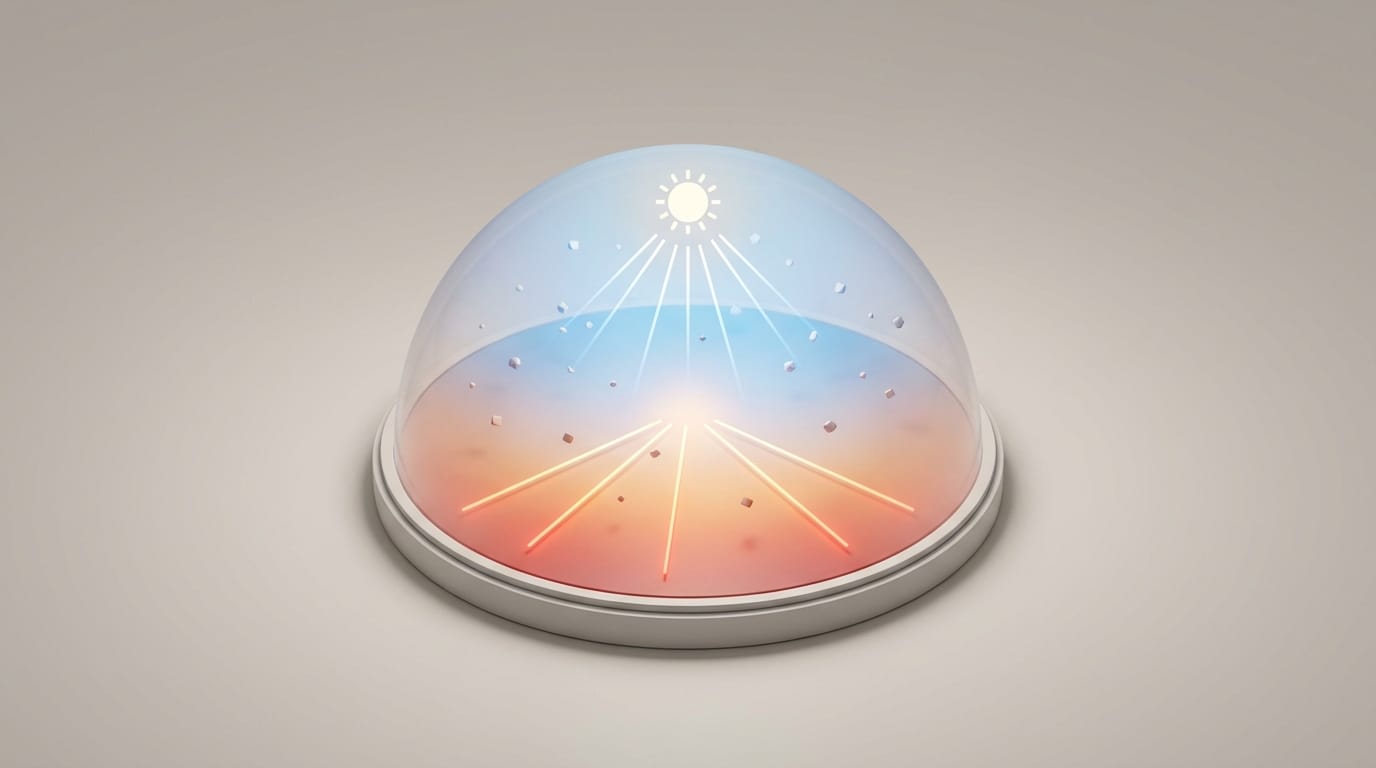
The Relationship Between Sunlight and the Atmosphere
The air does not have a color. The sky looks colored because of how sunlight hits the atmosphere. Your eyes also play a role in how you see this light. To understand why is the sky blue, you must look at sunlight. You must also look at the gases that make up our air.
Sunlight looks white to you. It is actually a mix of all the colors of the rainbow. This includes red, orange, yellow, green, blue, indigo, and violet. Light travels in waves. Each color has a different wave size. Red light has long waves. Violet and blue light have short waves. Sunlight leaves the vacuum of space and enters our atmosphere. There, it hits a thick sea of gas and dust.
The Colors in Sunlight
The Sun sends out energy in many forms. Most of this energy comes to us as visible light. We see this mix as a white glow. But the Sun does not send out the same amount of every color. It produces more yellow and green light than violet light. This matters for the final color you see in the sky. The light that enters our air is the starting point for the blue color.
The Air as a Filter
Our air is mostly nitrogen and oxygen. These gas molecules are very small. They are much smaller than the waves of visible light. When light hits these tiny molecules, it does not bounce off like a ball. Instead, the gas molecules catch the light. Then, they send the light out in all directions. Scientists call this scattering. This process turns the clear air into a glowing medium.
The Mechanics of Rayleigh Scattering
A physicist named Lord Rayleigh studied how light moves through the air. He found a process we now call Rayleigh scattering. This process explains how small particles spread light. The nitrogen and oxygen in our air are the perfect size to scatter certain colors. These gases do not treat all colors of light the same way.
How Selective Scattering Works
Scattering depends on the size of the light waves. Short waves scatter much more than long waves. There is a math rule for this. The scattering power increases by the fourth power of the wave size. In simple terms, short waves are much more likely to hit gas molecules and spread out. This is the main reason why is the sky blue instead of red during the day.
Wave Sensitivity in the Air
Blue and violet light have the shortest waves. They scatter about ten times more than red light. Sunlight enters the air. Long red and yellow waves pass through the gas without much trouble. But the short blue waves hit the gas and bounce everywhere. When you look at the sky, you see this scattered blue light coming from every direction. It fills the sky with a bright blue glow.
The Biological Link: Why the Sky Is Not Violet
You might wonder why the sky is not violet. Violet light has even shorter waves than blue light. The air scatters violet light even more than blue light. By the rules of physics, the sky should look purple. The answer to this puzzle involves the Sun and your eyes.
The sky you see comes from both the physical world and how your eyes work.
The Violet Light Puzzle
Two things stop us from seeing a purple sky. First, the Sun does not make much violet light. It makes much more blue light. There is not enough violet light to make the whole sky look purple. Second, the ozone layer high in the air absorbs some violet light. Less violet light reaches the ground. This leaves more blue light for you to see.
How Your Eyes See Color
Your eyes are the most important part of this story. Your retina has three types of cells called cones. These cones sense red, green, and blue light. Your eyes are much better at seeing blue than violet. When you look up, you see a mix of scattered violet and blue light. Your brain treats this mix as a pale blue. If you had the eyes of a bee, the sky would look very different. Bees can see ultraviolet light that humans cannot see.
The Transition to Red and Orange Sunsets
The same rules explain why is the sky blue and why sunsets are red. The change happens because the light travels a different path. The distance the light moves through the air changes throughout the day.
The Path of Light
At noon, the Sun is straight above you. The light travels through a thin layer of air to reach you. At sunset, the Sun is low near the ground. The light must travel through much more air to reach your eyes. This long path acts like a filter. The air blocks the colors with short waves.
How Blue Light Fades
This process is called extinction. The blue light scatters so many times that it misses your eyes. Only the long waves can make it through the thick air. These are the red, orange, and deep yellow colors. The air lets these warm colors survive the long trip. This makes the Sun look red. It also makes the clouds look pink and orange at the end of the day.
Variables That Change Sky Color
Clear air leads to a blue sky. Other things in the air can change what you see. Sometimes the sky looks white or gray. This happens because of a different kind of scattering.
Large Particles and Mie Scattering
Mie scattering happens when the bits in the air are large. These bits can be water drops, dust, or smoke. These particles are as big as light waves. They do not care about the size of the wave. They scatter all colors of light the same way. This is why clouds look white. The water drops scatter every color at once.
Humidity and Pollution
In wet or dirty air, the sky loses its deep blue color. It starts to look washed out. This happens because large bits of pollution scatter all colors toward you. This mix of colors creates white light. This hides the blue color of the sky. You can find more data on air quality at the NOAA website.
Observing Light Scattering Beyond Earth
The question of why is the sky blue is unique to Earth. Other planets have different gases and different skies. The color of a sky depends on what is in the air. It also depends on the pressure of the gas.
The Sky on Other Planets
The Moon has no air. There is nothing to scatter light. The sky on the Moon is always black. Venus has a very thick atmosphere. It has clouds made of acid. These clouds scatter light so much that the sky looks orange. Blue light never makes it to the surface of Venus.
The Martian Sky
Mars is very different from Earth. The air on Mars is thin. It is full of fine dust that contains rust. During the day, this dust absorbs blue light. It scatters red light. This makes the Martian sky look like the color of butterscotch. At sunset, the air near the sun looks blue. This is the opposite of what we see on Earth. Dust on Mars scatters light in a unique way. You can see images of these blue sunsets from NASA missions.
Summary of Light and Air
The color of the sky comes from physics and your eyes. Rayleigh scattering makes blue light fill the sky. Your eyes turn this scattered light into the blue color you know. These systems work together to create the view above your head.
Learning about these rules helps us understand our world. Scattering does more than just make the sky pretty. It helps balance the heat of our planet. The air reflects some of the Sun’s energy back into space. This keeps the Earth at the right temperature. The blue sky is a sign of the air that keeps us alive.

