
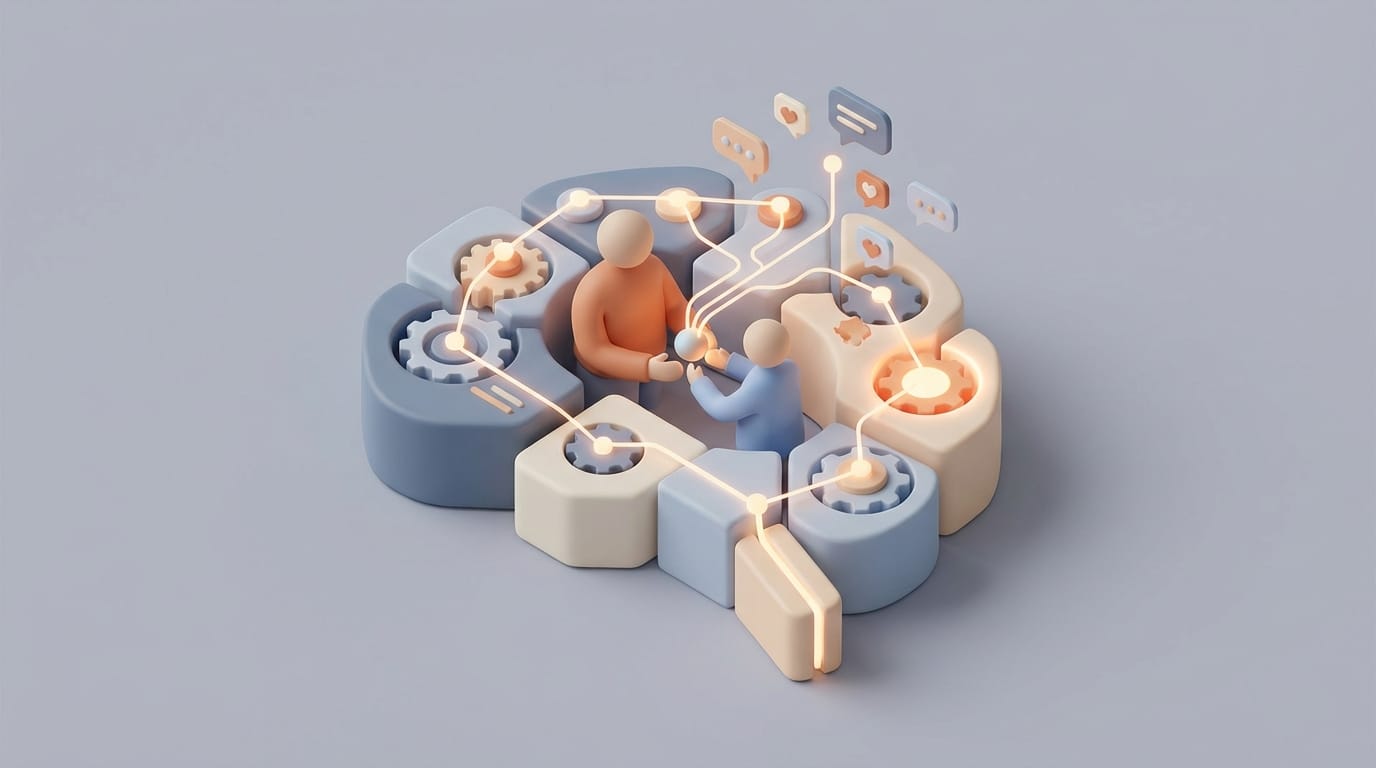
The cognitive benefits of grandparenting offer a more durable form of mental protection than digital puzzles or brain-training apps. While many retirees use Sudoku or specialized smartphone software to stay sharp, these isolated tasks often fail to mimic the complex demands of real-world social life. Evidence suggests that the mental stimulation found in an active, supportive family role provides systemic protection against age-related decline. This advantage stems from the specific psychological environment caregiving creates. When a grandparent steps into this role, they experience a shift in identity and mental load that functions as a biological shield for the brain.
This deep engagement resets the nervous system by prioritizing emotional connection and adaptive problem-solving over the repetitive loops of games. It requires a form of presence-based attention that modern life often lacks. By focusing on a child’s immediate needs, grandparents build mental resilience that protects their cognitive health better than any software could. This transition into a helper identity encourages the brain to remain in an active state, staying alert to social cues and linguistic shifts that keep neural pathways healthy.
The Neurological Link and Cognitive Benefits of Grandparenting
The relationship between childcare and brain health is rooted in how humans process social signals. Unlike a computer program with fixed rules, a child is a dynamic system. Interacting with them requires constant interpretation of non-verbal cues and emotional regulation. These interactions act as a workout for the prefrontal cortex, which is the area of the brain responsible for making decisions and managing tasks. Because these social demands are unpredictable, the brain must stay flexible and responsive.
How Intergenerational Interaction Stimulates Verbal Fluency
Engaging with grandchildren forces older adults to use different types of language. They must move between simple words for toddlers and complex stories for older children. A recent study found that grandparents who provided childcare scored higher on verbal fluency tests than those who did not. This constant stimulation prevents the word-retrieval issues often associated with aging. By keeping the neural pathways for language active, seniors can maintain their ability to communicate clearly and quickly.
The Relationship Between Active Caregiving and Memory Retention
Memory thrives on relevance rather than rote memorization. Providing care requires a person to remember evolving details such as schedules, food preferences, and the stories of a child’s life. Research analyzed by the American Psychological Association indicates that active caregiving helps slow cognitive decline by demanding high levels of creativity. This prevents the mental stagnation that can happen when retirement leads to fewer daily responsibilities. When the brain is required to track and manage the details of another person’s life, it stays sharper for longer.
The Power of Focus and the Helper Identity
The core of the cognitive benefits of grandparenting is a phenomenon known as presence-based engagement. In professional life, many people feel forced to multitask, which increases stress and fragments attention. Grandparenting offers a chance to return to focused tasks, where one gives a child undivided attention. This deep focus acts as a neural reset that lowers the stress hormones known to damage the brain over time. By moving away from the noise of modern productivity, grandparents build a type of mental strength that is often lost in sedentary retirement.
Adopting a helper identity also provides a clear sense of purpose. When a person feels like a vital part of a family, their brain stays in an active state rather than a passive one. This identity acts as a buffer against loneliness and isolation, which are factors that often speed up mental decline. Just as digital tools like apps for social well-being aim to bridge the gap between people, the physical presence required in grandparenting offers a natural solution to the same problem.
Grandparenting Compared to Digital Brain Games
The primary flaw in traditional brain training is that the skills do not often transfer to real life. If you play Sudoku every day, you will become good at Sudoku; however, that skill might not help you remember appointments or manage your budget. This is the silo effect of static exercises. In contrast, the social complexity of raising a child requires a wide range of skills, including empathy, planning, and rapid problem-solving. These skills are useful in every part of daily life.
Digital games are predictable because they operate within coded rules. The human brain evolved to solve social problems, not digital ones. A study highlighted by Harvard Health found that socially active adults had 70% less cognitive decline than their less-social peers. While puzzles are a fine hobby, they cannot replace the multi-layered load provided by a person who responds unpredictably. Children are excellent teachers for neural plasticity because they force you to change your strategy constantly. This type of mental labor is much more durable than the repetitive loops of a smartphone app.
Finding the Cognitive Sweet Spot in Childcare
While the gains are significant, the cognitive benefits of grandparenting are most visible when the caregiving is a choice rather than a burden. If childcare becomes a full-time job without enough support, the benefits can reverse. High levels of chronic stress lead to the release of cortisol, which is toxic to the memory centers of the brain. Just as balancing game design difficulty is vital for a player’s experience, the difficulty of childcare must be balanced to prevent burnout.
Research suggests that the most significant gains are found in grandparents who provide moderate care, such as one or two days a week. This schedule allows for intense focus and social engagement while leaving time for the senior to maintain their own hobbies. Keeping a balanced life ensures that the grandparent remains a helper rather than a servant, which preserves the identity that protects the brain. When a senior has time to rest and socialize with their own peers, they return to childcare with more energy and mental clarity.
Integrating Cognitive Care Into Retirement Planning
Families should view grandparenting as a deliberate health intervention rather than just a favor. When you plan your retirement, you should consider your social calendar just as you consider how inflation and interest rates affect your savings. Redefining the role of the grandparent as a coach for the next generation creates a system where everyone wins. The modern grandparent is active and health-conscious, and by focusing on the quality of engagement, they can maximize their brain health.
The effect of this intergenerational bond is a reduction in the risk of dementia. By staying active through the joyful and demanding work of childcare, seniors build a cognitive reserve that serves them well into their later years. It is a reminder that the best system for maintaining human intelligence is other humans. The health of our aging population depends on the depth of our family bonds. When we prioritize these connections, we install a vital piece of infrastructure that protects the minds of our elders. Putting down a smartphone and picking up a picture book might be the most advanced neurological exercise available today.