
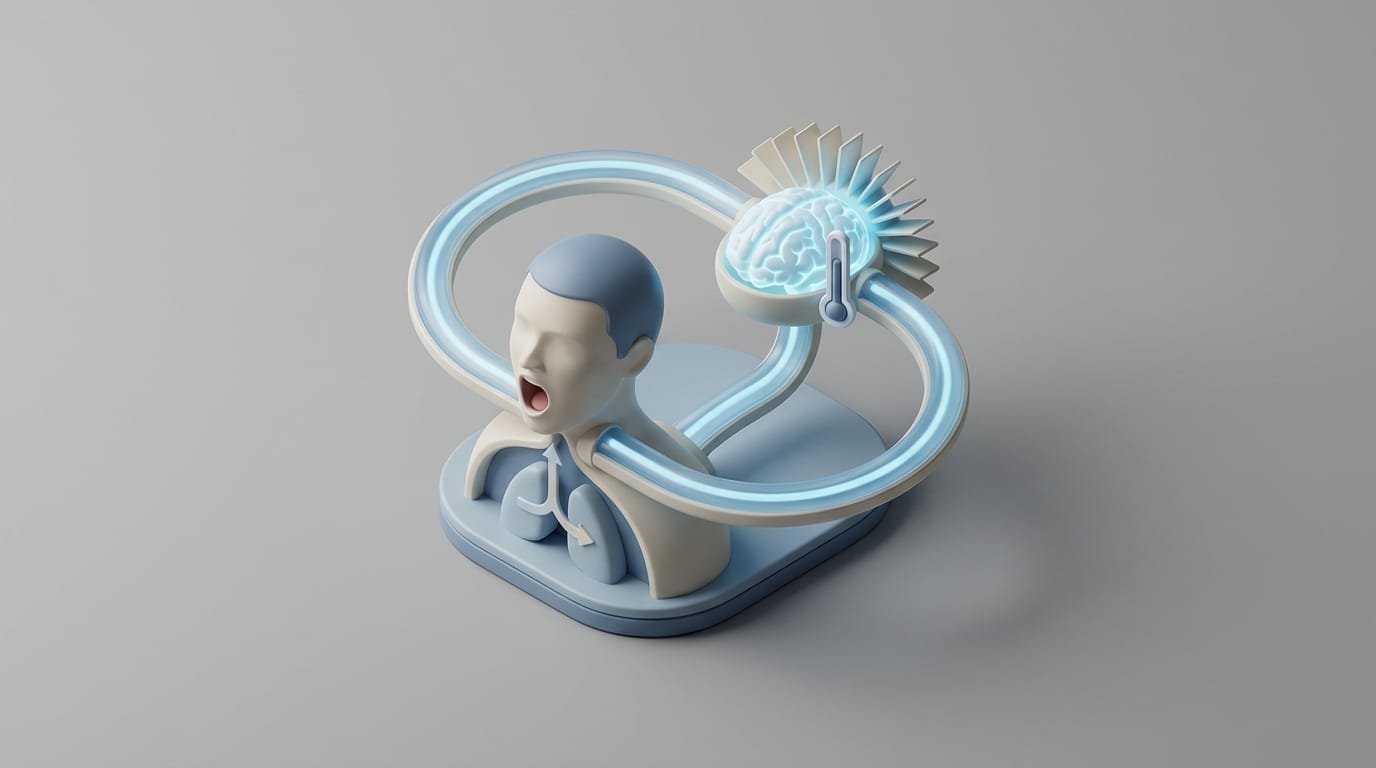
When we attribute yawning solely to boredom, we overlook the physical tools that keep our brain from overheating. Understanding why do we yawn requires looking past social fatigue into a complex system of cooling and fluid movement that maintains brain health. This biological program appears in almost all animals with a spine, suggesting it serves a purpose far deeper than a simple expression of tiredness. To an engineer, a yawn looks less like a sigh and more like a system reset. It is a high-energy event that involves the lungs, the diaphragm, the throat, and the blood vessels. While we often think of it as a deep breath, the mechanical sequence is unique; it serves hardware needs that a standard breath cannot satisfy. The system is so basic that it begins in the womb. Researchers see fetuses yawning as early as the first trimester, long before they could feel bored or need to show empathy. This suggests the reflex is part of our basic wiring, providing a maintenance function that the body values from its earliest stages.
How the physical makeup of a yawn differs from a deep breath
At first glance, a yawn looks like a strong breath, but the mechanical steps are entirely different. A deep breath is mostly a lung event focused on swapping gases. A yawn, known as oscitation, is a set pattern of muscle movements. It is an involuntary reflex that, once it starts, must finish. The most significant change happens in the throat. During a yawn, the pharynx (the space behind the mouth) stretches to its widest point. This state does not occur during heavy breathing or exercise. The larynx moves down while the soft palate rises, creating a large, temporary opening in the airway. This setup allows a high volume of air to enter while shifting pressure inside the skull.
The structural stretch of the jaw and eardrums
A yawn also uses the muscles of the head and neck in ways that breathing does not. The jaw opens to its limit, stretching the face muscles and the tissues around them. This intense stretch triggers a small muscle in the ear, which is why hearing often muffles or crackles during a yawn. Experts believe this stretch increases blood flow to the head, acting as a pump for the vessels that feed the brain. This effort is why humans and animals often pair a yawn with a full-body stretch. By pulling on the connective tissue and muscles across the body, the system resets the tone of the frame, preparing the person for a change in state, such as moving from rest to activity.
How yawning acts as a cooling system for the brain
One theory for why do we yawn suggests that the reflex regulates the temperature of the brain. The human brain uses a massive amount of energy, accounting for roughly 20 percent of the body’s fuel demand while making up only 2 percent of its weight. This high energy use creates heat. If the brain’s temperature rises by even a small amount, thinking becomes harder and cells feel stress. The brain operates within a narrow heat window. When it nears the top of that window, the yawning reflex may act as a radiator. By pulling in a large volume of air that is cooler than the body’s core, the system helps swap heat through the thin skin of the nose and mouth. This air cools the blood in nearby vessels, which then flows back into the brain to lower its temperature. It is a biological heat sink designed to prevent the brain from slowing down due to heat.
Why we yawn more in specific temperatures
Research shows that yawning depends on the outside temperature. In places where the air is cooler than the body, yawning works well to cool the brain. However, if the air is extremely hot, a yawn provides no cooling benefit. If the air is freezing, it might cause too much of a shock. This explains why people yawn more in mild weather rather than in extreme heat or cold. The reflex is set to provide the best cooling for the effort. This cooling theory also explains why we yawn when we are tired. During these times, our core body temperature shifts as our internal clock prepares for sleep. A yawn might be the body’s attempt to stay alert by cooling the brain, fighting off the heat rise that often happens before we drift off. This focus on balance is a core part of how sleep supports physical performance and keeps the mind sharp.
The science of brain scrubbing and fluid movement
While cooling is a solid theory, modern studies highlight a mechanical “scrubbing” effect. This theory focuses on the movement of brain fluid, the clear liquid that cushions the brain and spinal cord while removing waste. Unlike the heart, which pumps blood, this fluid does not have a central pump. It relies on pressure changes and physical movement to move around. MRI scans of brain fluid reveal that a yawn creates a unique pressure shift that differs from a deep breath. While a deep breath pushes fluid toward the brain, a yawn triggers a movement of fluid away from the brain and toward the spine. This shift suggests that yawning acts as a flushing tool for the nervous system.
Brain fluid and waste removal
During the day, the brain builds up byproducts of neural activity. These must be cleared out to keep neural paths open. The intense pressure change caused by the wide jaw and chest muscles creates a force that helps push this fluid through the brain’s waste-clearance system. This scrubbing action is vital for keeping a clean environment for our cells. The physical act of yawning changes how fluids move within the skull. By linking fluid and blood flow, the yawn clears out old fluid and makes room for fresh, oxygen-rich blood. Reports in New Scientist show that this flow is a distinct move that separates a yawn from any other breath. It is a structural reset of the brain’s internal pipes. Just as athletes use systems for post-workout recovery to clear out muscles, the brain uses the yawn to flush its own waste.
Why we mimic the yawns of people around us
The most famous part of this reflex is that it spreads. If you see someone yawn, you will likely feel the urge to do the same. This happens mostly in social animals like humans, chimps, and dogs. While the physical yawn has a biological use, its spread has a social one. Contagious yawning links to mirror neurons, which are cells that fire when we do an action or see someone else do it. These cells are a basic part of how we feel empathy. In groups, spreading a yawn may have started as a way to sync alertness. If one person yawns to reboot their brain and stay sharp, the signal spreads, ensuring the whole group stays ready for threats. Evidence also shows that the urge is stronger with friends or family than with strangers. This makes yawning a subtle tool that helps a group stay in the same mental state.
Why the oxygen theory is a common misconception
For a long time, the standard answer to why do we yawn was that we needed more oxygen or needed to get rid of carbon dioxide. It sounds right because we breathe to get oxygen and a yawn is a big breath. However, research has proven this gas theory wrong. If yawning were about oxygen, we would yawn more during a hard run, but we do not. We would also yawn less in a room full of oxygen, but tests show that breathing pure oxygen does not stop yawns. The myth stays popular because it feels right, but it ignores how complex the reflex is. A yawn uses too much energy and too many non-breathing muscles to be just about air. The body has faster ways to get oxygen, such as breathing faster. Yawning is an event for the brain, not a lack of lung space. It concerns the internal state of the skull more than the gas levels in the blood.
When excessive yawning indicates a health issue
While normal yawning is a healthy habit, constant yawning can signal a problem. If the body triggers the reflex all the time, it may be trying to fix a chronic issue. This often links to the vagus nerve, which connects the brain to the heart and stomach. In some cases, frequent yawning is a heart-related reaction. This happens when the vagus nerve is too active, causing heart rate and blood pressure to drop. The body may use yawning to try to speed up the heart and get blood back to the brain. People with heart issues or those who faint often report a lot of yawning before an event. Clinical reviews on yawning suggest it can also be a sign of an oncoming migraine, likely due to changes in the brain that happen before the pain starts.
Signals in sleep apnea and migraine
Constant yawning is also a sign of sleep apnea. In these cases, the brain does not get good rest because breathing stops and starts. Daytime yawning is the brain’s attempt to stay cool and clear out waste that should have been handled during deep sleep. If you yawn constantly despite sleeping enough hours, the quality of your sleep may be low. Much like how the science of why veins appear blue is a matter of light rather than blood color, yawning is often a sign of physical state shifts rather than just being tired.
How to manage the yawning reflex
There are times when a yawn is awkward. Because it is a reflex, stopping it is hard, but you can change the triggers. Since the brain yawns to cool down, finding another way to cool off can stop the urge. Breathing through your nose is an efficient way to cool the blood going to the brain without a full yawn. If you feel one coming, try taking slow breaths through your nose while keeping your mouth shut. This often provides enough cooling to satisfy the brain. Cooling your forehead with a cold cloth or moving to a cooler room can also lower brain temperature and stop the need to yawn. Long-term management involves checking the temperature of your workspace. If you are in a warm office, your brain will struggle to stay cool. Opening a window or using a fan helps your brain’s radiator work better, reducing the times your body has to resort to a yawn. Asking why do we yawn reminds us that it is a sign the brain is working hard to keep itself sharp. The next time you feel a yawn, remember your system is performing a necessary rinse to keep your hardware running clean.