
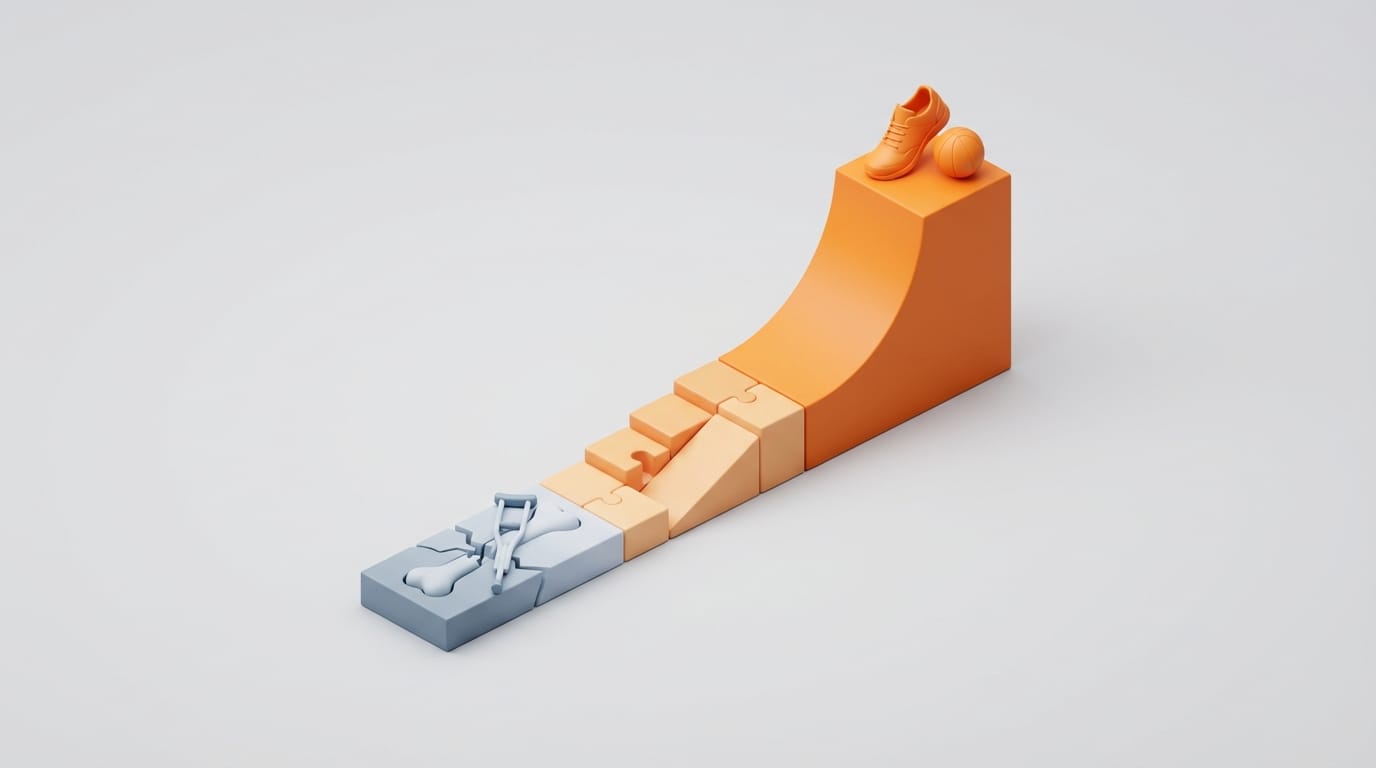
To manage a safe return to sports after injury, athletes must move beyond calendar dates and focus on functional benchmarks. Many people assume that once a surgeon clears them or the pain from a tear fades, they can jump straight back into a game at full speed. This mindset overlooks the way the human body works, as the brain often guards a perceived weak spot long after the tissue has physically mended.
To bridge the gap between rehab and high-stakes play, one must view the body as a system of physical work and brain signals. Success requires hard data, steady progress, and a focus on mental readiness. Without these tools, an athlete is not just recovering; they are taking a massive risk with their long-term health.
The Difference Between Medical Healing and Performance Readiness
In a doctor’s office, “healed” often means the bone or ligament is strong enough for daily life. However, the strength needed for a morning walk is not the same as the power needed to stop and turn in a soccer match. Relying on the absence of pain is a mistake because pain is often the last sign of trouble to show up and the first to go away. It usually vanishes long before a muscle has its full power or stamina back.
Closing the Performance Gap
The performance gap is the space between being medically stable and being physically ready for a game. While the body repairs tissue through biological growth, functional readiness comes through specific training. During the weeks of rest after an injury, the muscles around the area often shrink. At the same time, the nervous system loses its ability to coordinate fast, explosive movements. A Hospital for Special Surgery report notes that full recovery for sports that involve pivoting can take many months, even if a player feels fine much sooner.
Medical clearance is the starting line for training, not the end of the recovery journey. A true return to sports after injury requires the athlete to show they can handle the same speeds and forces they will face in a game. If the tissue is mended but the muscles around it are weak, the body will shift the load to other joints. This shift leads to the secondary injuries that often ruin a comeback.
Physical Benchmarks for a Safe Return to Sports after Injury
Feelings of strength are often wrong, so coaches and trainers use objective data to measure readiness. The best tool for this is the Limb Symmetry Index (LSI). This test compares the performance of the injured limb to the healthy one. Most trainers look for at least 90% symmetry in strength and power before they let an athlete return to full contact.
Measuring Strength and Stability
Testing must go deeper than simple weightlifting and should include movements that test how the athlete handles sudden changes. Trainers look for three main things:
- Strength Balance: Experts use specialized machines to ensure the thigh and hamstring muscles are balanced within 10% of the uninjured side.
- The 90% Rule: Athletes should reach 90% or more of the distance of their healthy leg during single-leg hop tests, which measure both power and landing control.
- Stopping Ability: Trainers watch how well an athlete can slow down. Since most injuries happen during a sudden stop or cut, this is a non-negotiable goal.
Testing should also happen when the athlete is tired. Most players can keep perfect form for the first few minutes, but as they tire out, the brain’s ability to steady the joint drops. Using proper recovery methods ensures the body can handle these repeated tests without breaking down during the final minutes of a game.
Why Mental Readiness Is a Vital Goal
Physical strength is only half of the story. Many athletes face a “hesitation factor” where the brain, fearing another injury, changes how the body moves to protect the old wound. Even if a knee is perfectly healed, a player who does not trust it will subconsciously shorten their steps or favor the other leg. This creates a new imbalance that almost guarantees another injury.
Overcoming the Fear of Movement
Kinesiophobia, or the fear of movement, is a major reason why many comebacks fail. It shows up as a lack of confidence during fast turns or jumps. If an athlete hesitates for even a split second, the timing of their muscle work is thrown off. This mental guarding leads to stiff landings and poor balance. To ensure a player is ready, they must move without thinking about their injury.
Using Self-Assessment to Track Confidence
Because mental readiness is so important, trainers track it with the same care they use for muscle strength. Many use a tool called the ACL-RSI scale, which is a questionnaire that asks about an athlete’s confidence and fear. A recent study on ACL confidence scores shows that a score of 65 or higher is a strong sign that an athlete will succeed when they go back to their sport.
The biggest danger is the athlete who passes every physical test but remains mentally stuck. This person has the physical tools to play but lacks the mental trust to use them. Spotting this gap allows for specific drills, like visualization or practicing in a crowd, to help the mind and body cross the finish line together.
A Step-by-Step Plan for Returning to Play
Moving from a quiet clinic to a chaotic game must happen slowly. This stage-based plan moves the athlete through higher levels of stress. A common mistake is jumping from solo drills straight into a full scrimmage, which creates a sudden spike in work that the body cannot yet handle.
Managing Training Loads and the 24-Hour Rule
A safe return to sports after injury follows a path from controlled to chaotic settings:
- Stage 1: Running in a straight line on a flat surface or treadmill.
- Stage 2: Moving side-to-side in planned drills, like weaving through cones.
- Stage 3: Reacting to outside cues, such as a coach’s whistle or a partner’s move.
- Stage 4: Small games with limited contact to test spatial awareness.
- Stage 5: Full competition with no limits.
To prevent the body from wearing out, trainers monitor the training load. According to studies on training load ratios, keeping the weekly workload close to the average of the last month keeps the risk of injury low. If a player does too much in one week, their risk of a new injury jumps. A simple 24-hour rule is also helpful; if any new drill causes pain or swelling that lasts for more than a day, the athlete must go back one step in the plan.
Ways to Prevent New Injuries
The brain is very efficient at finding workarounds. During an injury, the motor cortex often changes its signals to favor the healthy limb. If an athlete does not fix this habit during rehab, it becomes their new normal. This explains why people who tear one ligament often tear the one on the other side; the “healthy” leg has been doing extra work for months to make up for the weak one.
Neuromuscular training helps fix these patterns by rebuilding the connection between the mind and the muscles. By using external goals, like “step over the line” instead of “bend your ankle,” athletes can bypass over-thinking and move more naturally. Durable performance is not about luck; it comes from keeping the body’s systems from fighting against each other.
A successful return to sports after injury requires patience and data. By treating mental confidence as a goal equal to physical strength, and by following the natural timelines of healing, athletes can return with a stronger foundation. The system only works when the ligament, the muscle, and the mind are all ready for the load.
Moving from being a patient back to being an athlete is a total system update that requires more than just hard work. It requires following clear goals. While the urge to play often pushes people to rush, biology shows that shortcuts usually lead back to surgery. By measuring the fear factor and managing the workload, you turn a risky comeback into a steady path toward your best performance.