
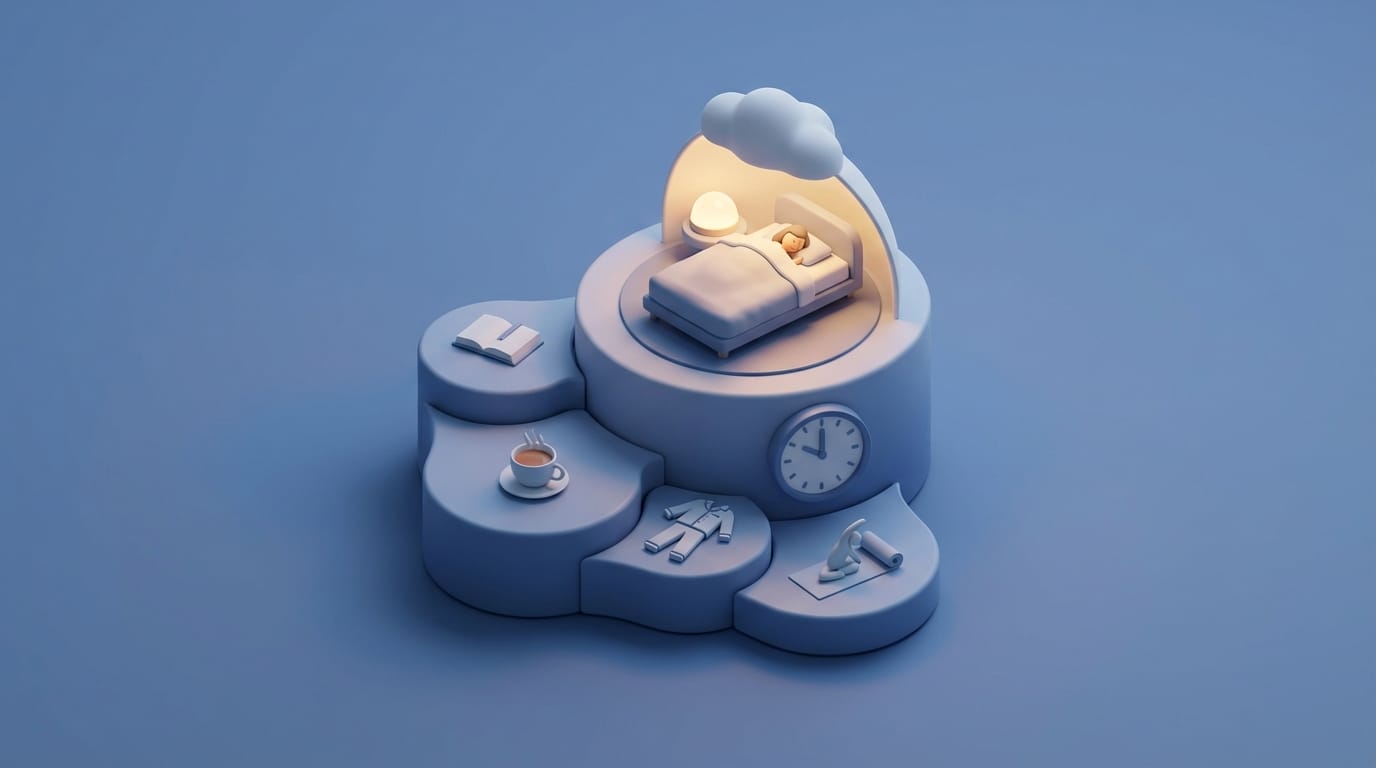
Most adults view sleep preparation as a short task performed right before bed, but biological readiness for rest begins the moment you wake up. Designing an effective bedtime routine for adults is not about choosing a pillow or turning off the television; it involves managing a 24-hour cycle of neurochemistry and environmental triggers. When we misunderstand this system, we often fight against our own biology, leading to the chronic exhaustion and high stress levels that define modern professional life.
The human body operates within a series of nested systems, primarily the circadian rhythm. This internal clock governs metabolic rates and cognitive clarity, using light as its primary input. If we treat sleep as a physiological state we can build rather than a switch we flip, we can align our daily habits to ensure deep recovery. A successful transition to sleep requires light management, cognitive offloading, and thermal regulation to signal the brain to move from high-alert processing to passive maintenance.
How Your Biological Clock Controls Sleep
The circadian rhythm is a 24-hour internal clock located in the hypothalamus. This system relies on external cues to synchronize internal processes with the outside world. Light is the most powerful cue, traveling through the retina to signal the pineal gland. When the environment darkens, the pineal gland secretes melatonin, the hormone that initiates the sleep cycle. Conversely, bright, blue-wavelength light inhibits melatonin and keeps the body in an active state.
Light and Melatonin Production
The sensitivity of our internal clock to light comes from our evolutionary past. Before artificial lighting, the sunset provided a natural prompt for the brain to begin its wind-down process. Today, screens and high-intensity LEDs create a state of constant noon, where the brain believes it is daytime long after dark. This delay in melatonin is a primary driver of modern insomnia. Understanding the science behind light wavelengths helps us realize why specific colors, such as those in clear blue skies, effectively suppress sleep hormones and maintain alertness.
Cortisol and Morning Energy
While melatonin manages the night, cortisol manages the morning. A healthy system experiences a cortisol awakening response, where levels spike shortly after waking to provide energy for the day. If your sleep-wake cycle is inconsistent, this spike can become delayed, leading to morning grogginess. Sleep experts emphasize that waking up at the same time every day is more critical for health than falling asleep at the same time. A consistent wake time anchors the entire cycle, ensuring that the melatonin surge occurs at the correct interval later that evening.
Why an Effective Bedtime Routine for Adults Starts Twelve Hours Before Bed
Effective sleep hygiene is a cumulative process. The pressure to sleep comes from a chemical called adenosine, which builds up throughout the day. However, lifestyle choices can interfere with how the brain perceives this pressure. To optimize a bedtime routine for adults, one must consider the inputs provided to the body during the first few hours of wakefulness. Just as recovery science emphasizes post-workout habits, sleep science focuses on the period immediately following waking.
Morning Sunlight as an Internal Timer
Exposure to bright sunlight within an hour of waking is the most effective way to set your internal sleep timer. This exposure triggers the early release of cortisol and sets a countdown for melatonin production roughly 15 hours later. Even on overcast days, outdoor light levels are significantly higher than indoor lighting, providing a clear signal to the brain that the day has begun. Aim for 20 minutes of outdoor light to anchor your rhythm and improve your ability to fall asleep naturally at night.
Managing Caffeine and Nutrition
Caffeine blocks adenosine receptors, masking the brain’s perception of fatigue. Because caffeine has a half-life of roughly six hours, a cup of coffee consumed at 4:00 PM may still circulate in your system at 10:00 PM, preventing the deep sleep necessary for physical repair. Nutrition also plays a role; late-night meals high in sugar can cause blood sugar spikes that lead to micro-awakenings during the night. Stability in the afternoon creates the foundation for stability in the evening.
Stopping Nighttime Worry Before It Starts
One of the most common barriers to sleep is nighttime rumination, where the mind replays stressors once the day’s distractions fade. To prevent the bedroom from becoming a theater for anxiety, researchers recommend a “worry window.” This is a dedicated 15-minute period in the afternoon where you intentionally address every stressor or task occupying your mental space. By scheduling your anxiety, you train your brain that there is a time for problem-solving that is not 2:00 AM.
Scheduled Reflection to Clear the Mind
The benefit of the worry window lies in cognitive offloading. When you write down a concern and a potential next step, the brain no longer feels the need to keep that information in active memory. A recent study on the worry window technique suggests that structured reflection reduces overall anxiety and limits intrusive thoughts. Addressing these issues early allows the prefrontal cortex to process them logically rather than emotionally.
The Benefits of Planning
Moving your cognitive load from your brain to a physical or digital medium is a vital step in any bedtime routine for adults. This list of tasks acts as a buffer against the anxiety of the unknown. Many professionals choose to use digital tools to organize tasks, ensuring their notes are ready for the next morning. Knowing that your responsibilities are safely stored allows the nervous system to shift from a fight-or-flight state into the rest-and-digest mode required for sleep.
Physical Signals for Rest
As the evening progresses, your focus should shift toward physical triggers that mimic the natural cooling and darkening of the environment. Our bodies are sensitive to temperature and light as signals for sleep. By manipulating these variables, we can trick the brain into readiness even after a high-stress day.
Cooling the Body for Sleep Onset
Sleep onset naturally accompanies a drop in core body temperature. You can accelerate this by taking a warm bath or shower before bed. The warm water causes blood to flow to the surface of the skin, which leads to a rapid loss of heat once you step out. This drop in core temperature is a powerful signal that it is time to sleep. According to the Sleep Foundation, maintaining a lower core temperature is essential for staying in the deeper, more restorative stages of the sleep cycle.
Managing Light to Protect Chemistry
In the two hours before bed, the goal is to reduce light levels and shift toward warmer tones. Short-wavelength blue light from smartphones and laptops is particularly disruptive because it mimics the midday sun. Transitioning to low-lumen, amber lamps helps the brain recognize the end of the day. If you must use digital devices, red-light filters or blue-light blocking glasses provide some benefit, though stopping screen use entirely remains the best way to protect melatonin production.
Creating a Nightly Ritual
The final phase of a bedtime routine for adults is a consistent behavioral sequence. This creates a Pavlovian response where repeating the same actions every night primes your brain for sleep. The content of these activities is less important than their consistency. Activities like reading fiction, gentle stretching, or listening to calm audiobooks are ideal because they require passive focus rather than active engagement.
Replacing Screens with Passive Habits
Scrolling through social media or news is inherently stimulating. These platforms trigger dopamine responses that keep the user engaged, which is the opposite of the relaxation response. Replacing these with passive activities allows the heart rate to slow and the mind to settle. While technology often creates a sense of isolation, modern apps for social well-being focus on meaningful connection, which can be a fulfilling way to spend the early evening hours.
Training the Brain with Consistent Cues
When you brush your teeth, dim the lights, and read in the same order every night, these actions become a ritual. Over time, the act of dimming the lights begins to trigger the release of sleep hormones. It is also important to avoid trying to sleep. Sleep is a passive process that occurs when conditions are right; the harder you try to force it, the more your nervous system engages. A well-designed routine removes the need for effort by making sleep the inevitable outcome of your environment.
Designing the Ideal Sleep Space
The physical space where you sleep should be engineered for absolute darkness, silence, and a specific temperature range. Even minor disruptions can cause micro-awakenings that degrade the quality of your rest. For working professionals, the bedroom should be a sanctuary reserved for sleep, removing any cues associated with work or high-energy activity.
Temperature Settings for Recovery
Scientific research consistently indicates that a cooler room improves sleep quality. Most experts recommend a thermostat setting between 60 and 67 degrees Fahrenheit, with 65 degrees often cited as the standard. A bedroom that is too warm disrupts the body’s ability to maintain a low core temperature, leading to increased wakefulness. As Dr. Michelle Drerup of the Cleveland Clinic notes, this cooler range facilitates REM sleep, the stage associated with emotional processing and memory.
Blocking Noise and Light
Controlling for sound and light ensures that your sleep remains uninterrupted. Blackout curtains prevent light pollution from streetlamps or early sunrises from signaling your brain to wake prematurely. For those in urban environments, white noise machines or fans provide a consistent sound floor that masks sudden noises like sirens or neighbors. By treating your bedroom as a high-performance environment, you ensure that the hours you spend asleep provide the maximum possible recovery for the day ahead.
A bedtime routine for adults is the deliberate management of a biological system designed to keep you functional and healthy. By understanding that sleep begins with morning light and is protected by midday reflection and evening cooling, you can stop fighting your body and start working with it. The ability to manage our own attention and recovery has become a critical professional skill. Treating your sleep with the same strategic precision you apply to your career can change your daily performance and long-term health.

