
The Evolving Landscape of Modern Display Technology
Selecting a flagship display today involves navigating a market where the technical gap between emissive and backlit technologies is narrowing. Choosing a high-end panel is often a decade-long commitment, and the engineering choices made by manufacturers this year dictate viewing quality, thermal management, and long-term durability. This TV buying guide 2026 examines how these hardware systems function to help you identify the right fit for your environment.
For several years, the market remained divided: OLED offered perfect black levels, while LED-LCD provided high brightness for well-lit rooms. In 2026, this binary choice has effectively dissolved. We have reached an era of hybridized performance where disparate technologies aim for the same result: a high-dynamic-range (HDR) image that preserves shadow detail without losing the specular highlights that provide visual realism.
Understanding these systems requires looking past marketing labels to the physical layers of the panel. Modern displays are sophisticated light-steering machines. Whether using organic compounds or microscopic inorganic diodes, the goal is the precise control of photons to prevent light from “leaking” where it does not belong.
Moving Beyond Standard LED-LCD
Standard edge-lit or basic full-array local dimming (FALD) sets have largely moved to the entry-level segment. In the premium category, traditional LED-LCD is increasingly rare. The industry has transitioned toward massive arrays of microscopic diodes and sophisticated optics to meet the rigorous demands of HDR10+ and Dolby Vision content.
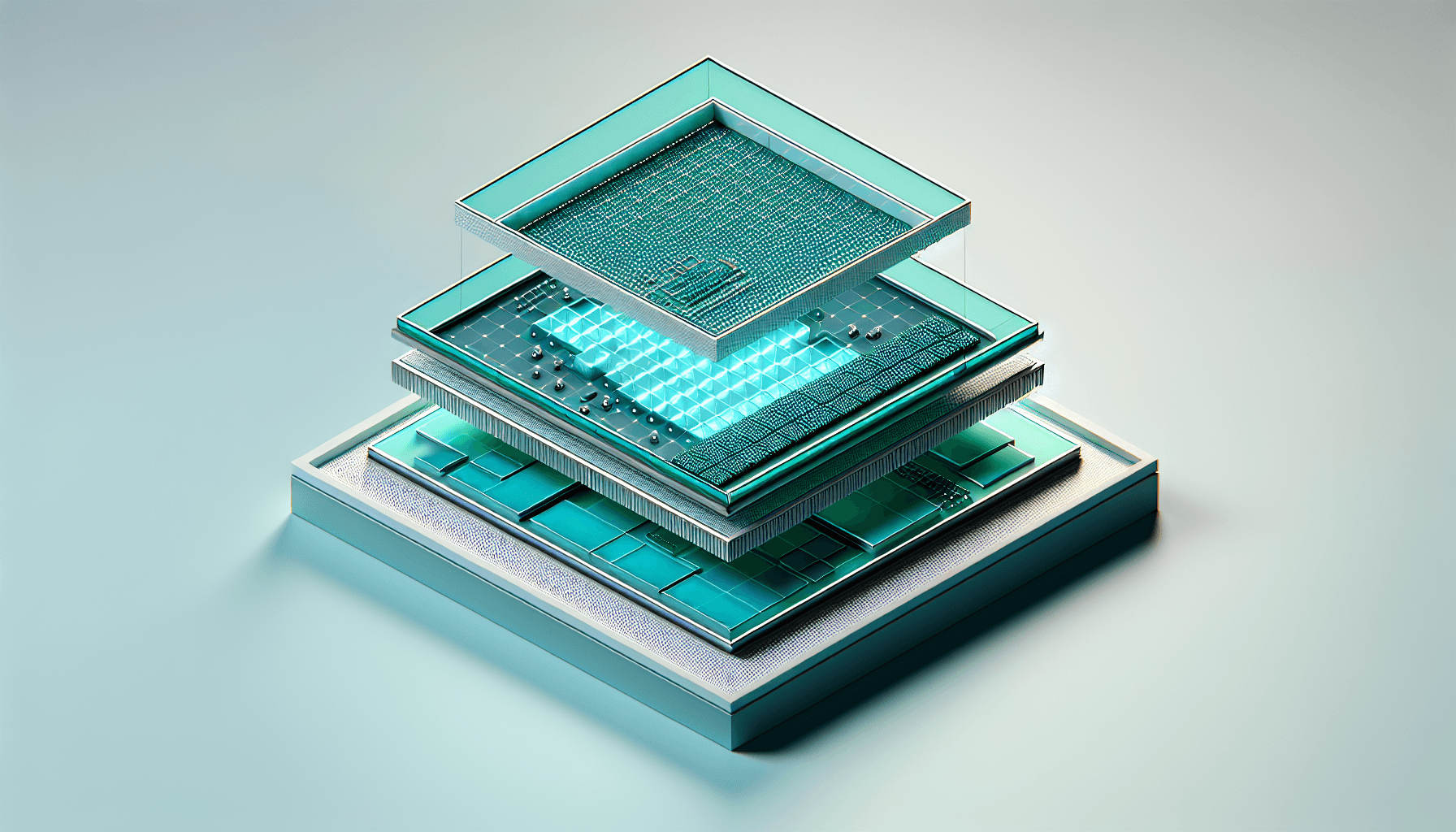
A modern display system is a complex stack of polarizers, color conversion layers, and backplane substrates. The shift away from basic LCD in the premium sector is driven by the physics of light leakage. To compete with the high contrast of modern cinema, manufacturers have adopted technologies that can modulate or extinguish light at the pixel or near-pixel level.
When light is not controlled with this degree of granularity, high-contrast scenes suffer from a “graying” of dark areas. This phenomenon, known as elevated black levels, reduces the perceived depth of the image. The current generation of displays solves this by either removing the backlight entirely or shrinking it to the point where the light source is nearly as small as the pixel it illuminates.
Defining the Long-Term Display Investment
A premium television is now a significant multi-year investment. Because hardware has reached a plateau of perceptual perfection in color reproduction, the focus has shifted to the durability of light-emitting materials. Whether using organic compounds in an OLED or gallium nitride in a Mini-LED, how these materials manage heat determines the panel’s lifespan.
From an engineering perspective, a television is a thermal management challenge. Higher brightness requires more power, which generates heat. If not dissipated, this heat can lead to material degradation and permanent image retention. The 2026 models are defined by their thermal solutions, utilizing materials like deuterium or integrated physical heat sinks to ensure peak brightness remains stable over thousands of hours of use.
Material stability is particularly important for HDR content, which frequently asks pixels to push to their luminance limits. A robust thermal system acts as a safety buffer, allowing the panel to reach 2,000 or 3,000 nits without compromising the chemical integrity of the sub-pixels. This structural approach to longevity is what separates a flagship display from a mid-range alternative.
OLED and QD-OLED: The Contrast Standards
OLED (Organic Light Emitting Diode) remains the benchmark for contrast because each pixel is its own light source. When a pixel is commanded to show black, it turns off completely, emitting zero light. This provides the absolute foundation for an image’s perceived depth. However, the 2026 market has moved beyond the original “WOLED” (White OLED) architecture into more robust and efficient forms.
The Architecture of Tandem OLED Panels
The most significant development in 2026 is the integration of Tandem OLED in consumer sets. Originally engineered for automotive displays and high-end tablets, a Tandem OLED stack places two layers of organic light-emitting material in series. This is a structural solution to a chemical limitation: by splitting the workload between two layers, the panel achieves higher brightness without overdriving the compounds.
This “dual-engine” design doubles the luminance efficiency. Because each layer operates at a lower voltage to reach the same total light output as a single-layer panel, thermal stress is reduced. This architectural shift has effectively addressed concerns regarding “burn-in,” as pixels no longer need to operate at their physical limits to remain visible in bright living room environments.
Furthermore, Tandem OLED improves the “near-black” performance of the panel. By having two layers to modulate, the display can more accurately represent very dark grays just above total black. This reduces “crushed shadows,” a common issue where detail in dark clothing or night scenes is lost to a uniform black mass.
Color Purity and QD-OLED Advantages
While standard OLED uses a white sub-pixel to assist with brightness—which can occasionally dilute color saturation at high intensities—QD-OLED (Quantum Dot OLED) employs a different method. Developed primarily by Samsung and used by brands like Sony, QD-OLED uses a blue OLED backplane to excite a layer of Quantum Dots. These dots convert blue light into red and green with high efficiency.
This process results in higher color volume. In bright scenes, such as a sunset or neon lighting, QD-OLED maintains deep, saturated colors where other technologies might wash out into white. For the cinema enthusiast, this represents the highest level of spectral purity currently available in a consumer panel, closely mimicking the “mastering monitors” used in professional color grading suites.
The absence of a white sub-pixel means that every photon emitted by a QD-OLED panel contributes to color. This creates a “pure” image that feels more vibrant even at lower brightness levels. It is a system designed for those who prioritize the accuracy of the color spectrum over raw, blinding luminance.
Navigating the TV buying guide 2026 Selection: Mini-LED vs. Tandem OLED
The central decision in this TV buying guide 2026 is the choice between “emissive” OLED and “transmissive” Mini-LED. While OLED controls light at the pixel level—over 8 million zones for a 4K set—Mini-LED has scaled to over 5,000 local dimming zones. This narrows the practical gap, as the human eye struggles to detect light bleed (blooming) once control zones reach a certain density.
The primary difference in the current cycle is “specular highlight” capability. A 5,000-nit Mini-LED can reproduce the glint of sunlight on chrome or the intensity of a flash of light in a way that feels physically visceral. Tandem OLED, while brighter than previous generations, typically reaches 2,000 to 3,000 nits. This makes Mini-LED the preferred choice for high-ambient-light environments, such as living rooms with large windows.
Conversely, OLED remains the superior choice for dedicated, light-controlled home cinemas. In a dark room, the eye is much more sensitive to the slight halos that can occur with backlit displays. The pixel-level precision of an emissive display ensures that stars in a space scene appear as pinpricks of light against a void, rather than soft glows.
The Engineering of 5,000+ Local Dimming Zones
Mini-LED technology replaces traditional large LEDs with thousands of microscopic ones. In 2026, flagship models from TCL and Hisense have pushed zone counts into the thousands. Managing this requires significant processing power. Each zone must be modulated in real-time, 120 times per second, to synchronize with the video signal.
If zones are managed poorly, “blooming” occurs—a ghostly halo around bright objects on dark backgrounds. To solve this, manufacturers use spatial processors that analyze object movement across frames, preemptively dimming or brightening zones before the video signal reaches the screen. This proactive light management allows a modern Mini-LED to mimic the “inkiness” of an OLED while maintaining its lead in peak brightness.
The challenge of zone management also involves “crushing” black levels to hide blooming. Poorly calibrated Mini-LEDs may turn off too many zones in a dark scene, losing detail in the process. The highest-performing sets in 2026 use sophisticated algorithms to balance the preservation of shadow detail with the elimination of light bleed.
MicroLED: The Luxury Display Frontier
At the absolute ceiling of display technology is MicroLED. It is often described as the “Holy Grail” of displays because it combines the best attributes of both OLED and Mini-LED. Like OLED, it is self-emissive; like Mini-LED, it uses inorganic materials (Gallium Nitride), meaning it can achieve extreme brightness without the risk of organic decay or permanent image retention.
Modular Design and Pixel Scalability
MicroLED is modular, composed of smaller tiles that are joined together. This allows for nearly any screen size or aspect ratio. Because there are no visible seams between tiles, the image appears as one continuous sheet of light. This modularity makes MicroLED the current standard for high-end “wall-sized” installations where traditional panel manufacturing is physically impossible.
The engineering challenge lies in the “pixel pitch”—the distance between the center of two pixels. Shrinking these microscopic LEDs enough to fit 8 million of them into a standard 65-inch frame is difficult and expensive. Consequently, most MicroLED sets are 100 inches or larger, as the physics of manufacturing favor larger canvases where the pixels have more room to reside.
Another benefit of MicroLED is its response time. Because the pixels switch states nearly instantaneously, motion is rendered with extreme clarity. Unlike LCD-based systems, there is no liquid crystal to physically rotate, removing the motion blur inherent in transmissive technologies.
Current Manufacturing and Price Barriers
As of 2026, MicroLED remains a luxury product, often priced similarly to high-end vehicles. The manufacturing process involves the “mass transfer” of millions of microscopic LEDs onto a backplane with sub-micron precision. A single defective pixel can necessitate the replacement of an entire tile, leading to low manufacturing yields and high costs.
“MicroLED represents the endgame of display physics. Once manufacturing yields stabilize, the distinction between the screen and the architecture of a room will likely vanish.”
While we are seeing steady progress in manufacturing automation, MicroLED will likely remain a niche product for the next several years. For the vast majority of consumers, the improvements found in Tandem OLED and Mini-LED provide 95% of the performance at a fraction of the cost.
Matching Panel Technology to Your Environment
Technical specifications are secondary if the TV is mismatched to your room’s physics. A common error is purchasing an OLED for a room with floor-to-ceiling windows and direct sunlight. Even with the advancements in Tandem OLED, the high-nit peak of a Hisense or Sony Mini-LED is often a functional necessity for daytime viewing.
Light Control and Anti-Reflective Coatings
Flagship TVs now feature “moth-eye” or advanced anti-reflective coatings. These work by trapping incoming light and scattering it internally to prevent it from bouncing back at the viewer. OLEDs, which usually have a glossy finish, have improved significantly here, but Mini-LED sets still possess the raw luminance required to “punch through” reflections rather than just diffusing them.
If you have total control over your lighting—such as blackout curtains or a basement theater—OLED is typically the correct choice. The absence of a backlight means there is no “bias light” to distract the eye, allowing for a level of immersion that backlit technologies cannot replicate in a pitch-black room.
Reflections can also affect color accuracy. When ambient light hits a screen, it can desaturate the colors you see. Choosing a TV with high peak brightness or superior anti-reflective layers ensures that the color grade the director intended is what you actually perceive, regardless of the time of day.
Viewing Angles and Seating Geometry
The “sweet spot” for viewing is another important engineering trade-off. OLED and QD-OLED offer nearly perfect viewing angles; color and contrast remain consistent even when viewed from the side. Traditional LCD-based Mini-LEDs can suffer from “gamma shift” or color washing when viewed off-angle, though the use of Wide Viewing Angle films has mitigated this effect.
If your seating arrangement is wide, such as a large sectional sofa, the emissive nature of OLED provides a more consistent experience for everyone. If your seating is directly in front of the screen, the off-angle limitations of Mini-LED become irrelevant, allowing you to prioritize the high brightness and punchy HDR that the technology provides.
Selection Framework for Use-Case Optimization
To finalize your decision using this TV buying guide 2026, you must evaluate your specific use case. A display designed for critical film viewing has different requirements than one intended for high-frame-rate competitive gaming or casual television.
Gaming Requirements: Refresh Rates and Latency
For gamers, the industry has moved toward 144Hz and 165Hz refresh rates. While most consoles cap at 120Hz, the PC gaming ecosystem pushes higher. OLEDs have a natural advantage here: response time. Because an OLED pixel can change state almost instantly (0.1ms), there is virtually no motion blur or ghosting.
Key features for a 2026 gaming set include:
- VRR (Variable Refresh Rate): Prevents screen tearing by syncing the TV’s refresh rate to the console’s output.
- ALLM (Auto Low Latency Mode): Automatically engages the TV’s fastest processing mode.
- HDMI 2.1b Support: Necessary for 4K/144Hz data throughput and improved HDR metadata handling.
Modern sets from LG and Samsung now include “Game Dashboards” that allow users to monitor these statistics in real-time, similar to a professional PC monitor.
Cinematic Fidelity: Accuracy and Filmmaker Mode
If your goal is to see exactly what the director intended, look for “Filmmaker Mode.” This setting disables the aggressive motion smoothing and artificial sharpening that many TVs apply by default. In this context, the quality of the image processor is as important as the panel. Brands like Sony and Panasonic are recognized for their processing pipelines, which handle near-black shadow detail with high precision.
A good processor doesn’t just display the image; it understands it. It can distinguish between intentional film grain and unwanted digital noise, preserving the former while cleaning up the latter. This is especially important when watching older content or highly compressed streaming signals.
Ultimately, this TV buying guide 2026 shows that the market offers two highly refined paths. You can choose the pixel-perfect precision of a Tandem OLED, which has gained the brightness needed to be a versatile daily driver. Alternatively, you can choose a high-zone Mini-LED, which has gained the dimming precision needed to be a serious cinematic contender. Both represent the current peak of display engineering, ensuring that whichever system you choose, the visual experience will be exceptional.