
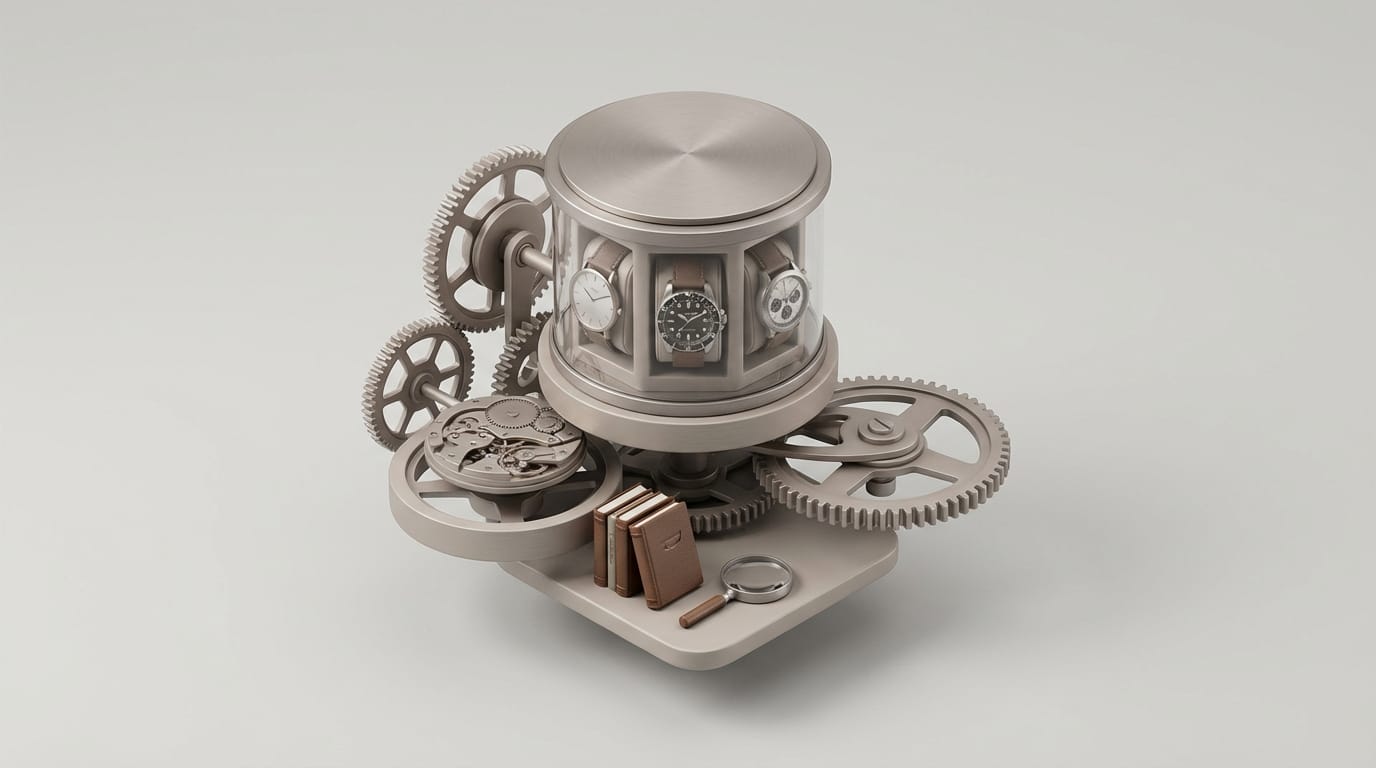
How to Start a Watch Collection
A truly valuable watch collection is defined by the mechanical integrity and historical significance of its pieces rather than the prestige of a luxury price tag. Understanding how to start a watch collection requires a shift in perspective from viewing timepieces as fashion accessories to seeing them as small, resilient machines. When you prioritize craftsmanship over marketing, you build a set of tools that retain their utility and social standing for decades. Most beginners make the mistake of equating value with expense, often overpaying for brand names that lack internal substance. A more effective strategy involves looking for watches that offer high-end materials like sapphire crystal and automatic movements at entry-level prices. By focusing on these technical foundations, you ensure your collection earns respect from seasoned enthusiasts while remaining financially sustainable.
Why Horological Credibility Matters More Than Luxury Brand Names
In the world of timekeeping, price and quality do not always move in a straight line. Many high-street fashion brands sell watches that use inexpensive quartz movements housed in low-grade plated steel cases. These watches are designed for a single season and often have no resale value once the battery dies or the plating wears off. Conversely, a modest Seiko or Orient is built with a level of mechanical depth that earns a nod of approval even from collectors who own six-figure pieces. The difference lies in the engineering intent; a tool watch is built to perform a specific function using materials that can withstand physical stress. Fashion watches prioritize the logo on the dial, whereas a true horological piece prioritizes the movement inside.
As you study different assets, you see that value always migrates toward items with intrinsic utility and scarcity, which is how historical payment systems and currencies gained trust over time. Mechanical watches possess these qualities by design. Value is best measured by the cost-per-wear over a decade. A cheap fashion watch that breaks after two years is far more expensive in the long run than a quality mechanical piece that lasts thirty years. Because mechanical watches can be serviced and repaired, their lifespan is theoretically infinite, making them a more logical allocation of your capital than disposable electronics. This long-term thinking separates a true collector from a casual consumer who buys based on temporary trends.
The Three Watch Rule: How to Start a Watch Collection with Focus
You do not need a dozen watches to be a collector; in fact, most scenarios in a modern life can be covered by a curated trio of timepieces. This “Three Watch Rule” prevents the common beginner mistake of buying too many cheap watches in quick succession, which often leads to a drawer full of pieces you eventually outgrow. This approach mirrors other systems of organization that focus only on essential data. The goal is to cover all bases with three distinct categories: a daily driver, a rugged tool, and a formal piece. By limiting your options, you force yourself to buy the best possible version of each category rather than diluting your budget across mediocre items.
The Everyday All-Rounder for Versatility
The first pillar of your collection should be a watch you can wear anywhere for almost any activity. These typically feature a stainless steel bracelet, a clean dial, and enough water resistance to survive a swim. Think of this as your daily driver because it looks just as appropriate with a t-shirt as it does with a blazer. A Seiko 5 Sports or a Citizen Tsuyosa fits this role perfectly, offering mechanical reliability without the fragility of a dress piece. These watches often feature versatile dial colors like blue, black, or silver, allowing them to match any outfit. When you have one reliable piece that works in ninety percent of your life, you can afford to be more specific with your next two choices.
The Professional Diver for Durability
A dive watch is the ultimate tool for weekend activities and travel; they are characterized by a rotating bezel used to track elapsed time and a rugged case designed for water pressure. Even if you never submerge it more than a few feet, the over-engineering required for a 200-meter depth rating ensures it can handle the bumps and scrapes of daily life. Models like the Orient Kamasu provide sapphire crystal and in-house movements for an accessible price, according to recent product specifications from Orient Watch USA. The dive watch is the “weekend” watch of the collection, adding a sense of sportiness and capability to your wrist that a standard office watch cannot provide.
The Minimalist Dress Watch for Formal Occasions
For weddings, interviews, or formal dinners, you need a watch that is slim enough to slide under a shirt cuff. These typically come on a leather strap and lack the bulky bezels of sport watches. Completing a formal look involves more than just the suit; learning how to tie a tie correctly and choosing the right dress watch, like the Orient Bambino, adds a touch of understated maturity to your ensemble. A dress watch should be simple, often lacking even a date window, to maintain a clean and elegant aesthetic. It is the piece you wear when the watch should be felt but not necessarily noticed, acting as a subtle signal of taste and situational awareness.
Technical Specifications That Define Quality
As you evaluate different models, you must look past the dial color and examine the technical specifications. A high-quality watch is defined by three main components: the crystal, the movement, and the case material. Identifying watches that offer premium features at non-premium price points is the core skill of a savvy collector. This technical knowledge protects you from overpaying for marketing and ensures your money goes toward the physical hardware of the watch.
Sapphire crystal is a primary requirement for lasting value. Unlike mineral glass, which scratches easily, sapphire is second only to diamond in hardness. A watch with a scratched crystal looks old and neglected, but one with sapphire stays looking new for years. While quartz is more accurate, mechanical movements provide the character of the watch. They use a weighted rotor to wind a mainspring as you move your arm, creating a sweeping seconds hand rather than the ticking motion of a battery-powered piece. Enthusiasts value the repairability of these mechanical calibers, and you can track their current market value through data provided by WatchCharts. Additionally, look for movements that “hack,” which means the seconds hand stops when you pull the crown, allowing for precise time-setting.
Case material and water resistance are also vital factors to consider. Most quality watches use 316L stainless steel, which is corrosion-resistant and hypoallergenic. Avoid anything labeled “base metal” or “alloy,” as these are often just plated brass that will pit and peel over time. For water resistance, a rating of 100 meters is the safe minimum for swimming, while 200 meters is the standard for any watch you intend to wear near the ocean or in demanding environments. Understanding these numbers allows you to ignore the flashy advertisements and focus on the actual durability of the timepiece.
Best Brands for New Collectors on a Budget
The most respected brands for starting a collection are those with a history of making their own movements rather than buying them from external suppliers. This heritage provides a story and a level of authenticity that fashion brands cannot replicate. Seiko and Orient are the gold standard for value in the modern market. Seiko’s Prospex line offers world-class divers, while Orient provides incredible value with models like the Mako. Both brands manufacture their movements in-house, a feat that many Swiss brands charging ten times the price cannot claim. Their pieces are often the gateway for young adults building financial independence who want to spend their money on assets that hold their value.
For those who prefer the “Swiss Made” label, Hamilton and Tissot offer the best entry points. Hamilton is famous for its military heritage, specifically the Khaki Field Mechanical, which remains one of the most respected watches in the community. Tissot is known for the PRX, a watch that features a high-quality Swiss movement and an integrated bracelet design. These brands maintain strong resale value because they have established reputations among enthusiasts. You can find detailed price guides and model comparisons for these brands at Precision Watches, which tracks how different models perform on the secondary market. By sticking to these established names, you ensure that if you ever decide to sell a watch, there will be a buyer ready to pay a fair price.
Smart Strategies to Grow Your Collection Sustainably
The biggest pitfall in this hobby is buying too many watches too quickly. It is easy to buy several cheap watches in a month because they are affordable, but you will quickly find that these pieces do not satisfy the desire for quality. A better strategy is to save your funds for a single, higher-quality piece that you will actually cherish. This requires discipline, much like the methods used to prevent lifestyle creep as your income increases. Focus on one category at a time and do not rush the process; the research phase is often just as enjoyable as the ownership phase.
Adopt the “one in, one out” rule once you hit your desired collection size. If you want a new watch, you must sell one from your current set. This forces you to be critical about every purchase and ensures that your collection only gets better over time, never just bigger. It also keeps your capital liquid, as you learn to navigate enthusiast forums and pre-owned marketplaces to find deals on used watches that have already taken their initial depreciation hit. Buying a used watch from a reputable seller allows you to effectively enjoy the watch for a very low cost, as you can often sell it later for nearly what you paid. This circular economy is the secret to owning a world-class collection on a modest budget.
A watch is more than a tool for tracking hours; it is a mechanical record of your taste and a rare example of a physical object built to outlast its owner. By focusing on horological credibility rather than the vanity of a price tag, you transform the act of buying into the act of curating. The system of timekeeping has remained remarkably stable for centuries, and by entering it with a focus on lasting value, you ensure that your first few pieces are not just a phase, but the beginning of a lifelong appreciation for craftsmanship. When you know how to start a watch collection with a focus on quality, every piece on your wrist tells a story of intentionality and respect for engineering. Your collection becomes a tangible legacy of your personal style and your commitment to things that are built to last.