
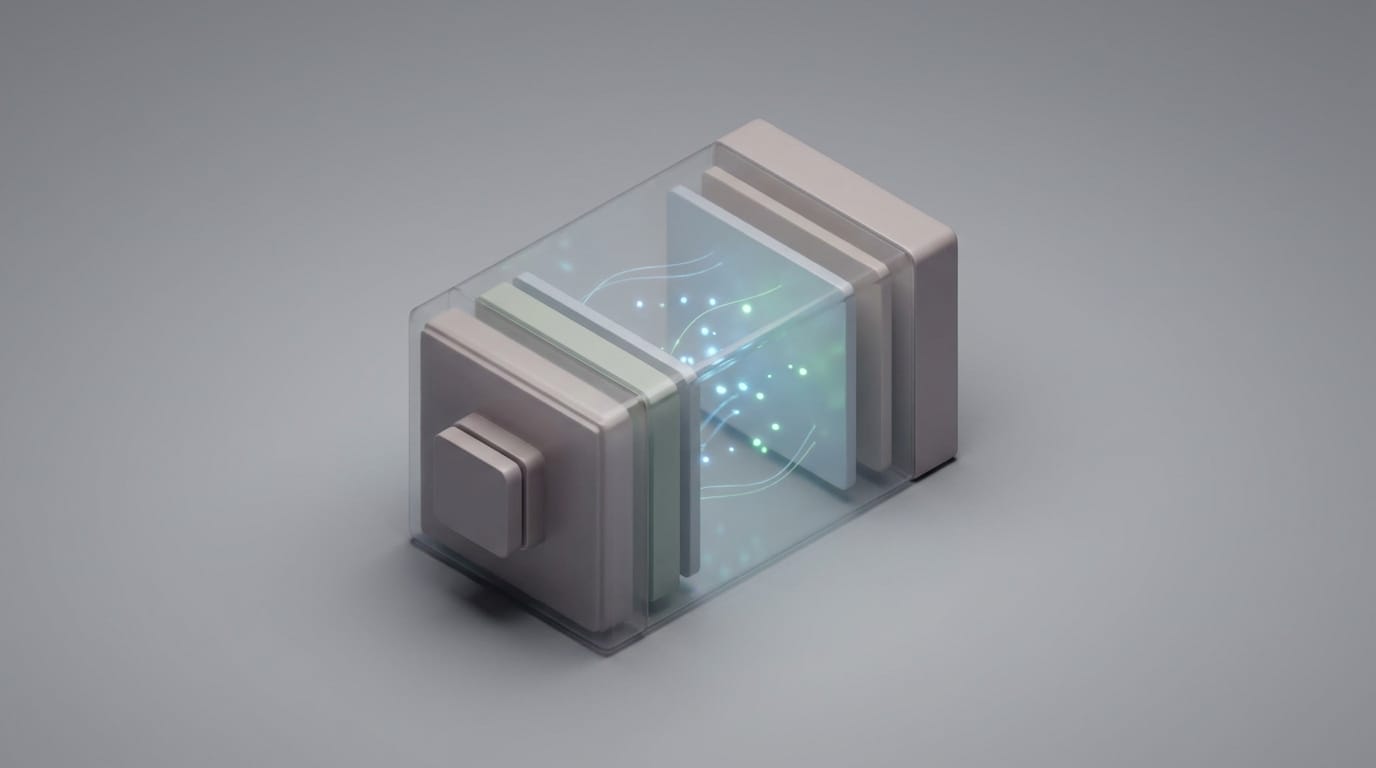
A smartphone that loses power while sitting idle shows a basic truth about energy storage; batteries never stay chemically still. Even when you turn a device off, internal reactions constantly attack the potential energy stored inside its cells. This process, known as lithium-ion battery self-discharge, is a natural trait of the chemistry rather than a mechanical flaw.
When a battery loses its charge on the shelf, the system is trying to reach a state of balance. In a perfect world, a battery would hold its electrons forever; in the real world, the materials inside the cell react with one another over time. Understanding why this happens requires looking past the simple idea of “leaking juice” and into the specific molecular shifts occurring within the cell.
The Science of Silent Energy Depletion
To understand self-discharge, you must tell it apart from the active discharge that occurs when you use your device. Active discharge is the controlled flow of electrons through a circuit to do work; self-discharge is an internal short circuit on a molecular level. It is a spontaneous event where the battery turns stored chemical energy into heat or uses it to drive side reactions that do not help power the device.
There is also a major difference between reversible and permanent capacity loss. Reversible loss is what we usually call self-discharge; the energy is gone, but the battery can be recharged to its original state. Permanent loss involves the lasting decay of the active materials. While both stem from the same triggers, true self-discharge is a temporary drop in charge that reflects the current instability of the chemical system.
This event is essentially an internal leakage current. Even the best separators have some resistance, and the electrolyte itself can carry a small number of electrons. Because the pressure between the two ends of the battery is so high (especially at a full charge) the system forces electrons to find a way across, leading to the slow loss of stored energy.
Primary Chemical Mechanisms of Charge Loss
The core of the problem lies in the relationship between the electrolyte and the electrodes. Most batteries use a liquid electrolyte that is unstable at the high voltages required for modern electronics. When a battery is full, the positive end is at its most active state; this can cause the liquid to break down at the surface, a reaction that eats up electrons and lowers the overall charge.
Another major cause is the growth of the Solid Electrolyte Interphase (SEI) layer. This is a thin film that forms during the first few charges; it acts as a gate that allows ions through while blocking electrons. Over time, this layer can crack or dissolve, particularly if the battery faces big temperature swings. When the SEI repairs itself, it uses up active lithium from the liquid, locking it away and reducing the available charge.
These reactions build up over time. As the cell ages, the buildup of waste products can increase internal resistance and make the battery less efficient. You can learn more about how these movements of ions and electrons define battery life by exploring how batteries store and release energy via electrochemistry.
The Hidden Role of Internal Battery Components
While experts have long focused on the liquid and the plates, new research has found a surprising cause of energy loss. A study from Dalhousie University found that common adhesive tape, used to hold the battery’s internal parts together, is a primary driver of lithium-ion battery self-discharge. Engineers previously thought this tape was inactive, but it appears to cause significant issues.
In the harsh environment of a cell, the tape can break down into a molecule called dimethyl terephthalate (DMT). This molecule acts as a chemical courier that picks up an electron at the negative end, travels across the liquid, and drops it off at the positive end. This creates a continuous tiny current that avoids the main circuit entirely, according to findings published by researchers in the journal Nature.
This discovery explains why some batteries lose charge much faster than their chemistry suggests. By simply replacing this tape with more stable materials like polypropylene, researchers found they could reduce energy loss by up to 70 percent. This highlights a lesson in design; even the most passive parts of a system can cause its most complex failures.
Environmental Triggers for Accelerated Lithium-Ion Battery Self-Discharge
The rate of these side reactions is not constant; it depends heavily on the surroundings. The most significant factor is temperature. Chemical reactions causing energy loss speed up as the temperature rises. Data suggests that the rate of loss roughly doubles for every 10°C (18°F) increase in heat.
If you leave a device in a hot car, you aren’t just losing charge; you are physically aging the battery faster. High temperatures provide the energy needed for molecules to move quicker and for the liquid to break down more aggressively. This is why keeping a battery at a 100 percent charge in a hot room is the worst thing for its health. The high voltage provides the pressure, and the heat provides the speed.
High voltage levels create an unstable state where the positive end of the battery is hungry for electrons. Managing this state is a primary job of modern electronics, as explained in our guide on how battery management system overcharge protection works. When the cell is strained at high voltage, the force driving the loss of energy is at its peak.
Strategies for Minimizing Idle Energy Loss
To maximize the shelf life of your electronics, the strategy is simple but often feels wrong. The most common mistake is storing a backup device at 100 percent charge. While it feels ready for use, this state puts the most chemical stress on the cell. Instead, the industry standard for long-term storage is between 40 and 50 percent charge.
At this level, the voltage is high enough to keep the cell from falling into a “dead” state but low enough to slow down the side reactions. Controlling the environment is also vital; standard research suggests that storing cells in a cool, dry place can greatly extend their life. Moisture is also a threat, as it can react with salts in the battery to create acid that attacks the internal parts.
Finally, avoid the habit of frequent shallow charges when the device is already nearly full. Constantly topping off a battery keeps it in that high-voltage zone where side reactions are most common. It is also worth noting that once a battery sits for too long and reaches a true zero percent state, physical damage can occur that prevents it from ever charging again. This safety wall stops you from charging a cell that has become unstable. You can find more details on this threshold in our guide on why draining your battery to zero ruins phone battery lifespan.
Summary of Energy Loss
The silent depletion of a battery is not a sign of a broken device, but a reminder that chemical energy is restless. From the breakdown of liquids at high voltages to the role of adhesive tapes in creating tiny internal currents, every part of the cell plays a role in energy loss. By viewing the battery as a changing chemical system rather than a static fuel tank, you can better manage its health through smart charging and temperature control. As we move toward denser energy storage, the challenge will be finding materials that stay stable while holding a large charge. For now, the best tool for device life remains a simple understanding of the lithium-ion battery self-discharge occurring in your pocket.