
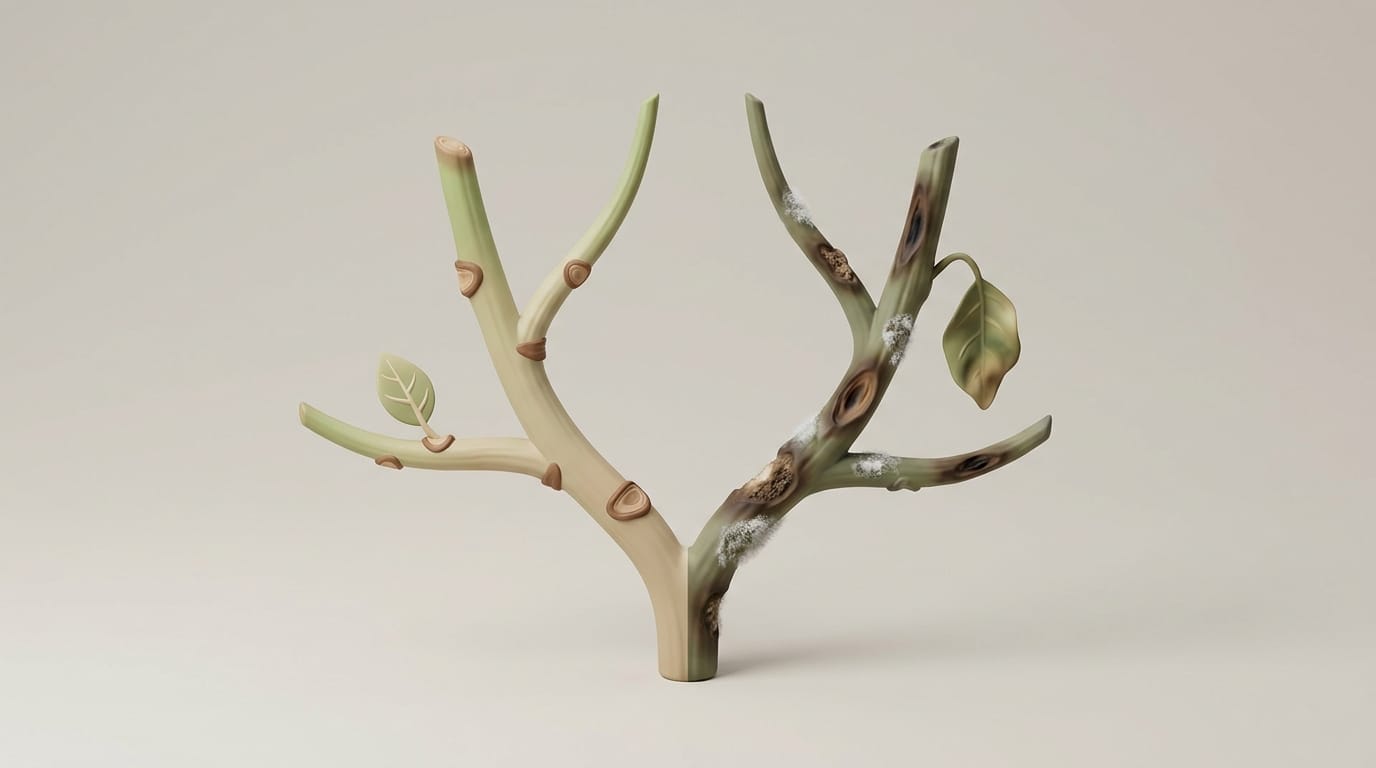
Treating a healthy plant for a sickness it does not have often causes more physical stress than the infection itself. For many enthusiasts, a brown line or a textured patch on a vine triggers an immediate rush for fungicides or shears. Understanding houseplant stem scarring vs disease helps you develop the patience to evaluate these marks before acting, as many blemishes represent natural milestones in a plant’s growth.
The biology of a plant centers on efficiency and support; if a vine grows rapidly or becomes heavy, the plant reinforces its own architecture. Mistaking these natural reinforcements for germs leads to unnecessary chemical use. These interventions can disrupt the microbiome of the soil and the plant’s immune response. By shifting focus from color to texture and system behavior, you can identify whether your Pothos or Philodendron is sick or simply maturing.
Why Color Alone Misleads Houseplant Stem Scarring vs Disease
In human health, we often associate brown or black marks with decay, but in the botanical world, brown tissue frequently signals strength rather than rot. This misconception drives many people to over-treat healthy plants. When a hobbyist sees a brown streak on a Pothos stem, they might interpret it as the start of a fungal invasion, even though it likely represents a natural reaction to physical stress or age.
Applying broad-spectrum fungicides to a plant that is merely “corking,” or developing woodier tissue, is like taking antibiotics for a callous on your hand. It introduces toxins without a clear target. Before intervening, observe the plant’s overall vigor. A diseased plant shows systemic decline, such as wilting, leaf drop, or stunted new growth; a scarred or corked plant continues to push out healthy, vibrant foliage despite the marks on its older stems.
Patience during diagnosis means observing a mark for 48 to 72 hours. Pathogenic diseases, particularly bacterial ones, move with remarkable speed and often expand within hours. Mechanical scars and structural changes remain static. If the mark hasn’t moved or changed texture in three days, the likelihood of an active infection remains low.
How Corking and Cataphylls Protect Mature Plants
As Pothos and Philodendrons mature, they undergo a process called lignification. This biological reinforcement strengthens cell walls with lignin, a complex polymer that makes tissue rigid and woody. In a home setting, this appears as “corking,” which looks like tan or brown bark. These textures typically begin at the base of the plant or near high-stress nodes. This process strengthens the central axis of plant organs against gravity and damage, according to research on how plants strengthen their cell walls.
The Biological Function of Woodiness
Lignification represents a structural upgrade rather than a sickness. When a vine reaches a certain length or weight, the soft, green outer layer fails to support the internal pressure of the plant’s vascular system. The plant lays down cork cells to create a tougher, waterproof outer layer. This occurs often in climbing Philodendrons that support their own weight against a moss pole or wall.
Identifying Sheath Remnants on Pothos and Philodendron
One of the most frequent false alarms in houseplant stem scarring vs disease is the presence of dried cataphylls. These are the leaf sheaths that protect new foliage as it emerges. Once the leaf fully unfurls, the sheath fulfills its purpose and begins to dry out, turning brown and papery. These sheaths often stay attached to the stem for months. Because they sit at the nodes where rot often begins, many mistake them for stem rot. These remnants are entirely external; you can often peel them away to reveal a healthy green node underneath.
Identifying Growth-Related Mechanical Scarring
Plants do not have elastic skin. When a houseplant experiences a growth spurt due to high light or fertilization, the internal tissues may expand faster than the outer skin can keep up. This results in “stretch marks,” which are thin, vertical brown lines that run along the stem. This phenomenon occurs often in Pothos and signals high vitality rather than a systemic issue. Understanding how biological design balances form and function clarifies this; the stretch mark is a healed callus where the plant quickly sealed a gap in its outer layer.
These scars feel dry and hard to the touch and usually sit slightly raised on the surface. They do not ooze or look water-soaked. External abrasions also fall into the category of mechanical scarring. If a vine bumps against a pot rim or a support tie, it develops a brown, callused wound. Unlike a lesion caused by a germ, these wounds remain localized and do not spread. They function like a scab on human skin, protecting the internal system from exposure while the plant continues its growth cycle elsewhere.
Recognizing True Pathogenic Disease and Rot
While many marks remain harmless, true disease requires immediate action to protect your collection. Pathogens like Pythium or Rhizoctonia target the plant’s vascular system and clog the pipes that move water and nutrients. This differs fundamentally from surface scarring. When evaluating houseplant stem scarring vs disease, the most critical indicator of a pathogen is the yellow halo.
A yellow halo is a ring of yellowed tissue that surrounds a brown or black spot. This halo represents the battlefront where the plant’s immune system tries to block invading bacteria or fungi. Bacterial leaf and stem spots often look water-soaked and feature these distinct yellow outlines, according to the guide to identifying plant symptoms from the NC State Extension.
The speed of spread serves as a second diagnostic tool. A mechanical scar looks the same on Tuesday as it did on Monday. A bacterial infection can consume a leaf or girdle a stem in 24 hours. If you see a dark spot that is soft, mushy, or rapidly expanding, you are likely dealing with rot. In these cases, the plant’s natural defenses may be overwhelmed, requiring you to prune the affected tissue immediately to save the rest of the plant.
The Texture Test for Accurate Plant Diagnosis
The single most reliable method for distinguishing houseplant stem scarring vs disease is the texture test. Color provides a signal, but texture provides a fact. To perform this, gently press the suspicious area with a clean cotton swab or a fingernail.
- Hard and Dry: If the mark feels firm, woody, or papery, it is likely corking, a healed scar, or a dried sheath. These do not require treatment.
- Soft and Mushy: If the tissue gives way, feels slimy, or collapses under light pressure, it is active decay. This requires immediate pruning.
- Smell: Healthy plant tissue smells earthy or like fresh greens. Pathogenic rot, especially the bacterial kind, produces a foul odor of fermentation or decay.
Environmental factors can sometimes mimic disease symptoms. Low humidity causes sheath burn, where the edges of a developing leaf turn brown before it opens. This looks like an infection but represents a physical reaction to dry air. Similarly, choosing the right home and garden supplies is vital, as certain harsh fertilizers can cause chemical burns on stems that resemble lesions. Evaluate your recent maintenance habits before assuming a pathogen has entered your home.
When in doubt, clean the area with a mild alcohol solution and observe. If the plant is truly diseased, the mushiness will spread regardless of surface cleaning. If it is a scar, the plant will simply continue its growth, incorporating the mark into its history as a structural necessity. Distinguishing between natural growth and active infection marks the shift from a beginner to an advanced hobbyist.
A brown line is rarely a death sentence; more often, it is the plant’s way of building a stronger foundation for future leaves. Every scar tells a story of a growth spurt or a physical challenge overcome. Instead of seeking a perfect green stem, look for a resilient one. Changing your perspective to see these marks as badges of maturity rather than symptoms of failure leads to a more relaxed and successful gardening experience.