
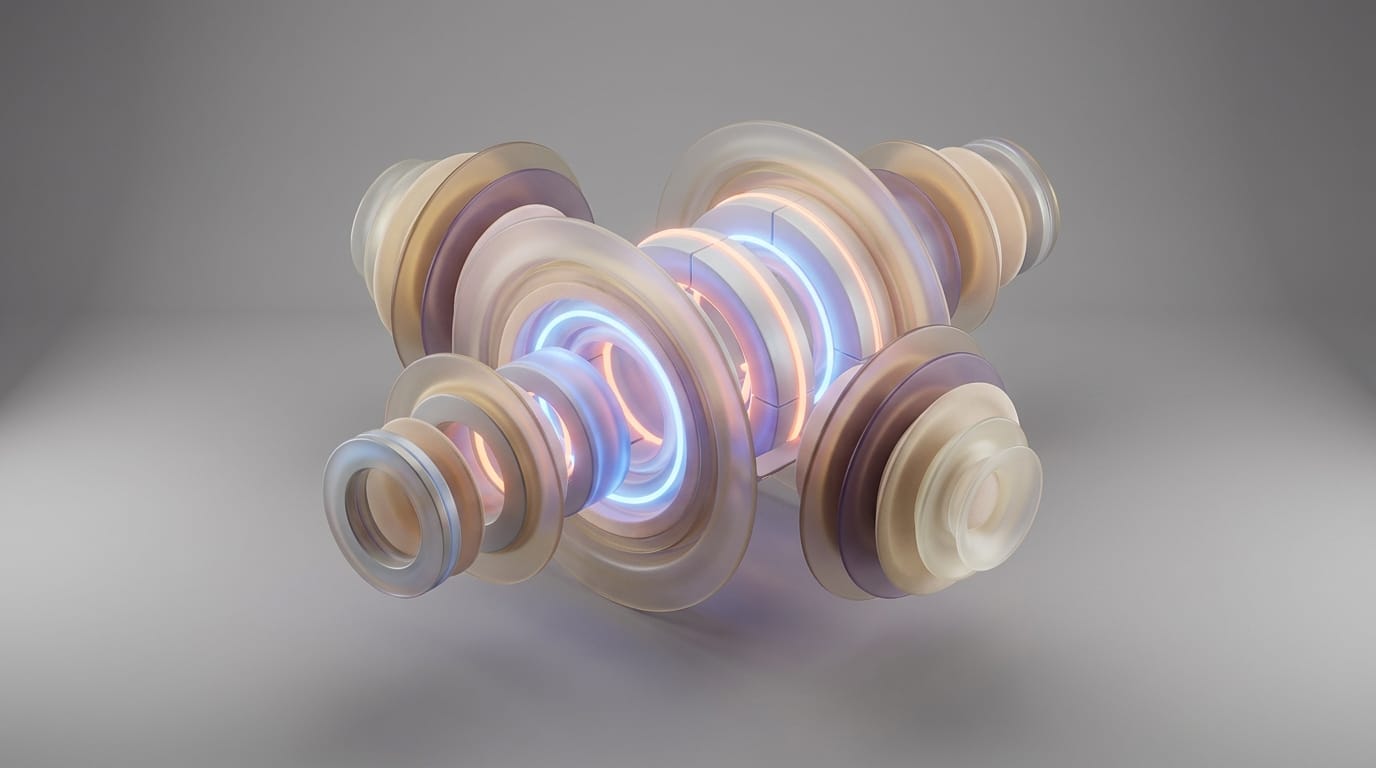
The rhythmic hammering of an MRI machine is not a sign of mechanical failure. It is the audible evidence of physics mapping your anatomy at the subatomic level. Patients often ask why are mri machines so loud during their scans; they often assume the noise stems from a spinning motor or a malfunctioning fan. In reality, the sound is a byproduct of the extreme electromagnetic forces required to achieve high-resolution images.
To understand the acoustic environment, one must view the MRI as a high-precision electromagnetic instrument rather than a traditional camera. The noise is a direct sign of electrical current interacting with a static magnetic field. This interaction occurs within the gradient coils, which sort signals within your body. Without the rapid switching that causes these sounds, the machine would produce a blurred signal instead of a high-fidelity image. This technical explanation looks at the physical reasons behind the scanner’s volume and why acoustic dampening remains a difficult engineering challenge.
The Electromagnetic Origin of Scanner Acoustic Noise
At the core of every MRI machine is a superconducting magnet. This magnet creates a static, uniform magnetic field that aligns the spins of hydrogen protons in the body. To maintain this field without electrical resistance, the system immerses the magnet in a cryostat filled with liquid helium. This keeps the components at temperatures near absolute zero. This environment shares similar cooling requirements with cryogenic sensors used in particle physics, where extreme cold is necessary to maintain stability.
While the main magnet remains silent, the imaging process requires the magnetic field to change in a controlled manner. This is the job of the gradient coils. These are three sets of wire loops nested inside the main bore. During a scan, the system pumps hundreds of amps of current through these coils in microsecond bursts. These rapid fluctuations create the secondary magnetic fields needed to localize the signal to specific slices of the body. The noise begins when these electrical pulses meet the massive static field of the main magnet.
The Interaction Between Main Magnets and Gradient Coils
Because the main field is always on, the gradient coils remain under the influence of immense magnetic pressure. When current flows through these coils, they experience physical stress. Internal geometry then amplifies this vibration, turning the scanner into a resonant chamber. The cryostat environment also plays a role in noise conduction. Vacuum layers and fiberglass supports inside the bore provide thermal insulation and structural integrity, but they do not stop sound well. As the coils vibrate, they transmit mechanical energy through the scanner’s frame, which turns the entire assembly into a loud speaker.
Physical Forces and Why Are MRI Machines So Loud
The specific mechanism behind the banging sound is the Lorentz force. This force occurs when an electrical current moves through a conductor within an external magnetic field. The force pushes perpendicular to both the direction of the current and the magnetic field lines. In an MRI, the current in the gradient coils moves through the field of the main magnet, causing the wires to physically flex.
During a typical scan, these electrical pulses switch on and off at high frequencies. This rapid switching causes the gradient coil assembly to expand and contract with violent speed. The knocking sound is the physical impact of the coil assembly vibrating against its mechanical supports. Research shows that sound pressure levels in high-strength scanners can exceed 100 decibels, making the noise comparable to a loud rock concert. The mechanical stress on the wire loops can reach several tons of force per square meter. Engineers must cast the gradient coils in high-density resin to prevent them from tearing apart, but the microscopic movement of the material still converts mechanical energy into acoustic pulses.
Spatial Encoding and the Necessity of Noise
The noise is more than just a byproduct; it is a mechanical sign of the imaging math. To create a 3D image, the scanner must label every tissue voxel with a specific magnetic signature. This process varies the magnetic field across the body so that protons in the head spin at a different frequency than protons in the feet. This process relies on the Fourier transform, which is a mathematical operation that deconstructs complex signals into individual frequencies. Gradient coils fire in specific patterns to create these gradients. When you hear a rapid-fire click, you are hearing the spatial encoding of your anatomy. The rhythm is the sound of the machine solving a complex spatial equation.
Without these acoustic pulses, spatial resolution would be impossible. The loud knocking is the physical sign of the path the scanner takes through the data map of your body. Each pulse shifts the phase or frequency of the protons by a precise amount. If the machine were silent, it would mean the gradients are not switching fast enough to differentiate between healthy tissue and disease. The volume of the machine reflects the precision of the data it collects.
Acoustic Fingerprints of Pulse Sequences
Technicians can often identify which part of the exam is occurring by listening to the rhythm of the scanner. Each pulse sequence has a unique acoustic fingerprint because each one requires the gradient coils to fire at different intervals. T1-weighted scans often sound like a steady thumping and help highlight body structures and fat. T2-weighted scans may have a faster chirp or buzzing sound to find fluid and inflammation. Echo-Planar Imaging, which captures brain activity, is among the loudest sequences. It sounds like a high-pitched drone because the gradients switch at their maximum possible speed. Technicians who master pattern recognition in these sounds can identify if a scan is progressing correctly without looking at the monitor.
Material Science Challenges in Coil Stabilization
Adding insulation seems like an easy solution to the noise, but the scanner’s bore has harsh physical limits. To achieve high image quality, the gradient coils must stay as close to the patient as possible. Adding thick layers of foam would increase the distance between the coil and the body, which reduces the signal quality. The coils also generate a large amount of heat. Any material used for sound dampening must also allow for efficient cooling. Most modern scanners use a vacuum-sealed gradient assembly to prevent sound waves from traveling through the air. However, sound still travels through the mounting points and the fiberglass shell. This complex manufacturing process is why high-end MRI systems remain expensive.
Engineering Solutions for Quieter Scanners
Several manufacturers have introduced technologies to reduce the acoustic footprint of a scan. These systems use hardware redesigns and software updates to address the noise. Companies like Siemens Healthineers and GE HealthCare have made significant progress in this area. Hardware solutions include silent gradient technology, where the wire loops are wound in a way that forces cancel each other out. This minimizes the physical movement of the assembly. Software solutions involve rounding the edges of the electrical pulses. Instead of sharp pulses that cause a snap, the system uses smoother waves to reduce noise by up to 99%. This can bring the scanner down to ambient room levels, though it sometimes results in slightly longer scan times.
Some researchers are also testing Active Noise Cancellation built into the scanner bore. This involves using microphones to detect gradient noise and speakers to emit a sound wave that cancels it out. Implementing this in a magnetic environment is difficult because standard speakers contain metal parts that the MRI would pull. Engineers must use specialized piezoelectric transducers to deliver the signal safely. Despite these advances, the knocking remains a part of the technology. For many high-performance scans, the power of sharp gradient switching is still required to capture the detailed images necessary for surgery or heart assessments.
The Future of Acoustic Innovation in Radiology
The hammering of an MRI machine serves as a reminder of the strong physical forces at play. Answering the question of why are mri machines so loud leads to an appreciation of the engineering required to keep the machine stable. It is a system built on the edge of its physical limits, pushing electrical and magnetic fields to their maximum to see inside the human body. As gradient technology evolves, we may eventually reach a point where the loud MRI is a thing of the past. However, the connection between the acoustic rhythm and the spatial math remains an essential part of the design. Understanding this allows patients to view the noise as the sound of high-fidelity data being built. The next time you hear that rhythmic hammering, consider that you are listening to the audible signature of your own internal anatomy being translated into a digital map.