
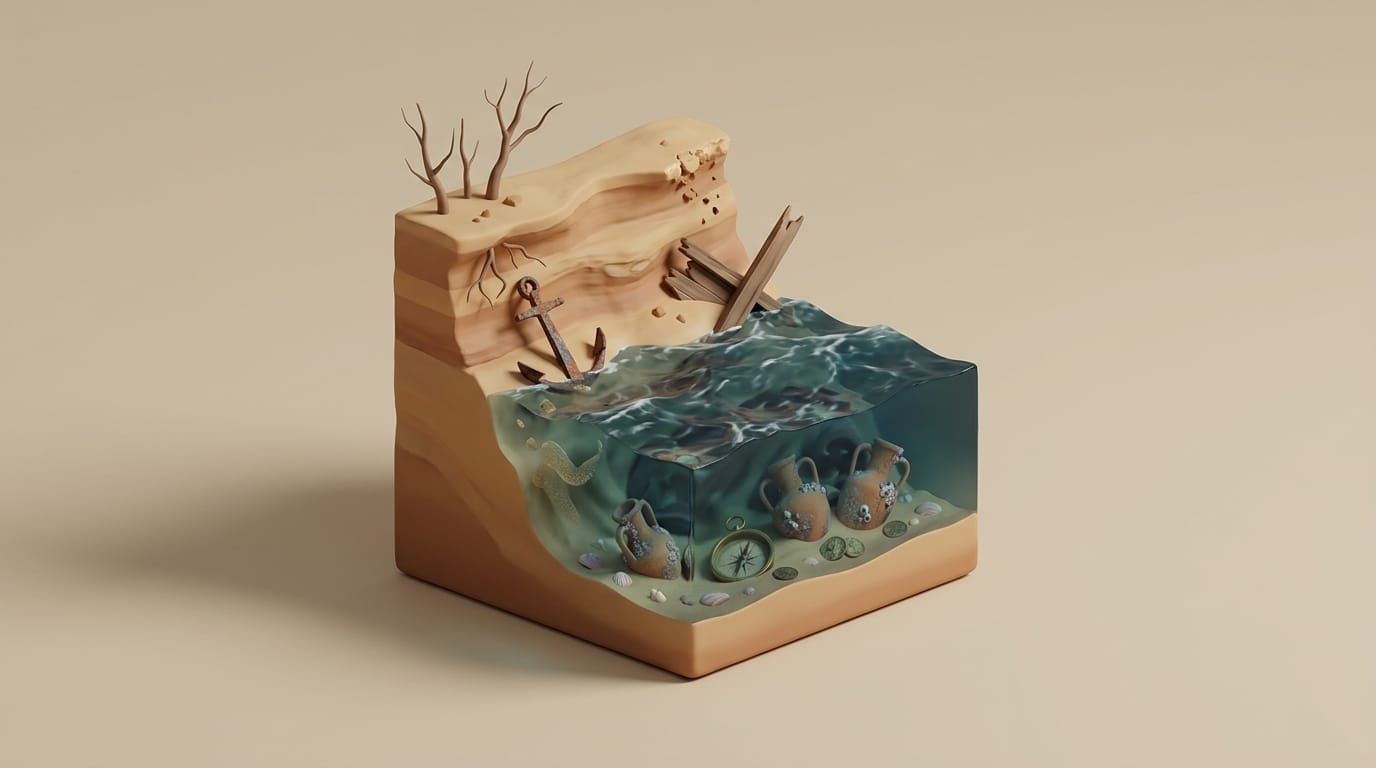
When a shifting tide reveals a centuries-old hull, it marks both a triumph for history and a countdown for the object itself. This cycle of beach erosion shipwrecks appearing after big storms is a result of moving sand that acts as both a shield and an excavator. When a ship settles into the seabed and sand buries it, the vessel enters a state of suspended animation that can last for thousands of years. For people living on the coast, these sightings feel like a glitch in time where a winter gale strips away layers of earth to show the skeletal remains of old schooners or merchant ships.
To a maritime engineer or archaeologist, these reveals are less a discovery and more an emergency. The same forces that unveil these treasures also destroy them, turning a moment of historical clarity into a race against the elements. Understanding why these wrecks appear requires looking at the coastline as a high-energy system of moving sediment rather than a static border. As sea levels fluctuate and storm intensity increases, these encounters happen more often, forcing a shift in how we document and save our submerged history.
The Mechanism of Submerged Preservation
When a ship sinks and sand covers it quickly, it leaves the active biological and chemical cycles of the ocean. The main reason things stay intact is a lack of oxygen, known as anoxia. Deep within the sediment layers of a beach, oxygen cannot reach the wreck, which stops the most aggressive forms of rot. Wood lasts a long time, but ocean life eats it quickly when oxygen is present. In a typical marine setting, fungi and bacteria begin breaking down wood fibers almost immediately; however, under several feet of sand, the environment becomes anaerobic. This lack of oxygen prevents wood-boring organisms and aerobic bacteria from surviving.
Under these conditions, organic matter can stay solid for centuries. The waterlogged wood stays soaked, which keeps the cell walls from collapsing, while the surrounding sand provides a stable temperature. It is a natural sealing process that preserves everything from tool marks to delicate ropes. This balance mirrors the natural balance of planetary systems where stability is required to support life. For a wreck, preservation depends on keeping that low-energy, low-oxygen state.
Exposure happens when the local sand levels change. Beaches naturally go through cycles where they build up or wash away. During the summer, calm waves push sand toward the shore, but winter storms pull it away and dump it in offshore bars. When enough sand moves, it reveals the layer where beach erosion shipwrecks sit. Recently, erosion at a state park in New Jersey revealed the 136-year-old remains of a schooner according to park officials. These events are often sudden, showing massive sections of a hull that had been hidden for generations in a single afternoon.
The Biological Clock of Exposed Artifacts
Archaeologists use the term irony of exposure to describe a tragic reality; the moment we find a shipwreck is often the moment it begins to die. Once the protective sand is gone, the artifact enters a world of oxygen, light, and hungry marine life. The move from a buried state to the surface is a chemical shock. Oxygen allows fungi to grow and consume wood fibers in days. At the same time, sunlight breaks down the wood, causing it to bleach and crack. If the wood dries out during a low tide, the cell walls collapse and lead to shrinking that cannot be fixed.
There is also a hidden chemical threat from iron. While buried, iron from the ship’s bolts reacts with sulfur in the sand to form stable compounds. When air hits these compounds, they turn into acid that eats the wood from the inside out. This fast chemical change makes saving a revealed site a logistical struggle compared to a planned dig. The most visible threat comes from the shipworm, which is actually a clam that bores through wood. In open water, these creatures can turn a solid oak beam into a sponge in a single season. The biological clock for an exposed wreck is measured in weeks, and experts link this urgency to extreme weather patterns that happen more frequently now.
Methods for Rapid Maritime Documentation
Because physical recovery costs a lot, experts focus on digital records when beach erosion shipwrecks appear. The goal is to capture as much data as possible before the next tide buries the site or the surf destroys it. The main tool for this work is photogrammetry. Archaeologists take thousands of overlapping photos of the wreck from every angle. Software then uses these images to build a 3D digital twin of the vessel. This allows researchers to study the ship’s build and size in a virtual space long after the physical remains are gone.
This digital approach is vital because a wreck changes daily once it is visible. After a recent typhoon in Vietnam, a merchant ship appeared on a beach, but there was only a narrow window for salvage before the waves tore it apart. Digital mapping ensures that even if the artifact is lost, the historical data remains. Raising a ship is rarely the best move. Waterlogged wood needs years of expensive chemical treatment to keep it from falling apart as it dries. For most beach finds, the best solution is to let the wreck stay where it is and hope the sand covers it again to return it to an oxygen-free state.
How Climate Change Accelerates Discovery
The increase in reported beach erosion shipwrecks is a direct result of a changing climate. As sea levels rise, the shoreline moves further inland. This movement forces the ocean to cut into older, deeper dunes that have stayed quiet for centuries. As the sea reaches higher, it hits fossil sediments. These are layers of the beach that formed hundreds of years ago when the shore was much further out. When these layers erode, they show the history left behind when those spots were active ports or dangerous shallows. This shift is similar to how shifting environmental impacts disrupt global systems; it breaks the natural storage of our cultural history.
Climate change also makes individual storms more powerful. Warmer water leads to bigger storm surges that move vast amounts of sand in one night. This fast erosion means we are finding more wrecks, but we are also losing them faster. Archaeologists are struggling to keep up with the number of revealed sites. They often rely on salvage archaeology to record a site before the waves crush it.
Public Involvement in Coastal Archaeology
Since beachcombers find most wrecks, the public is the first line of defense. However, there is a line between curiosity and damage. If you find old timber or a ship’s frame on the beach, you should record it and report it without touching it. Most parks have rules for reporting these finds. Photos and GPS coordinates are the most helpful things you can provide. This data allows professional teams to decide how important the find is and plan a visit before the tide returns.
It is tempting to take a piece of a wreck as a souvenir, but removing even a small part can destroy the context needed to identify the ship. In many places, taking items from a shipwreck is a crime. More importantly, it is an ethical loss. Once an object leaves its wet environment, it starts to rot immediately without professional help. Responsible observation ensures the story of the ship belongs to everyone instead of ending up in a private collection where it will likely turn to dust. These wooden skeletons are indicators of our changing world, reminding us that the line between land and sea is more fluid than we think. As the coast continues to move, we must decide how much history we will save and how much we will watch return to the deep.