
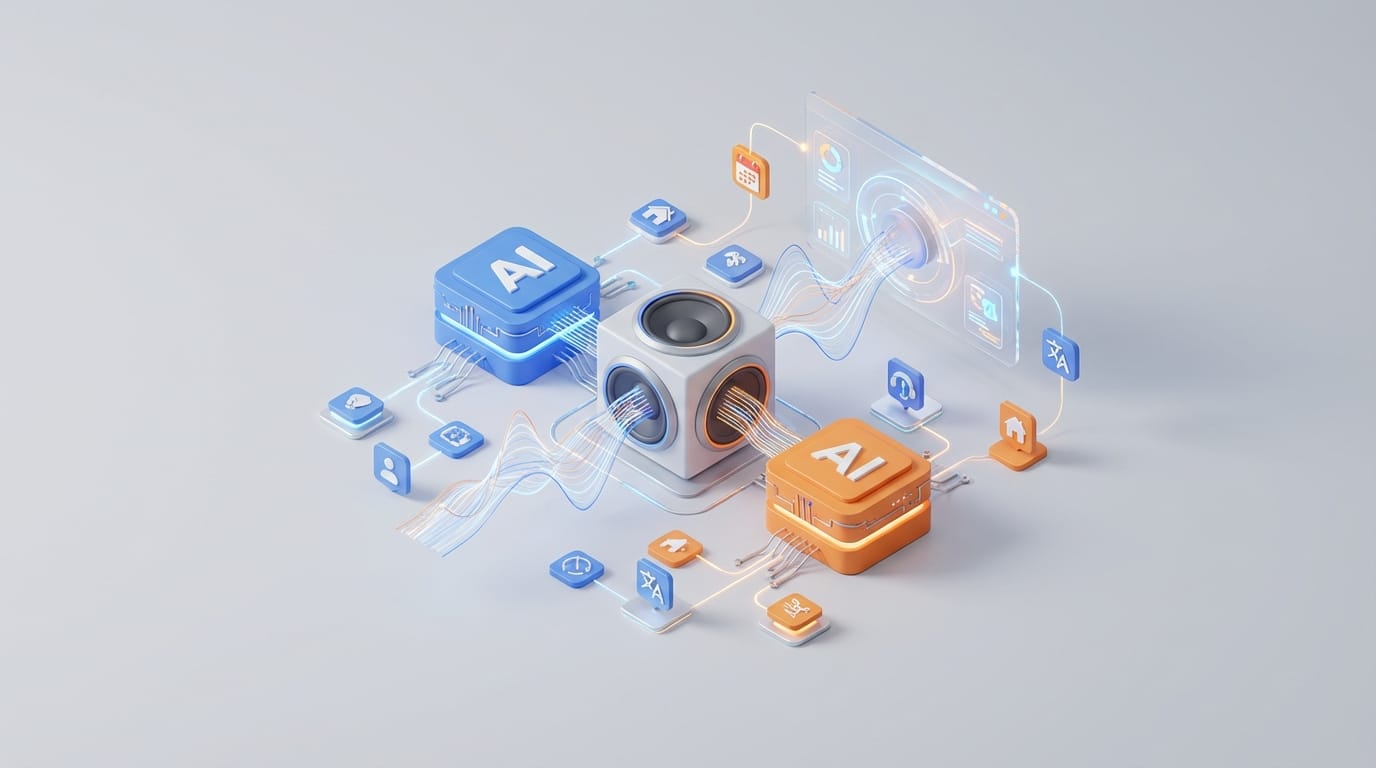
Modern voice assistants have long struggled with a specific hurdle. It is not that they cannot hear us; it is that they lack permission to act on our behalf across the software we use every day. For a long time, talking to a phone felt like using a remote control with only a few working buttons. You could set a timer or check the weather, but you could not ask the device to manage your digital life. This limit is finally fading through a surge in AI voice assistant partnerships that grant these systems true digital agency.
The shift we see today moves assistants from tools that find information to agents that navigate operating systems. This change is not happening by chance. Strategic alliances fuel this transition as hardware giants like Apple and Amazon open their secure software borders to specialized models from companies like OpenAI and Anthropic. This turns your voice into a trusted proxy capable of running multi-step tasks that once required dozens of manual taps.
When we look at how these partnerships work, we see a basic reshaping of the relationship between the user, the device, and the cloud. It is no longer just about which company has the best smart speaker. Success now depends on which network can hand off your intent to an agent that can finish the job. This structure shows us where personal computing is headed.
Why Legacy Voice Assistants Are Transitioning to LLM Models
To understand the current shift, we have to look at why the first wave of voice assistants failed. Early versions of Siri and Alexa were built on rigid scripts. They used a library of pre-defined patterns; if your request did not match a known pattern, the system simply showed a web search. This made them good for simple tasks but useless for reasoning.
The use of Generative AI changes the logic from matching patterns to understanding context. Instead of searching for a specific command, a modern assistant reads the intent of a request. It understands that finding an email and summarizing its main points is not one command but a series of logical steps. This level of detail is why major technology companies form AI alliances to bridge the gap between their old hardware and modern reasoning engines.
The Limits of Closed Processing
For years, companies tried to keep voice processing in-house to maintain control. However, the cost of running a model that can reason is massive. Hardware makers realized that while they are great at building microphones and fast chips, they cannot build new AI models as fast as specialized labs. By outsourcing the intelligence layer while keeping the execution layer, they can offer a modern experience without rebuilding their entire software stack every few months.
The Mechanics of Strategic AI Model Integration
The technical glue holding these partnerships together is a quick handoff between systems. We now see a smooth dance between a device’s operating system and an external AI model. When you give a complex command, the phone first performs a quick check. It sees if the request can be handled locally, like turning on a light, to keep the response fast and private.
If the task requires deeper thought, the phone packages the request into a secure packet. This packet goes to a partner model like Claude or GPT. The innovation here is that the external model does more than return text. It sends back a structured plan. It tells the phone to open the Calendar app, find a free slot, and draft a message. The phone then runs these local actions on the model’s behalf.
Balancing Local and Cloud Power
The challenge for engineers is managing the speed of the response. Sending voice data to a remote server and waiting for an answer can create lag. To stop this, modern hardware now includes dedicated processing units that handle basic tasks locally. This local brain manages the flow of the conversation while the cloud handles the heavy lifting of planning across different apps. This hybrid approach is a major part of how dedicated hardware improves AI performance by allowing fluid talk without losing power.
How AI voice assistant partnerships Enable Complex Task Execution
The true value of these partnerships is how they break down the walls between apps. In a traditional setup, apps are silos. Your email does not know what is in your calendar, and your calendar does not know what is in your bank app. To pay a bill you received in an email, you have to act as the bridge. You copy information, switch apps, and paste it into another screen.
Through AI voice assistant partnerships, the system gets a permission slip to move between these apps. Developers can now expose the actions within their apps directly to the operating system. The voice assistant can then coordinate these actions across different software. This is the core of agentic AI; it is a system that does not just tell you things but acts as your representative within a secure environment.
Automating Multi-Step Workflows
Consider the growth from asking for the weather to asking an assistant to organize a full travel plan. This requires the assistant to read confirmation emails, find flight numbers, and add hotel addresses to a calendar with alerts. This level of navigation was once impossible. By partnering with AI experts, assistants can now perform these tasks. In fact, market experts expect the voice assistant market to grow to nearly $79 billion over the next decade as these features become standard.
Data Privacy Challenges Within Shared AI Networks
When you invite a third-party model to navigate your phone, the privacy stakes rise. This shared model creates tension between utility and security. If an assistant needs to know your email content to summarize it, that data must move. The risk of data leaks, where a partner model might learn from your private habits, is a primary concern for many users. Managing this balance is a central theme in ways to keep your information safe while using modern tools.
To fix this, companies use advanced protocols. When a phone passes a query to an external model, it hides personal details before the data leaves the device. The IP address is masked and the request is treated as a one-time event. This means the external model does not know who is asking and does not store a history of the chat. As assistants become more proactive, they will need a better memory of who you are, making these guardrails even more vital.
- Differential Privacy: This adds noise to data so a model can learn patterns without seeing individual details.
- Local Guardrails: Software on the phone scans the AI’s plan to ensure it is not trying to touch data it should not see.
- User Consent: Users must specifically allow an assistant to talk to a third-party model for a specific task.
The Strategic Stakes of Partnered Intelligence
The current growth of AI voice assistant partnerships shows a quiet shift in who owns the intelligence of the future. While these deals offer speed, they also carry a risk. If every phone uses the same external brain, the hardware becomes a simple shell. This is why we see different tiers of service in the industry.
Amazon, for example, has worked on a more capable version of its assistant. Recent data suggests companies mix internal and external models to keep costs down and maintain control. This allows them to stay leaders in the smart home space without building every piece of the AI from scratch. However, they end up paying a fee to competitors to stay relevant. This is a common pattern in how digital platforms change over time, shifting value from the screen to the logic underneath.
Speed Versus Ownership
For many companies, these partnerships were a move to catch up in the AI race. By using external models, they satisfied the demand for conversational tools while they worked on their own tech in the background. The danger is becoming too reliant on a partner. If a deal ends, a company could find its main user interface loses its mind overnight. Because of this, most deals today are built as temporary bridges rather than permanent fixes.
The Long Term Impact on Computing Behavior
As these partnerships grow, they will likely lead to the end of the app grid. Today, we use phones by looking at rows of icons and tapping through menus. This is high-effort work. In a future run by agents, the app becomes a background service and the voice assistant becomes the primary way we use the device. We are moving toward zero-touch use, where the phone evolves from a tool into a digital representative.
You will not open an app to order food; you will tell your assistant what you want, and it will talk to the app’s code for you. This reduces the need for the bright interfaces that developers spend millions building. Instead, the invisible quality of the system becomes its greatest strength. Agency is not just about understanding words; it is about having the power to act within the bounds set by the user.
Eventually, we can expect assistants that follow us across different hardware. Your personal agent might stay with you as you move from your phone to your car and then to your glasses. The brand of the device will matter less than the quality of the AI partner behind the scenes. This represents a massive change in how we see our devices. We will no longer view them as objects we use, but as partners we direct.
The rise of AI voice assistant partnerships marks a shift from passive tools to active agents. By combining secure operating systems with the reasoning of modern AI, the promise of a digital butler is finally becoming real. This is a new model of human-computer interaction where trust is the most important part. As these systems gain the ability to act on our behalf, the era of tapping on icons is starting to fade into a voice-first future. The only question left is how much control we are willing to hand over.