The human clavicle is the only bone in the body designed to fail under pressure to protect the vital nerves it supports. While many people overlook it, clavicle anatomy functions as a strategic strut that holds the arm in place, allowing for a wide range of motion while acting as a structural circuit breaker during a hard hit. By connecting the arm to the torso, this S-shaped bone handles a complex distribution of forces. It is not a simple spacer; it is a moving part of the shoulder that helps with the reach and rotation required for everything from throwing a ball to climbing. Understanding its design shows a masterclass in biological planning where a weak point serves as a survival tool.
The Unique Structural Design of Human Clavicle Anatomy
Several features distinguish the clavicle from other long bones in the skeleton. Most notably, it is the only long bone that sits horizontally. While the leg and arm bones support weight vertically, the clavicle works like a crane arm that holds the shoulder joint away from the ribs. This position keeps the arms from collapsing inward, which gives humans the freedom to use their hands in front of their bodies with great precision.
The Double Curve Geometry
When viewed from above, the bone reveals a distinct S-shape. The inner two-thirds of the bone curve outward, while the outer third curves inward. This double curve is not for looks; it gives the bone a spring-like quality. This geometry allows the bone to spread out force more effectively than a straight rod could, as shown in this guide on anatomical landmarks. By bending slightly under pressure, the bone can absorb energy that would otherwise snap a rigid structure.
The First to Form
The clavicle is an outlier in how the body grows. It is the first bone to start hardening in the womb, beginning around the fifth or sixth week of pregnancy. Curiously, it is also among the last to finish growing; the inner end might not fully fuse until a person reaches their mid-twenties. Unlike most long bones, portions of the clavicle lack a traditional marrow cavity. This lack of a central void contributes to its density and explains why it breaks in specific patterns when hit with force.
Critical Biomechanical Roles in Upper Body Mobility
To understand the shoulder, one must view the clavicle as the anchor for the arm. Without it, the shoulder blade would collapse toward the chest, which would limit how far the arm can reach. This strut function lets the arm move through a full 180 degrees when lifting it to the side. This range of motion is rare in the animal kingdom and allows humans to perform complex tasks above their heads.
The Clavicle as a Mobile Crane Arm
The bone serves as a bridge between the main skeleton at the chest and the arm at the shoulder blade. By keeping the shoulder out to the side, it gives the chest and back muscles the mechanical advantage they need to generate power. When you lift your arm, the clavicle does not just sit still; it turns along its long axis and rises to follow the movement of the shoulder blade. This coordination ensures the shoulder joint stays stable even during fast movements.
Transfer of Weight and Force
The clavicle is the main path for moving physical force from the arm to the body. When you push against a heavy door or brace yourself against a wall, the energy moves through the arm, into the shoulder blade, across the clavicle, and finally into the chest bone. This pathway is vital for stability, but it puts the bone in the line of fire during a fall. Because it sits between the limb and the torso, it must handle every ounce of pressure that enters the upper body.
Why Evolution Favored a Fragile Structural Bridge
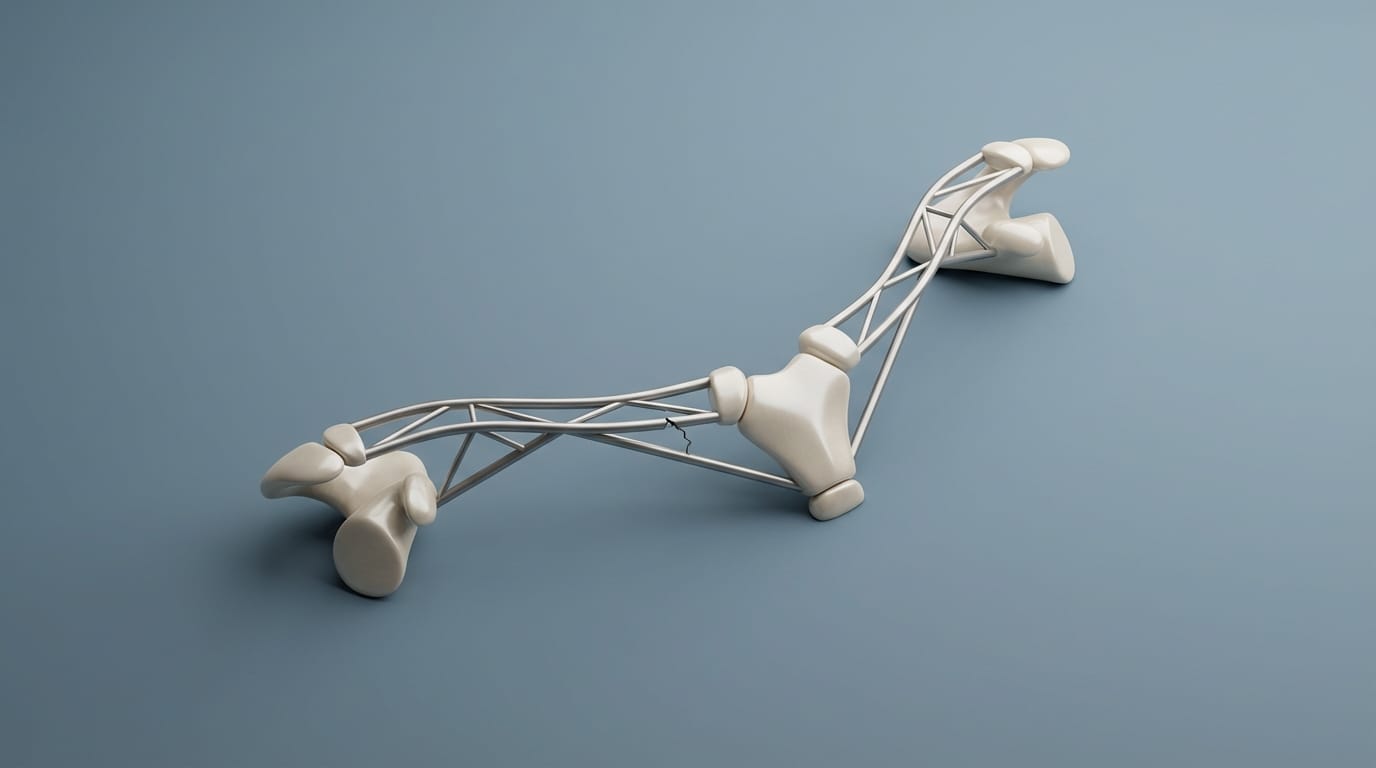
It might seem odd that such a vital bone is thin and breaks easily. However, experts often call the bone a “mechanical fuse.” This idea suggests that the clavicle breaks on purpose to save the rest of the body from worse harm. It acts as a sacrificial part that gives way before the force of an impact can reach more sensitive areas like the spine.
The Mechanical Fuse Hypothesis
When a person falls on an open hand, a huge burst of energy moves up the arm. If the clavicle were too strong to break, that force would move directly to the ribs and the spinal column. By snapping, the clavicle acts as an energy sink, soaking up the force before it can reach the brain or the central nervous system. This trade-off between a broken collarbone and a damaged spine represents a major survival advantage for humans.
Protecting the Nerve Bundle
Just under the clavicle lies a group of vital nerves and blood vessels that serve the arm. The S-shape of the bone creates a safe path for these parts as they go from the neck to the armpit. Even when the bone breaks, its shape usually causes the pieces to pull away from these deep nerves. This design ensures that a common injury does not turn into a permanent loss of arm function or a life-threatening bleed.
The Vulnerability of the Midshaft Region
Despite its protective role, the clavicle has a clear weak point. Most breaks happen in the middle third of the bone, according to clinical data on injuries. This middle area is known as the midshaft region, and its weakness comes directly from the clavicle anatomy itself.
The Transition Point Between Two Curves
The middle part is the thinnest section of the bone and marks where the two curves meet. This spot faces the most stress because it sits at the peak of the S-shape. Also, while the ends of the bone have strong cords and muscles to hold them, the middle has less support. This leaves the midshaft to take the brunt of any bending or shearing forces when someone falls or takes a hit to the shoulder.
The Dynamics of Displacement
When the middle of the bone breaks, the pieces move in a predictable way because of the muscles attached to them. A large neck muscle pulls the inner piece up, while the weight of the arm pulls the outer piece down and in. This shift is why many collarbone breaks show a lump under the skin. Fixing this alignment is a key part of how to safely return to sports after injury, as the shoulder needs the correct bone length to regain its full power.
Integrating Clavicle Health into Modern Biomechanics
For athletes, the clavicle is more than just a bone to avoid breaking; it is a key check for shoulder health. Its movement ties to two main joints at the chest and the shoulder blade. If these joints get stiff, the entire arm starts to lose its range of motion. Keeping the clavicle moving well is essential for any activity that requires reaching overhead or lifting heavy loads.
Importance of Joint Mobility
Stiffness in the joint where the clavicle meets the chest can lead to pain when lifting the arm. If the clavicle cannot turn or rise properly, the shoulder blade cannot get out of the way of the arm bone during high reaches. This can cause inflammation and long-term damage. This is why many trainers focus on clavicle and chest mobility during effective warm-up strategies to make sure the joints are ready for a workout.
Rehabilitation and Performance
Healing after a break focuses on getting the shoulder and arm to move together again. Because the clavicle sets the spot for the shoulder blade, any change in its shape affects how the muscles work. High-quality recovery is essential because the body heals on its own time, and rushing the process can lead to lasting weakness. The body’s repair cycles are steady, as explained in the science of athletic recovery science.
The clavicle shows how the body keeps the whole system safe by risking a single part. It works as a strut that provides the reach needed for daily tasks while serving as a bridge that breaks to protect the brain and spine. Recognizing this dual nature changes how we view performance and injury management. We often see weak points as flaws, but in the human body, they are often the most important safety tools we have.