
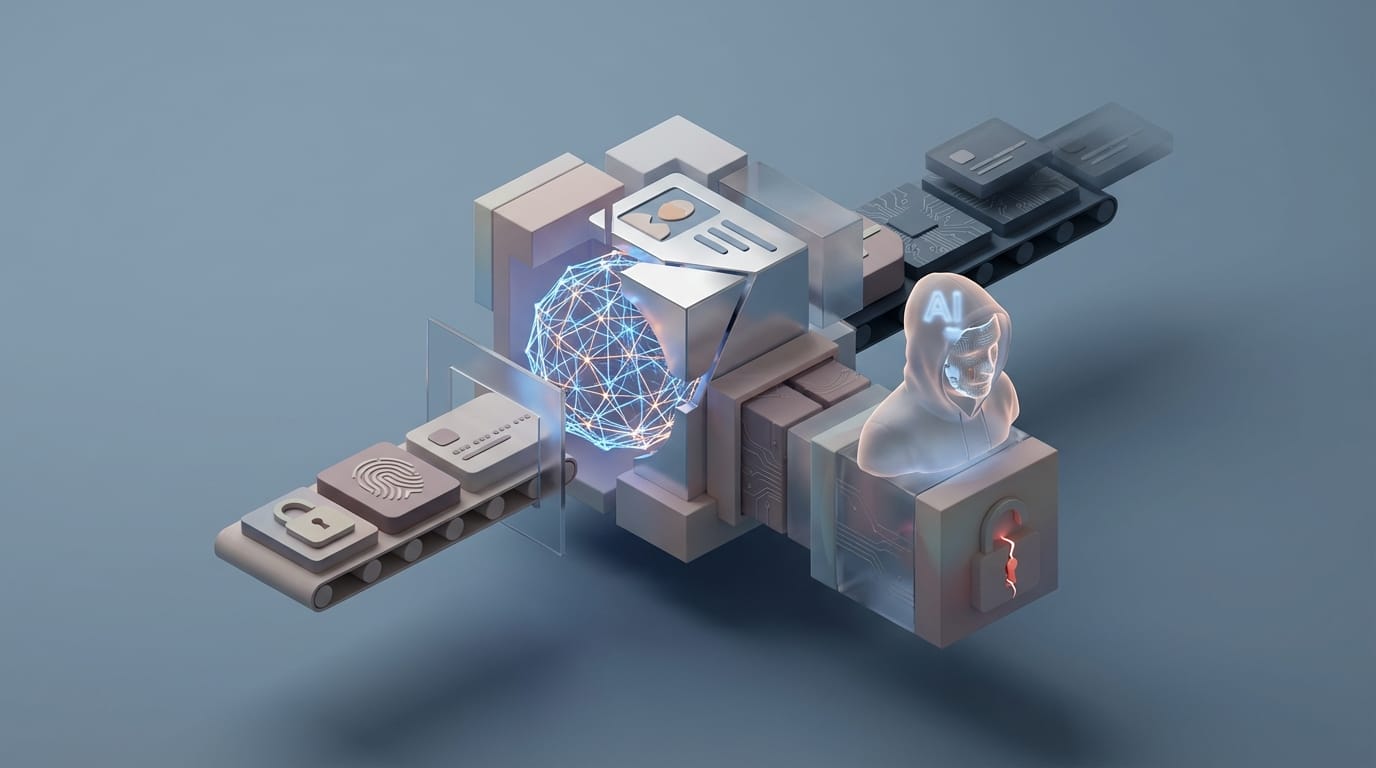
Traditional fraud detection often fails because it looks for errors or missing pieces in data, but modern attackers use perfect consistency to trick the system. The rise of industrialized synthetic identity fraud ai allows criminals to create “Frankenstein” personas. These profiles are not just static records; they are dynamic, aging digital lives that can bypass old security checks. By the time a bank or lender flags a profile as fake, the AI has often spent many months building a believable reputation that looks better than many real customers.
The scale of this threat is massive. Globally, businesses lose tens of billions of dollars every year to these schemes, according to recent reports from Fintech Global. This shift from messy identity theft to polished, automated persona management marks a major change in how criminals operate. Modern safety no longer depends on catching a fake ID card; it relies on telling the difference between a real human life and a computer simulation.
The Growth of Synthetic Identity Fraud
From Simple Theft to Building New People
In the past, identity theft was a simple problem. A thief stole a real person’s information and used it until the owner noticed and reported it. Synthetic fraud changed this by mixing real data with fake details. Criminals often take a real Social Security Number from a child or an elderly person and combine it with a fake name and address. Since there is no actual “owner” for the new profile, no one gets an alert about suspicious activity. This allows the fraud to stay active and undetected for years.
Generative AI has turned this manual work into a mass production process. Attackers no longer need to build these IDs by hand; they use software to create thousands of unique personas in seconds. These IDs are built to pass the specific logic tests used by credit bureaus and identity services. While knowing how multi-factor authentication secures your digital life is vital for real people, it often fails against synthetic identity fraud ai. These fake personas “own” the very accounts, email addresses, and phone numbers used for security checks, making them appear completely legitimate to automated systems.
What Makes a Modern Synthetic Profile
A modern synthetic profile is built in layers. At the center is a “seed” of real data, which is usually a government ID that has not yet been used in the credit system. AI tools then wrap this seed in layers of fake but believable information. They add home addresses that pass location checks, phone numbers that match the local area code, and email accounts with a history of normal messages. This structure helps the fake IDs pass initial identity checks without raising any red flags or triggering high-risk warnings.
How the Digital Aging Process Beats Security
Creating a Fake History That Looks Real
The most dangerous part of modern fraud is the “aging” process. Years ago, a new fake ID had no history, which made it easy for banks to spot. Today, bots automate the process of living a digital life. These bots handle small tasks like paying a monthly utility bill, signing up for store newsletters, or making small buys. Over a year or more, they build a “warm” credit history that looks perfect to a computer.
This automated life creates a trail of data that mirrors a real human. Because the AI manages the timing and amount of these actions, the profile develops a low-risk pattern. To a bank officer, a customer who has paid every bill on time for a year looks like a dream client. This deceptive consistency is a huge hurdle for protecting digital assets from modern AI-powered scams, because the detection must now look at how a person behaves over a long period rather than just checking their ID at the start.
Building a Social Reputation with Bots
AI also builds social and professional lives for these fake people. Large language models maintain social media accounts and professional profiles on sites like LinkedIn. They post unique updates and build connections with other accounts. These personas create social proof that current verification systems are not built to challenge. When a profile has years of social posts and professional praise, it becomes very expensive and difficult for a company to prove it is actually a machine.
Industrialized Fake Identities and AI
Talking Like a Human to Bypass Filters
The use of synthetic identity fraud ai helps attackers bypass bot detectors that look for repetitive, mechanical behavior. Language models can write unique, smart emails and support tickets. This allows the fake persona to talk to bank staff or customer service without causing suspicion. This makes it hard for security tools to flag the user as a machine because the writing sounds exactly like a real customer asking a normal question.
Lenders now face billions of dollars in losses every year from these accounts, according to the Business Information Industry Association. This surge comes from “fraud-as-a-service” platforms on the dark web. These sites sell pre-aged identities that come with a full digital history. This allows even low-skill criminals to take out large loans or max out credit cards and then disappear. Since the identity was never real, the bank has no one to find once the money is gone.
Using Deepfakes for Online Sign-Ups
Modern tools have also weakened “liveness” checks used during online sign-ups. Attackers can now create deepfake video and audio that pass real-time security tests. The technology behind deepfakes explained in technical reports shows how attackers feed synthetic video directly into a bank’s app. This lets a fake identity “show its face” during a video call with a service agent, completing the trick and making the fake person seem real.
The Limits of Current Security Frameworks
Why Static Checks Are Not Enough
Most current security systems rely on checks that happen only once. They verify that a piece of data exists in a database at the moment someone applies for an account. However, since synthetic IDs use parts of real data, they pass these checks easily. Looking at the history of credit reporting agencies and their role shows a system built to track real human financial behavior, not to tell the difference between a person and a bot. If an AI has “primed” the system with two years of perfect payments, the credit bureau will say the identity is legitimate.
Modern fraud has shifted from high-volume, messy attacks to fewer, smarter attempts that are much harder to find. This new method focuses on quality over quantity, making each fake identity a long-term investment for the criminal.
The Problem of Finding Bot-Managed Lives
The biggest challenge is that different banks do not always talk to each other in real time. A synthetic identity might open accounts at five different banks at once. Because these banks do not share live data, the AI can manage all five accounts with a low-risk profile. By the time one bank notices a problem, the attacker has already taken the maximum amount of money from all five sources and abandoned the persona forever.
Building Stronger Identity Systems
Moving Toward Graph Analysis
To stop synthetic identity fraud ai, the industry is moving toward “identity graphs.” Instead of looking at single records in a list, these graphs map the ties between thousands of data points. They can find patterns that humans and old computers miss, like twenty “unrelated” identities that all use the same browser settings, a specific phone provider, or the exact same transaction times. These fraud rings become visible through their math and connections, not just their names.
Using advanced neural networks helps systems spot the “tells” of automated life management. Even the best AI simulation has a different pattern than real human randomness. Humans are messy; they forget passwords, their habits change with their mood, and their social circles grow in bursts. An AI-managed identity is often too perfect. it shows a level of consistency and optimization that real people rarely reach in daily life.
Sharing Data Across the Industry
The best defense against this type of fraud is sharing signals between different companies. When banks, phone companies, and government agencies share risk data, they can see a fake identity’s entire life. If a profile is aging across three different industries with the exact same habits, it is likely a synthetic construct. This turns the attacker’s size against them; the more accounts an AI manages, the more visible its patterns become to a strong detection network.
As the impact of synthetic identity fraud ai grows, the focus must shift from checking what a person knows to analyzing how a person lives in the digital world. Only by watching the continuous flow of an identity can we hope to catch the machines hiding in our data. Monitoring behavior over time is the only way to ensure that a customer is a person and not a script.
The move from catching fake data to finding simulated lives is the new front in cybersecurity. As AI builds both the attack and the defense, the “aging” of a digital identity has become its most convincing mask. If a machine can perfectly mimic a decade of human life, the line between a simulation and a customer starts to vanish. Solving this problem will define the future of digital trust and the systems we build to protect it.